
BLOG ARTICLE

Customer Experience in the Retail Industry: The Hidden Role of Frontline Hiring

Customer Experience in the Retail Industry: The Hidden Role of Frontline Hiring
Published by
Chandal Nolasco da Silva
February 16, 2026
SUMMARY
Learn what customer experience means in retail, which moments matter the most, and why frontline teams play a central role in creating a great experience.
Table of Contents

    Customer experience in the retail industry shapes how customers feel at every stage of the shopping journey. They expect consistent, fast, and reliable interactions that depend on how CX teams handle everyday customer interactions across channels.

    This guide breaks down what customer experience means in retail today and which moments matter most. It also explains how retailers can deliver more consistent customer experiences by improving how they screen and hire their frontline teams.

    Retail Customer Experience Across Channels and Segments

    The retail customer experience varies depending on how customers interact with a brand across different channels and segments in their end-to-end journey. 

    Two distinct but interconnected elements contribute to CX in different ways: customer service focuses on assistance and support moments when issues arise, while customer engagement reflects the ongoing seller-buyer relationship through marketing, loyalty, and communication.

    The table below outlines the CX elements that retail businesses need to deliver across each shopping environment:

    customer experience in retail table

    Customer experience also varies by retail segment, even when the underlying shopping journey follows similar steps. The difference appears most clearly in interactions with staff who deal with customers directly, either in person, over the phone, or online. How frontline service staff speak to customers, answer questions, and resolve issues shapes how the brand feels in practice. 

    Retailers need to define the right experience for their brand and deliver it consistently. For instance, bargain and value-focused retail customers demand speed, clarity, and efficiency when shopping, so frontline teams need to prioritize quick assistance and low-friction resolution. On the contrary, in luxury and premium retail, customers expect deeper product knowledge and a consultative approach. To accommodate luxury shoppers, frontline teams reinforce brand perception through expertise and personalized guidance.

    No matter the channel or retail segment, customer experience ultimately comes down to frontline teams delivering according to expectations, day after day.

    Customer Expectations Have Evolved With Technology

    More widespread technology adoption has also changed what customers want from retail experiences. These changes reflect broader trends in customer experience, focusing on speed, consistency, and connected service across channels. 

    Alongside cohesive touchpoint transitions and service quality, speed now plays a direct role in whether customers follow through. Research shows that one in four customers abandon online purchases if they can’t complete their transaction within 10 seconds.

    Many retailers use artificial intelligence to keep pace with these customer demands. AI-powered tools such as chatbots and augmented reality support faster customer support and more relevant recommendations across channels. More on leveraging technology in retail CX later.

    Frontline Teams Bring Customer Experience to Life 

    In retail, customers judge the experience through people, not systems. Everyday interactions determine whether the experience feels clear, reliable, and supportive.

    Frontline employees influence CX when they help customers find products or answer questions, acknowledge wait times and explain delays, guide customers through checkout and payment, and handle returns or post-purchase questions. When these frontline interactions break down or vary across channels and locations, the customer experience suffers. This is why hiring the right people should be at the heart of a retailer’s customer-centric CX strategy to drive the service buyers have come to expect.

    The Moments That Matter Most in Retail Customer Experience

    In retail, four key moments shape customer experience and influence how customers remember their visit.

    1. The first interaction
    2. Engaging with service
    3. Navigating checkout or payment
    4. Returning and item or asking for post-purchase support

    For example, in brick-and-mortar stores, the in-store experience often depends on simple actions. Customers notice how easily they move through aisles, use kiosks, and complete transactions using preferred payment options.

    Online and omnichannel experiences follow a similar pattern. Customers care about how efficiently they can find products, interact with frontline staff, and move through checkout. Below are these four moments explained in detail.

    1. The First Interaction

    The customer experience begins as soon as a customer enters the store or the online retail environment. In physical stores, staff visibility, ease of navigation, and initial acknowledgment all set customers’ early expectations. Online, customers notice whether product information is clear, guidance is easy to follow, and help is available when questions arise. These early interactions can shape the entire customer experience, so retailers need to hire teams that can make a good first impression across every channel and environment.

    2. Engaging with Service

    In retail, any moment when customers have to wait can be a high-friction point in the experience. In-store, customers notice how staff manage queues, acknowledge delays, and respond under pressure. Online and across channels, customers care about clear status updates, realistic timelines, and prompt support when something goes wrong. When frontline staff handle these moments well, customers feel supported instead of frustrated.

    3. Navigating Checkout and Payment 

    The retail checkout process is a defining moment in the customer experience. Customers expect speed, clarity, and payment flexibility. Confusion, delays, or inconsistent processes at this stage can undo otherwise positive experiences. Checkout pain points often emerge when payment options feel limited, or processes are slow, confusing, or unreliable. In fact, research shows that long and complicated online checkout processes account for 18% of abandoned carts.
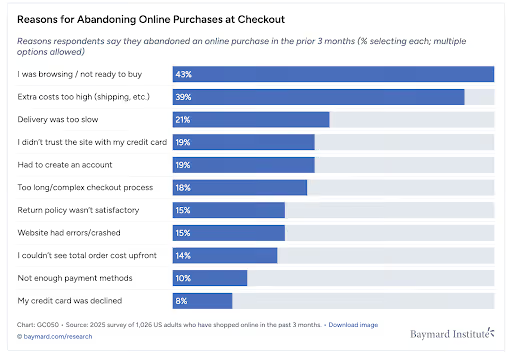
    reasons for abandoning a purchase in retail customer experience

    A smooth overall purchasing system keeps customers returning and receiving the same level of efficiency each time.

    4. Returning an Item or Requesting Post-Purchase Support

    This moment begins after the purchase, when a customer returns an item or asks for help. Interactions at this stage test how reliably a retailer supports customers beyond the sale. Customers expect a clear and consistently applied return policy, especially when returns span channels. They also seek straightforward guidance when they need help with orders, delivery issues, or product questions. The way frontline teams handle these situations is critical. Clear explanations, calm communication, and respectful treatment help maintain trust and encourage future visits.

    What Drives Consistency Across Retail CX Moments

    A strong customer experience in retail depends on several interconnected drivers. The table below shows what these drivers are and how they support consistency in retail CX: 

    retail customer experience consistency table

    Customers rarely separate these elements. In practice, they experience them together. These moments are crucial because they directly influence customer loyalty, satisfaction, and repeat purchasing in retail.

    When retailers handle these moments consistently across stores and channels, the impact becomes clear in customer behavior and, as a result, operational performance. 

    For example, brand loyalty strengthens through predictable, positive interactions. Meanwhile, customer satisfaction grows when friction remains low, and repeat purchases happen as trust increases over time. According to a recent study, well-implemented omnichannel experiences resulted in 23% higher repeat store visits.

    Additionally, customer complaints and escalations decrease when teams handle common situations consistently. Overall performance across stores and teams stabilizes when expectations remain clear in key moments.

    Consistency across these moments depends on more than systems and policies. Retailers that pay close attention to how teams operate in these situations are better positioned to deliver reliable experiences and realize the full value of a positive customer experience.

    Over time, repeat shoppers become loyal customers and brand advocates. They might write positive online reviews, participate in customer loyalty programs, or talk about the brand on social media.

    How Retailers Can Build a More Consistent Customer Experience

    Consistency in retail comes from handling key customer interactions in predictable ways, day after day. Aligning day-to-day behavior with broader customer experience initiatives helps retailers reinforce that consistency in practice. Here’s how.

    Define What “Good” Looks Like for Frontline Interactions

    Clear behavioral expectations reduce variation in how frontline teams interact with customers. Retailers often rely on broad service standards without explaining how those standards apply in daily interactions. That lack of clarity creates inconsistency across locations and shifts.

    To reduce variation, retailers must define what good performance looks like in common situations. This work involves translating brand values into observable behaviors. For example, retailers should establish how staff acknowledge customers when they enter the store, offer help without interrupting or hovering, explain products, pricing, or policies, and respond to delays, complaints, or returns.

    Clear expectations help teams act with confidence. They also reduce guesswork, especially for new hires or seasonal employees. To get there, retailers should emphasize consistency over perfection. Customers rarely expect flawless service, but they do expect predictable treatment and respectful communication. For instance, customers tolerate delays more easily when staff acknowledge the wait and explain the next steps. That outcome depends on communication behavior, not speed alone.

    Defining expectations at this level also improves coaching and performance management. Managers can reference specific behaviors rather than subjective impressions. Over time, this clarity reduces location-to-location differences and helps customers experience the brand more consistently.

    Use Technology to Support, Not Replace, Human Experience

    Technology works best in retail when it supports frontline teams, not when it replaces human interaction. POS systems, inventory platforms, self-checkout tools, and mobile apps reduce errors and help standardize everyday tasks. When these tools work well, they remove friction from common interactions and make it easier for teams to meet customer expectations.

    In practice, technology supports consistency by helping staff to share accurate pricing and inventory information and move customers through checkout more efficiently. On the customer service front, it enables personnel to process returns and exchanges smoothly, even supporting omnichannel actions such as pickups or cross-channel returns.

    Technology works best when it streamlines decision-making for both customers and staff. For example, real-time inventory visibility enables employees to provide confident answers rather than guesses.

    At the same time, technology cannot replace human judgment. Customers still rely on people when situations fall outside standard workflows. Think of situations involving longer-than-expected wait times, checkout or return exceptions, and moments where reassurance or explanation matters.

    A customer whose return is delayed across channels, for instance, cares less about the system behind the issue and more about how well the situation is resolved. Technology can surface the information, but the interaction itself depends on the person delivering it.

    Hire and Enable People Who Can Deliver Consistency

    Consistent retail customer experiences depend on businesses hiring people who can perform reliably in everyday customer-facing situations. Good frontline customer service requires a lot from employees, including being able to communicate clearly with customers as well as apply service standards consistently. Additionally, they must respond well under pressure and make sound judgment calls in routine customer situations.

    When hiring focuses mainly on a candidate’s availability or past experience, these behaviors are often left out of the conversation. To support a strong customer experience strategy, retailers need to be more intentional about how they hire for frontline roles and who they choose to bring into customer-facing positions.  An effective frontline hiring approach prioritizes the behaviors customers would experience once a candidate is in the role. 

    Improving Retail Customer Experience with Better Screening

    The standard of the retail customer experience ultimately comes down to the decisions recruiters make when they hire for frontline roles. Frontline employees shape how customers experience a retail brand in situations that demand clarity, empathy, and good communication. When employees handle these interactions well, the experience feels reliable and supportive. To improve the retail customer experience, recruiters need to evaluate how well candidates handle real customer situations before making hiring decisions.

    Why Traditional Screening Falls Short in Retail Roles

    Most retail screening processes prioritize speed and availability. Resumes, basic questions, and high-level assessments help move candidates through the funnel quickly, but they rarely predict on-the-job behavior. As a result, retailers frequently hire candidates who seem like a good fit on paper, but lack the customer-facing skills the role demands. 

    The impact on the customer experience can be far-reaching. A negative interaction with a poor-fit retail associate can result in customers abandoning their purchase, losing confidence in the brand, or even deciding not to return.

    While upskilling and reskilling can support a team member’s performance, they can’t fix a fundamental mismatch between the demands of the role and a candidate’s behavior. To build the best frontline teams possible, you need a better way to screen for candidates’ real capabilities during the hiring process.

    What Effective Screening Looks Like in Retail Hiring

    The most effective candidate screening for retail roles focuses on behaviors and soft skills that directly affect the customer experience. Job screening should evaluate how clearly candidates communicate and how they handle routine questions. It should also assess qualities such as whether they stay calm in stressful situations and skills that indicate how well they meet defined service standards.

    Applicant screening works best when it evaluates customer-facing behavior consistently for every candidate to support fair hiring across demographics. For example, a situational assessment shows how candidates respond to the same customer scenario regardless of factors such as age or prior retail experience. Better screening improves a number of retail performance areas. For instance: 

    Improving retail customer experience table

    Hiring decisions shape customer experience long before customers walk through the door. Consider a retail associate assessment to help talent teams screen for the right skills without adding to their manual workload, like the one shown below:

    Customer service speaking assessment with scores for observable behaviors

    By focusing on how candidates communicate and respond in realistic scenarios, teams gain a clearer view of candidates’ service readiness. Hiring for a consistent set of skills makes it easier to build frontline teams that deliver consistent customer experiences across channels and locations. 

    Why Retail Customer Experience Depends on Frontline Teams

    A strong retail customer experience depends on how consistently frontline teams handle everyday interactions. Tools and policies support the process, but customers judge the experience through human interactions.

    Effective screening helps shape that consistency early by identifying candidates who can handle customer-facing situations reliably. As a result, teams perform better, and customer experience becomes easier to maintain across retail stores and channels. 

    Customer Experience in the Retail Industry FAQs

    What’s the most important part of retail customer experience?

    Retail customer experience covers the full shopping journey. Customers form opinions across in-store experience, digital retail, and post-purchase interactions. Four points in that journey have the biggest impact on a customer’s perception of their experience. These key moments are their first interactions, waiting for service, navigating checkout and payment, and making a return or asking for support. 

    How do retailers improve customer experience without lowering their prices?

    Retailers can improve customer experience by focusing on convenience and ease of use. Faster checkout, better customer support, and seamless omnichannel experiences reduce friction. These improvements help retailers meet customer needs without competing on price.

    Which metrics best measure retail customer experience?

    Retailers use several metrics to track customer experience. Common measures include Customer Satisfaction Score (CSAT), Net Promoter Score (NPS), Customer Effort Score (CES), and repeat purchases. Qualitative customer feedback is also valuable. Support interactions, online reviews, and social media conversations all give retailers important customer insights. Together, these signals help retailers measure customer experience quality over time.
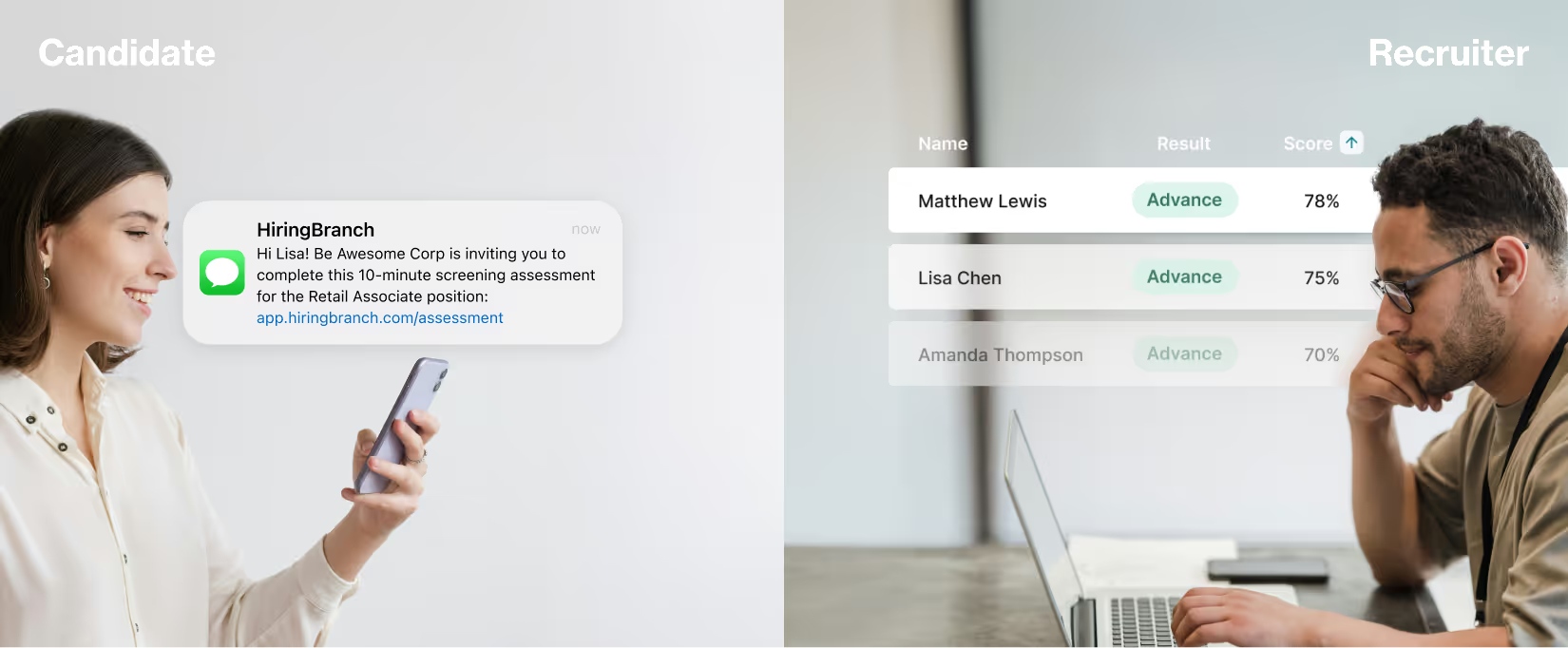

    Image Credits

    Featured image: Via Unsplash/Cova Software

    Image 1: Property of HiringBranch. Not to be reproduced without permission.

    Image 2: Via Baymard Institute

    Image 3, 4: Property of HiringBranch. Not to be reproduced without permission.

    Read More Blogs
    View all
    Read report
    Read report
    Artificial Intelligence
    Talent Acquisition

    Can AI Pass Your Interview?

    Read report
    Artificial Intelligence
    Best Practices

    The Quick C-Suite Guide to Responsible AI Leadership

    Read report
    Read report
    Read report
    Best Practices
    High-Volume Recruitment

    What Hiring and Recruiting Strategies Look Like in 2026

    Read report
    Read report
    Read report
    Read report
    Read report
    Read report
    Read report
    Read report
    Read report
    Read report
    Contact Center
    Customer Service
    Soft Skills

    The Ultimate Guide to Call Center Soft Skills

    Read report
    Read report
    Contact Center
    Digital Transformation

    A Simple Guide to Customer Contact Center Software

    Read report
    Read report
    High-Volume Recruitment
    Digital Transformation

    Resume Screening Software Is Holding Recruiters Back

    Read report
    Contact Center
    Customer Service

    16 Best Call Center Tips for Customer Services

    Read report
    Read report
    Read report
    Read report
    Artificial Intelligence
    High-Volume Recruitment

    Create Your Volume Hiring Strategy with AI

    Read report
    Artificial Intelligence
    Soft Skills

    Building the World’s First Soft Skills AI

    Read report
    Read report
    Read report
    Read report
    Best Practices
    High-Volume Recruitment
    Contact Center

    The Retail Contact Center Hiring Success Guide [+ Bonus Cheat Sheet]

    Read report
    Read report
    Read report
    High-Volume Recruitment
    Talent Acquisition
    Assessments

    Why One-Way Interviews Are Dividing Recruiters and Candidates

    Read report
    Best Practices
    Soft Skills

    Santa’s Top Soft Skills Revealed

    Read report
    Read report
    News
    Digital Transformation
    Soft Skills

    Human Skills Have Never Been More Important

    Read report
    Read report
    Read report
    Read report
    Read report
    Read report
    High-Volume Recruitment
    Contact Center
    Best Practices

    Getting Through the Contact Center’s High-Volume Season with Ease

    Read report
    Contact Center
    Customer Service

    Cures for the Most Common Call Center Problems

    Read report
    Read report
    Digital Transformation
    Assessments
    Soft Skills

    5 Tech Companies Bringing Skills-Based Hiring to Life

    Read report
    Read report
    Read report
    Read report
    Read report
    Read report
    Read report
    Contact Center
    High-Volume Recruitment

    Addressing Call Center Turnover Rate

    Read report
    Contact Center
    High-Volume Recruitment
    Best Practices

    Average Attrition Rates in High-Volume Roles and How To Improve Them

    Read report
    Read report
    Read report
    Read report
    Read report
    Talent Acquisition
    Artificial Intelligence

    6 Quick-Read Stats About AI and Talent Acquisition

    Read report
    Assessments
    Talent Acquisition

    Candidates Speak Up About Assessments

    Read report
    Artificial Intelligence
    Digital Transformation

    Adding AI to Your HR Tech Stack: Build, Buy or Partner?

    Read report
    Talent Acquisition
    Best Practices

    Quality of Hire: Everything You Need to Know

    Read report
    Read report
    Events
    High-Volume Recruitment
    Artificial Intelligence

    Top 7 Moments in Our Summer Podcast Tour

    Read report
    Talent Acquisition
    High-Volume Recruitment

    The History of Interviews According to Kevin Wheeler

    Read report
    Read report
    Read report
    Assessments
    High-Volume Recruitment

    Proving That Multiple Choice Assessments Suck

    Read report
    Read report
    Assessments
    Soft Skills
    High-Volume Recruitment

    Employment Assessment Testing: A Comprehensive Guide

    Read report
    Artificial Intelligence
    High-Volume Recruitment
    Digital Transformation

    How is Artificial Intelligence Changing the Recruiting Process?

    Read report
    Read report
    High-Volume Recruitment
    Assessments
    Digital Transformation

    The No-Interview Hiring Model is Changing Talent Acquisition Forever

    Read report
    Read report
    Read report
    Artificial Intelligence
    Contact Center
    Customer Service
    Digital Transformation

    Do Your Call Center Agents Accurately Represent Your Brand Personality?

    Read report
    Assessments
    High-Volume Recruitment

    The Essential Guide To Pre-Hiring Assessments

    Read report
    Assessments
    Customer Service
    Digital Transformation
    High-Volume Recruitment

    How To Hire For Great Communication Skills Without Interviewing?

    Read report
    Artificial Intelligence
    Contact Center
    Customer Service
    Digital Transformation

    Are Bots The Key To Providing Outstanding Customer Support?

    Read report
    Assessments
    Contact Center
    High-Volume Recruitment

    Finding Candidates in the Digital Age with New Hire Assessments

    Read report
    Read report
    Read report
    Contact Center
    Digital Transformation
    High-Volume Recruitment

    How Do Virtual Contract Recruiters Help Companies Hire Fast And Accurately?

    Read report
    Contact Center
    Customer Service
    High-Volume Recruitment

    A Guide To Hiring And Managing Frontline Employees

    Read report
    Artificial Intelligence
    Contact Center
    Digital Transformation
    High-Volume Recruitment

    How To Scale Recruitment With A Virtual Recruiter: Accurate, Quick, and Performance-Based

    Read report
    Read report
    Read report
    Contact Center
    Customer Service
    High-Volume Recruitment
    Sales

    How To Guide: 3 Essential Steps For Hiring A Quality Frontline Employee

    Read report
    Artificial Intelligence
    Contact Center
    High-Volume Recruitment

    5 Ideas To Transform Your Contact Center

    Read report
    Read report
    Read report
    Contact Center
    Customer Service
    High-Volume Recruitment

    How To Hire Top Talent Remotely?

    Read report
    Read report
    Contact Center
    Customer Service
    High-Volume Recruitment

    How To Tackle 7 Common Contact Center Issues

    Read report
    Read report
    Contact Center
    Customer Service
    Digital Transformation
    High-Volume Recruitment

    Top 5 Things You Need to Know About Customer Support

    Read report
    Read report
    Read report
    Read report
    Artificial Intelligence
    Digital Transformation
    High-Volume Recruitment

    Case Study - The advantages of using AI for assessing voice and chat candidates

    Read report

    Does your assessment guarantee a performance improvement?

    We do. Gone are the days of guessing skills in an interview. Rely on technology to do it for you with 98% accuracy and boost your hire quality, guaranteed.

    Some of our happy customers
    Infosys logoBell logoFortune 500 logocarelon logoFundraising Direct
    Customer Service

    Customer Experience in the Retail Industry: The Hidden Role of Frontline Hiring

    Chandal Nolasco da Silva
    Chandal Nolasco da Silva
    February 16, 2026
    In This Article
    Chandal Nolasco da Silva
    Chandal Nolasco da Silva
    February 16, 2026
    summary

    Learn what customer experience means in retail, which moments matter the most, and why frontline teams play a central role in creating a great experience.

    Subscribe to our Newsletter

    Like what you're reading? Leave us your email, and we'll deliver to your inbox on the last Thursday of the month.

    Customer experience in the retail industry shapes how customers feel at every stage of the shopping journey. They expect consistent, fast, and reliable interactions that depend on how CX teams handle everyday customer interactions across channels.

    This guide breaks down what customer experience means in retail today and which moments matter most. It also explains how retailers can deliver more consistent customer experiences by improving how they screen and hire their frontline teams.

    Retail Customer Experience Across Channels and Segments

    The retail customer experience varies depending on how customers interact with a brand across different channels and segments in their end-to-end journey. 

    Two distinct but interconnected elements contribute to CX in different ways: customer service focuses on assistance and support moments when issues arise, while customer engagement reflects the ongoing seller-buyer relationship through marketing, loyalty, and communication.

    The table below outlines the CX elements that retail businesses need to deliver across each shopping environment:

    customer experience in retail table

    Customer experience also varies by retail segment, even when the underlying shopping journey follows similar steps. The difference appears most clearly in interactions with staff who deal with customers directly, either in person, over the phone, or online. How frontline service staff speak to customers, answer questions, and resolve issues shapes how the brand feels in practice. 

    Retailers need to define the right experience for their brand and deliver it consistently. For instance, bargain and value-focused retail customers demand speed, clarity, and efficiency when shopping, so frontline teams need to prioritize quick assistance and low-friction resolution. On the contrary, in luxury and premium retail, customers expect deeper product knowledge and a consultative approach. To accommodate luxury shoppers, frontline teams reinforce brand perception through expertise and personalized guidance.

    No matter the channel or retail segment, customer experience ultimately comes down to frontline teams delivering according to expectations, day after day.

    Customer Expectations Have Evolved With Technology

    More widespread technology adoption has also changed what customers want from retail experiences. These changes reflect broader trends in customer experience, focusing on speed, consistency, and connected service across channels. 

    Alongside cohesive touchpoint transitions and service quality, speed now plays a direct role in whether customers follow through. Research shows that one in four customers abandon online purchases if they can’t complete their transaction within 10 seconds.

    Many retailers use artificial intelligence to keep pace with these customer demands. AI-powered tools such as chatbots and augmented reality support faster customer support and more relevant recommendations across channels. More on leveraging technology in retail CX later.

    Frontline Teams Bring Customer Experience to Life 

    In retail, customers judge the experience through people, not systems. Everyday interactions determine whether the experience feels clear, reliable, and supportive.

    Frontline employees influence CX when they help customers find products or answer questions, acknowledge wait times and explain delays, guide customers through checkout and payment, and handle returns or post-purchase questions. When these frontline interactions break down or vary across channels and locations, the customer experience suffers. This is why hiring the right people should be at the heart of a retailer’s customer-centric CX strategy to drive the service buyers have come to expect.

    The Moments That Matter Most in Retail Customer Experience

    In retail, four key moments shape customer experience and influence how customers remember their visit.

    1. The first interaction
    2. Engaging with service
    3. Navigating checkout or payment
    4. Returning and item or asking for post-purchase support

    For example, in brick-and-mortar stores, the in-store experience often depends on simple actions. Customers notice how easily they move through aisles, use kiosks, and complete transactions using preferred payment options.

    Online and omnichannel experiences follow a similar pattern. Customers care about how efficiently they can find products, interact with frontline staff, and move through checkout. Below are these four moments explained in detail.

    1. The First Interaction

    The customer experience begins as soon as a customer enters the store or the online retail environment. In physical stores, staff visibility, ease of navigation, and initial acknowledgment all set customers’ early expectations. Online, customers notice whether product information is clear, guidance is easy to follow, and help is available when questions arise. These early interactions can shape the entire customer experience, so retailers need to hire teams that can make a good first impression across every channel and environment.

    2. Engaging with Service

    In retail, any moment when customers have to wait can be a high-friction point in the experience. In-store, customers notice how staff manage queues, acknowledge delays, and respond under pressure. Online and across channels, customers care about clear status updates, realistic timelines, and prompt support when something goes wrong. When frontline staff handle these moments well, customers feel supported instead of frustrated.

    3. Navigating Checkout and Payment 

    The retail checkout process is a defining moment in the customer experience. Customers expect speed, clarity, and payment flexibility. Confusion, delays, or inconsistent processes at this stage can undo otherwise positive experiences. Checkout pain points often emerge when payment options feel limited, or processes are slow, confusing, or unreliable. In fact, research shows that long and complicated online checkout processes account for 18% of abandoned carts.

    reasons for abandoning a purchase in retail customer experience

    A smooth overall purchasing system keeps customers returning and receiving the same level of efficiency each time.

    4. Returning an Item or Requesting Post-Purchase Support

    This moment begins after the purchase, when a customer returns an item or asks for help. Interactions at this stage test how reliably a retailer supports customers beyond the sale. Customers expect a clear and consistently applied return policy, especially when returns span channels. They also seek straightforward guidance when they need help with orders, delivery issues, or product questions. The way frontline teams handle these situations is critical. Clear explanations, calm communication, and respectful treatment help maintain trust and encourage future visits.

    What Drives Consistency Across Retail CX Moments

    A strong customer experience in retail depends on several interconnected drivers. The table below shows what these drivers are and how they support consistency in retail CX: 

    retail customer experience consistency table

    Customers rarely separate these elements. In practice, they experience them together. These moments are crucial because they directly influence customer loyalty, satisfaction, and repeat purchasing in retail.

    When retailers handle these moments consistently across stores and channels, the impact becomes clear in customer behavior and, as a result, operational performance. 

    For example, brand loyalty strengthens through predictable, positive interactions. Meanwhile, customer satisfaction grows when friction remains low, and repeat purchases happen as trust increases over time. According to a recent study, well-implemented omnichannel experiences resulted in 23% higher repeat store visits.

    Additionally, customer complaints and escalations decrease when teams handle common situations consistently. Overall performance across stores and teams stabilizes when expectations remain clear in key moments.

    Consistency across these moments depends on more than systems and policies. Retailers that pay close attention to how teams operate in these situations are better positioned to deliver reliable experiences and realize the full value of a positive customer experience.

    Over time, repeat shoppers become loyal customers and brand advocates. They might write positive online reviews, participate in customer loyalty programs, or talk about the brand on social media.

    How Retailers Can Build a More Consistent Customer Experience

    Consistency in retail comes from handling key customer interactions in predictable ways, day after day. Aligning day-to-day behavior with broader customer experience initiatives helps retailers reinforce that consistency in practice. Here’s how.

    Define What “Good” Looks Like for Frontline Interactions

    Clear behavioral expectations reduce variation in how frontline teams interact with customers. Retailers often rely on broad service standards without explaining how those standards apply in daily interactions. That lack of clarity creates inconsistency across locations and shifts.

    To reduce variation, retailers must define what good performance looks like in common situations. This work involves translating brand values into observable behaviors. For example, retailers should establish how staff acknowledge customers when they enter the store, offer help without interrupting or hovering, explain products, pricing, or policies, and respond to delays, complaints, or returns.

    Clear expectations help teams act with confidence. They also reduce guesswork, especially for new hires or seasonal employees. To get there, retailers should emphasize consistency over perfection. Customers rarely expect flawless service, but they do expect predictable treatment and respectful communication. For instance, customers tolerate delays more easily when staff acknowledge the wait and explain the next steps. That outcome depends on communication behavior, not speed alone.

    Defining expectations at this level also improves coaching and performance management. Managers can reference specific behaviors rather than subjective impressions. Over time, this clarity reduces location-to-location differences and helps customers experience the brand more consistently.

    Use Technology to Support, Not Replace, Human Experience

    Technology works best in retail when it supports frontline teams, not when it replaces human interaction. POS systems, inventory platforms, self-checkout tools, and mobile apps reduce errors and help standardize everyday tasks. When these tools work well, they remove friction from common interactions and make it easier for teams to meet customer expectations.

    In practice, technology supports consistency by helping staff to share accurate pricing and inventory information and move customers through checkout more efficiently. On the customer service front, it enables personnel to process returns and exchanges smoothly, even supporting omnichannel actions such as pickups or cross-channel returns.

    Technology works best when it streamlines decision-making for both customers and staff. For example, real-time inventory visibility enables employees to provide confident answers rather than guesses.

    At the same time, technology cannot replace human judgment. Customers still rely on people when situations fall outside standard workflows. Think of situations involving longer-than-expected wait times, checkout or return exceptions, and moments where reassurance or explanation matters.

    A customer whose return is delayed across channels, for instance, cares less about the system behind the issue and more about how well the situation is resolved. Technology can surface the information, but the interaction itself depends on the person delivering it.

    Hire and Enable People Who Can Deliver Consistency

    Consistent retail customer experiences depend on businesses hiring people who can perform reliably in everyday customer-facing situations. Good frontline customer service requires a lot from employees, including being able to communicate clearly with customers as well as apply service standards consistently. Additionally, they must respond well under pressure and make sound judgment calls in routine customer situations.

    When hiring focuses mainly on a candidate’s availability or past experience, these behaviors are often left out of the conversation. To support a strong customer experience strategy, retailers need to be more intentional about how they hire for frontline roles and who they choose to bring into customer-facing positions.  An effective frontline hiring approach prioritizes the behaviors customers would experience once a candidate is in the role. 

    Improving Retail Customer Experience with Better Screening

    The standard of the retail customer experience ultimately comes down to the decisions recruiters make when they hire for frontline roles. Frontline employees shape how customers experience a retail brand in situations that demand clarity, empathy, and good communication. When employees handle these interactions well, the experience feels reliable and supportive. To improve the retail customer experience, recruiters need to evaluate how well candidates handle real customer situations before making hiring decisions.

    Why Traditional Screening Falls Short in Retail Roles

    Most retail screening processes prioritize speed and availability. Resumes, basic questions, and high-level assessments help move candidates through the funnel quickly, but they rarely predict on-the-job behavior. As a result, retailers frequently hire candidates who seem like a good fit on paper, but lack the customer-facing skills the role demands. 

    The impact on the customer experience can be far-reaching. A negative interaction with a poor-fit retail associate can result in customers abandoning their purchase, losing confidence in the brand, or even deciding not to return.

    While upskilling and reskilling can support a team member’s performance, they can’t fix a fundamental mismatch between the demands of the role and a candidate’s behavior. To build the best frontline teams possible, you need a better way to screen for candidates’ real capabilities during the hiring process.

    What Effective Screening Looks Like in Retail Hiring

    The most effective candidate screening for retail roles focuses on behaviors and soft skills that directly affect the customer experience. Job screening should evaluate how clearly candidates communicate and how they handle routine questions. It should also assess qualities such as whether they stay calm in stressful situations and skills that indicate how well they meet defined service standards.

    Applicant screening works best when it evaluates customer-facing behavior consistently for every candidate to support fair hiring across demographics. For example, a situational assessment shows how candidates respond to the same customer scenario regardless of factors such as age or prior retail experience. Better screening improves a number of retail performance areas. For instance: 

    Improving retail customer experience table

    Hiring decisions shape customer experience long before customers walk through the door. Consider a retail associate assessment to help talent teams screen for the right skills without adding to their manual workload, like the one shown below:

    Customer service speaking assessment with scores for observable behaviors

    By focusing on how candidates communicate and respond in realistic scenarios, teams gain a clearer view of candidates’ service readiness. Hiring for a consistent set of skills makes it easier to build frontline teams that deliver consistent customer experiences across channels and locations. 

    Why Retail Customer Experience Depends on Frontline Teams

    A strong retail customer experience depends on how consistently frontline teams handle everyday interactions. Tools and policies support the process, but customers judge the experience through human interactions.

    Effective screening helps shape that consistency early by identifying candidates who can handle customer-facing situations reliably. As a result, teams perform better, and customer experience becomes easier to maintain across retail stores and channels. 

    Customer Experience in the Retail Industry FAQs

    What’s the most important part of retail customer experience?

    Retail customer experience covers the full shopping journey. Customers form opinions across in-store experience, digital retail, and post-purchase interactions. Four points in that journey have the biggest impact on a customer’s perception of their experience. These key moments are their first interactions, waiting for service, navigating checkout and payment, and making a return or asking for support. 

    How do retailers improve customer experience without lowering their prices?

    Retailers can improve customer experience by focusing on convenience and ease of use. Faster checkout, better customer support, and seamless omnichannel experiences reduce friction. These improvements help retailers meet customer needs without competing on price.

    Which metrics best measure retail customer experience?

    Retailers use several metrics to track customer experience. Common measures include Customer Satisfaction Score (CSAT), Net Promoter Score (NPS), Customer Effort Score (CES), and repeat purchases. Qualitative customer feedback is also valuable. Support interactions, online reviews, and social media conversations all give retailers important customer insights. Together, these signals help retailers measure customer experience quality over time.

    Image Credits

    Featured image: Via Unsplash/Cova Software

    Image 1: Property of HiringBranch. Not to be reproduced without permission.

    Image 2: Via Baymard Institute

    Image 3, 4: Property of HiringBranch. Not to be reproduced without permission.

    Explore more blog posts

    We Proved That Hiring for the Right Skills Can Increase Sales
    Sales
    Assessments
    Soft Skills

    We Proved That Hiring for the Right Skills Can Increase Sales

    Being the Change: Unveiling Performance Metrics in Recruiting
    Best Practices

    Being the Change: Unveiling Performance Metrics in Recruiting

    Top 5 Things You Need to Know About Customer Support
    Contact Center
    Customer Service
    Digital Transformation
    High-Volume Recruitment

    Top 5 Things You Need to Know About Customer Support