



One-way interviews are dividing recruiters and applicants. Learn how to create a candidate-focused hiring process that still saves time at high volumes.
Subscribe to our Newsletter
Like what you're reading? Leave us your email, and we'll deliver to your inbox on the last Thursday of the month.
One-way interviews streamline initial screenings for hiring teams by letting candidates record answers to pre-set questions.
At first glance, they seem like a time-saving solution for high-volume recruitment. However, this impersonal format can damage your employer brand by making applicants feel undervalued. In fact, CareerPlug research reveals that 33% of job seekers have abandoned applications that lead to one-way interviews.
In this post, you’ll learn why some companies still rely on them and a faster, more candidate-focused alternative that results in better hires.
What Is a One-Way Interview?
A one-way interview (AKA asynchronous interview) is a screening process where job seekers respond to pre-set questions via video.
For example, common questions can include:
- “Can you tell me about yourself?”
- “Why are you interested in this company?”
- “What are your current role responsibilities?”
- “What are your career goals?”
Unlike traditional in-person interviews (even video calls like Zoom), there’s no real-time interaction with a hiring manager. It’s just a candidate, their phone or webcam, and video interview software to record all the answers.
Here’s what that looks like on a desktop:
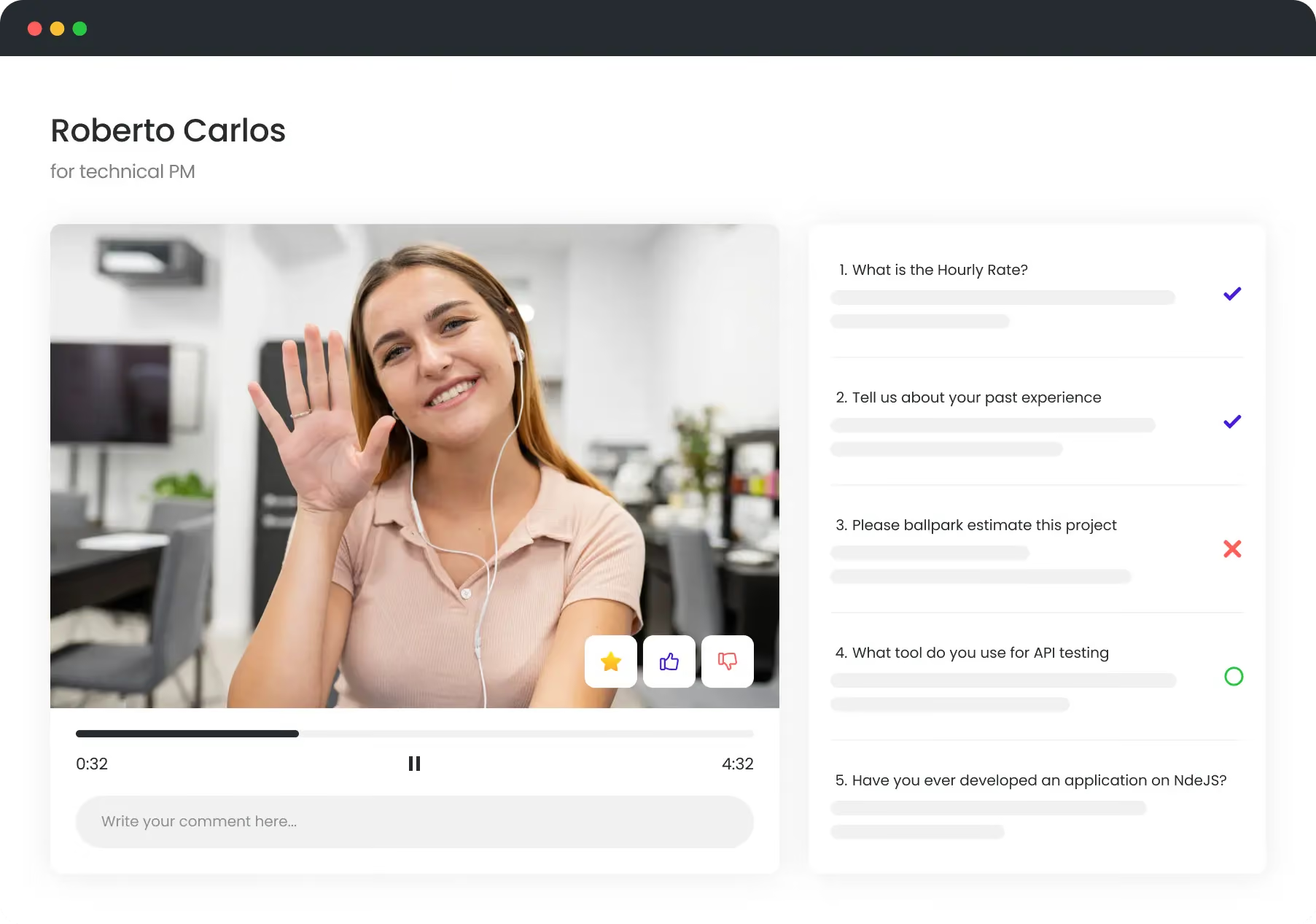
These types of virtual interviews focus on candidates’ previous experience, communication style, and how they present themselves.
So, recruiters tend to use them in early hiring stages, especially for roles with high job application volumes. Teams can review responses when it best suits them to narrow down huge candidate pools.
Note: One-way interviews are different from pre-hiring assessments or job simulations, which evaluate specific skill sets (e.g., solving a coding challenge or demonstrating answering customer calls).
How Do One-Way Video Interviews Work?
Candidates receive a set of video interview questions through a designated platform. They record answers within a time limit and submit them for potential employers to review later.
Let’s say a company is hiring for a frontline customer service position. One question might be, “How do you handle irate customers while staying professional?”
Candidates can take a minute to think or write down some notes. Then, they’ll record answers to explain their problem-solving approach.
Some platforms also allow job seekers to re-record video responses. For example, applicants can retake if they stumble over their words, have technical issues, or simply feel unsatisfied with their initial answer.
Some software limits to three attempts per question:
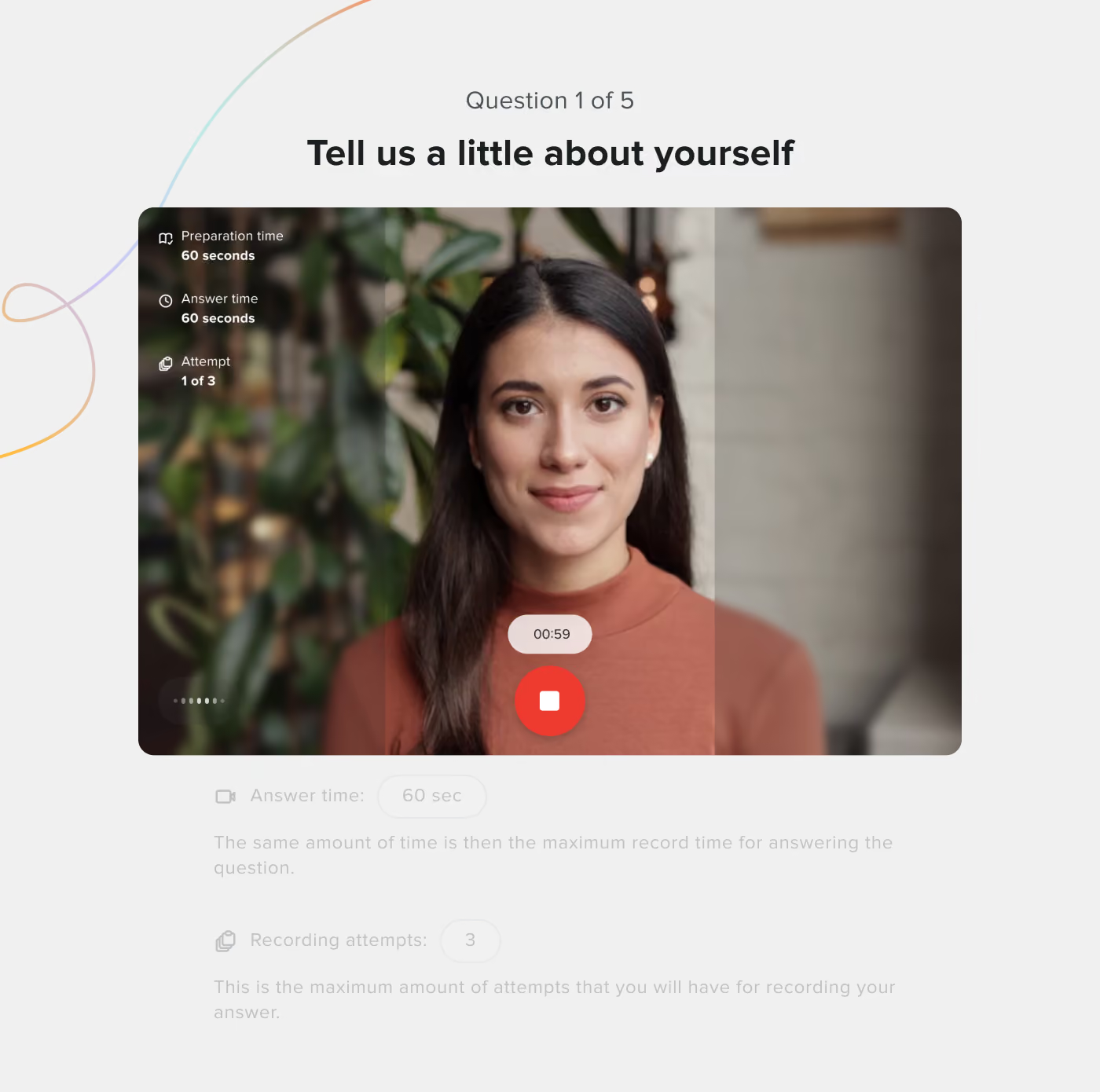
Scheduling live conversations with hundreds of applicants can be a logistical nightmare. So, it’s no surprise that this interview format’s flexibility is a big draw for high-volume recruitment.
To the participant, however, it can seem impersonal. This Reddit comment sums up how many candidates feel about this part of their job search:
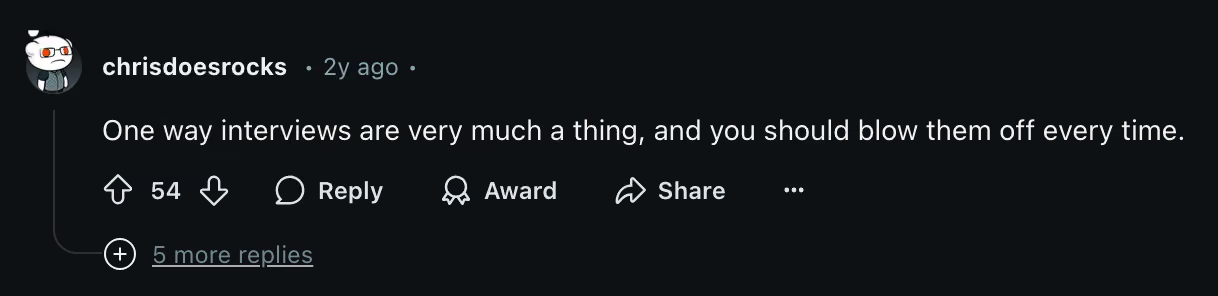
Without live engagement, answers disappear into the void. There’s no opportunity to clarify, expand, or build any rapport with potential employers or stakeholders.
And candidates are getting frustrated. In fact, the top concern for 60% is not knowing whether a human even sees their application.
So, while one-way job interviews offer practical benefits for hiring teams, they also raise an important question: how can recruiters balance efficiency while keeping candidates engaged?
Why Do Companies Rely on One-Way Video Interviews?
One-way interviews are often a go-to for recruiters because they’re simple, efficient, and flexible.
They promise to streamline high-volume hiring by reducing scheduling conflicts and screening large candidate pools quickly. But there are always trade-offs.
Here are the four main reasons why recruiters rely on one-way interviews and the potential risks for both hiring teams and candidates.
1. Saves Time for Recruiters and Candidates
Many employers think a one-way video interview process saves a significant amount of time in the early recruitment stages. Eliminating back-and-forth scheduling leads to faster, more efficient hiring decisions.
The problems with this:
- HR teams may spend more time analyzing and scoring pre-recorded interviews than meeting in person. Automated systems can also incorrectly reject candidates.
- Traditional interviews offer more natural first impressions and flows of conversation. During face-to-face discussions, it’s easier to assess someone’s communication skills and personality nuances.
- Recording answers to multiple questions under time limits can stress out candidates. Particularly those unfamiliar with video interview platforms or without access to quiet, private spaces.
2. Creates a Standardized Evaluation Process
Everyone answers the same set of one-way interview questions to create a consistent evaluation. This levels the playing field so hiring managers can compare applicants from different backgrounds fairly.
The problems with this:
- Pre-set questions don’t allow for follow-ups that explore unexpected insights. Often, the most revealing parts of interviews are the unscripted, off-piste moments that uncover unique qualities or approaches.
- The one-size-fits-all structure may unintentionally disadvantage candidates who excel in less traditional ways (e.g., creative thinkers or conversationalists).
- Under the pressure of time limits, candidates often focus more on crafting “correct” responses than expressing their true personalities. This can lead to generic answers that fail to highlight individuality or workplace soft skills.
3. Gives Candidates More Flexibility
One-way interviews let candidates from different time zones respond to questions on their own time. This flexibility reduces scheduling conflicts, a massive plus for anyone juggling a full-time job or other commitments.
The problems with this:
- While convenient, many candidates view one-way interviews as robotic and impersonal. Without eye contact or body language, they can’t gauge how responses are being received.
- Candidates can’t always ask clarifying questions about job descriptions, expectations, or company culture. This lack of interaction can leave them uninformed and uninvested in the role.
- What’s meant to be a flexible recruiting strategy can unintentionally push applicants toward competitors who prioritize more engaging interactions.
4. Reduces Costs Compared to Live Interviews
One-way interviews help companies cut live interview costs like travel expenses or virtual meeting resources. For high-volume hiring, this approach can seem like a far cheaper solution.
The problems with this:
- Saving short-term money could mean losing out on top-tier candidates who find one-way interviews low-effort and impersonal. Applicants who value connection may disengage entirely.
- A poor candidate experience can harm your employer brand, making it harder to attract quality talent. What seems like a quick financial win could lead to higher expenses in the long run (e.g., frequent turnover or difficulty filling critical roles).
- Not everyone has access to reliable internet connections, high-quality cameras, or quiet spaces for video recordings. This puts job candidates from different socioeconomic backgrounds at a disadvantage.
How to Create a Faster, Candidate-First Hiring Process
By embracing more engaging and thoughtful hiring methods, employers can respect both the recruiters’ time and the candidate’s experience.
While one-way interviews promise efficiency, they’re not always the right solution. There’s also little evidence that they lead to better hiring outcomes than more interactive methods.
Just because it’s not feasible to read every cover letter or speak with thousands of applicants one-on-one, your hiring process doesn’t have to feel impersonal or disconnected.
Skills-based hiring allows candidates to complete role-based written or spoken assessments and show off their abilities:
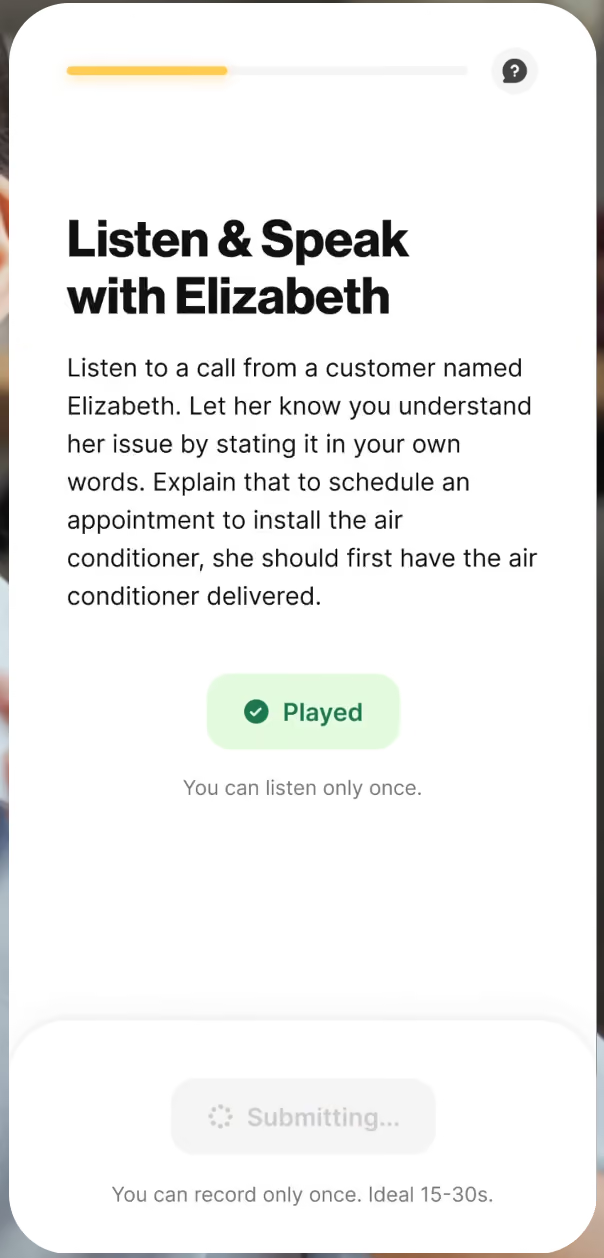
Soft skills like persuasion in sales or active listening in customer support are critical for success. Yet, one-way interviews and other hiring methods (e.g., personality tests or unstructured interviews) often fail to evaluate these essential traits accurately.
For recruiters that hire thousands of employees a year, measuring skills leads to significant performance improvements. Our report shows a 400% reduction in bad hires and millions of dollars in savings from switching to skills-based hiring assessments.
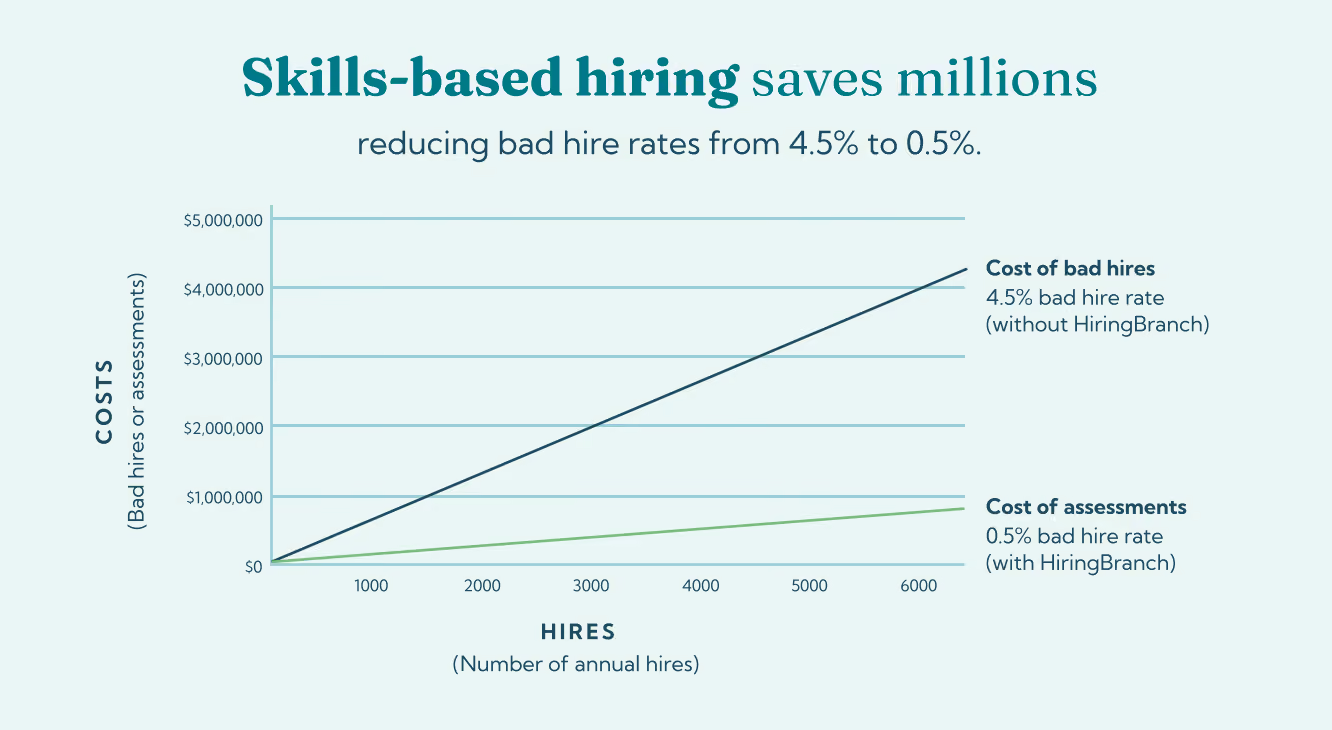
If you’re still weighing up a skills-first hiring model, here are four tips to better engage candidates in the meantime:
- Be transparent with what candidates can expect at each stage, why you’ve chosen the process, and how it benefits them to build trust and reduce frustration
- Instead of generic interviews, give candidates tasks that mimic job responsibilities (e.g., walking through sales demos or acknowledging customer issues)
- Personalize automated communications by using people’s names and referencing specific roles or stages to add a human touch
- Provide timely and constructive feedback at multiple touch points to show respect and keep candidates informed (especially if they’re not selected)
Create a process that values candidates as people (not just numbers) while still meeting your hiring goals.
Wrapping Up One-Way Interviews
One-way interviews might feel like a time-saver. But they disconnect recruiters and applicants by removing the chance to showcase unique skills and personalities.
Skills-focused hiring balances efficiency with a more engaging, modern candidate experience. It’s time to rethink recruitment and create more efficient operations for both sides.
Image Credits
Feature Image: Via Unsplash / Surface
Image 1: Via OneWayInterview
Image 2: Via Phenom
Image 3: Via Reddit
Image 4: Property of HiringBranch. Not to be reproduced without permission.
Image 5: Property of HiringBranch. Not to be reproduced without permission.
One-Way Interview FAQs
Choose a quiet, well-lit space, test your camera and microphone beforehand, and dress professionally.
Keep answers clear and concise while maintaining eye contact with the lens. Note down specific examples that highlight your skills and experience.
Most one-way interviews take between 15 and 45 minutes in total. Individual questions often let candidates answer for 1–3 minutes per response, sometimes with preparation time before recording starts.
Yes. Candidates can decline a one-way interview if they’re uncomfortable with the format or prefer a live conversation.
It’s best to respond professionally and, if still interested in the role, ask whether an alternative interview option is available.
Review the job description again, research the company, and practice answering common interview questions out loud.
Prepare concise examples of your work, test your technology in advance, and record a few practice responses to build confidence and improve delivery.






.svg)