



Discover the pros and cons of AI resume screening tools, and learn why a shift to skills-based assessments can revolutionize your hiring process.
Subscribe to our Newsletter
Like what you're reading? Leave us your email, and we'll deliver to your inbox on the last Thursday of the month.
Artificial intelligence (AI) resume screening is often sold as a time-saving, bias-eliminating solution for high-volume hiring teams. However, by filtering out top talent or adding costly inefficiencies, these tools can often create more problems than they solve.
This guide explores how AI resume screening tools work, what their pros and cons are, and why skills-based assessments offer a more effective way to use AI in high-volume recruitment.
Key Takeaways for AI Resume Screening
- AI resume screening tools help hiring teams filter large applicant pools by automatically evaluating resumes based on predefined criteria and keywords.
- While AI-driven resume screening can go some way toward improving speed and consistency, it can introduce challenges like bias, system gaming, and inaccurate shortlisting decisions.
- Another challenge is that these tools evaluate what candidates say about their skills, rather than their actual ability to perform on the job.
- AI-powered skills assessments evaluate applicants on their real-world performance to help hiring teams identify candidates who can do well on the job.
What Is AI Resume Screening and How Do the Tools Work?
AI resume screening involves using artificial intelligence to evaluate candidates’ resumes automatically during the hiring process. The aim is to save recruiters time by quickly identifying the most qualified candidates from large applicant pools based on specific hiring needs.
Many tools are part of a broader recruiting platform and integrate with an applicant tracking system or human resources information system (HRIS) to streamline end-to-end hiring workflows. For example, ATS integration allows recruiters to screen, track, and manage candidates without switching between systems.
At a basic level, AI screening tools scan resumes for specific words, match candidates’ qualifications to job requirements, and rank candidates based on predefined criteria. Some tools also apply candidate matching to surface the most relevant job applications for a role.
Here’s how the candidate screening tool Peoplebox scores applicants for a customer success manager role based on relevant information from their resumes:
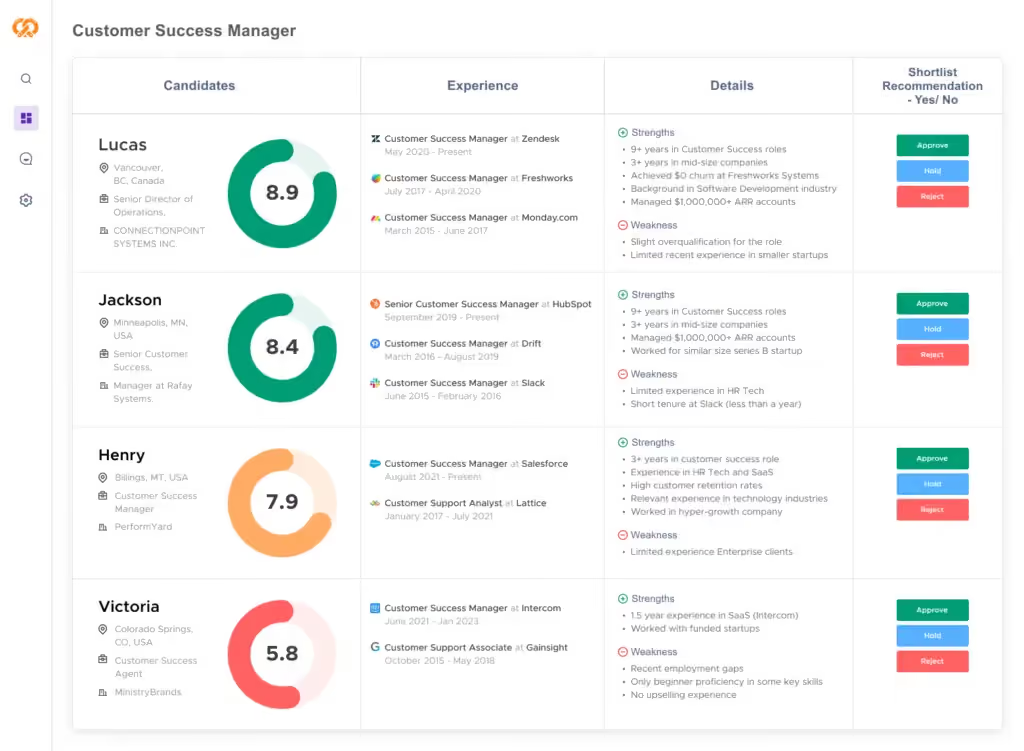
More advanced systems use machine learning algorithms and natural language processing (NLP) to deeply analyze and “understand” resume content. For example, some AI screening tools can recognize customer service experience from a phrase like “Handled 50+ support tickets daily,” even if the candidate hasn’t used a specific job title or keyword in their resume.
The systems use AI to translate this information into structured insights about candidate quality, including skills and certifications, experience levels, and suitability for the role. These insights are typically presented on dashboards, where candidate scoring helps recruiters compare applicants and prioritize those who appear to best match the role.
However these screening tools apply AI technology, most solutions share key features such as automation, real-time insights, and the ability to handle high volumes of candidate data.
But AI screening tools also share a common limitation: they assess candidates solely on self-reported information. Even the most advanced AI features can only evaluate the content in a resume, which may not reflect a candidate’s true capabilities. More on this later.
Note: Not all resume screening tools need AI to function. Some use simpler, rule-based algorithms or manual input to match keywords without generating insights from the results. While less sophisticated, these keyword-matching tools can still be effective for basic screening. Think of them as a “Ctrl+F” search for resume documents in PDF or docx format.
The Benefits of AI Resume Screening
Like most AI-powered solutions, AI screening tools have the potential to streamline and optimize an organization’s processes and workflows. A Mercer survey found that 73% of organizations emphasize the importance of AI in their hiring processes. So what impact can AI have on resume screening?
Let’s take a look at the key benefits.
1. Efficiency
Manual resume reviews take a lot of time. By automating the initial screening process with AI, busy hiring managers can free capacity for other tasks, like:
- Building stronger talent acquisition strategies
- Improving meaningful performance metrics like time-to-hire
- Collaborating with team leads to gauge workforce needs
- Delivering great candidate experiences
- Assessing suitable candidates’ soft skills (a more accurate way to predict on-the-job performance)
Let’s say an e-commerce business needs 200 new support agents to meet seasonal demand. More than 1,600 job seekers submit resumes, each of which must be checked manually by a human recruiter. The process takes a small team three days.
An AI system can quickly parse those resumes for terms like “years of experience,” “communication skills,” and “customer service,” and then give the recruiter a shortlist of what it deems the best candidates. By filtering out resumes from less suitable applicants, the software cuts the recruiters’ workload to one day, freeing two days to manage other job postings.
2. Scalability
The ability to scan lots of resumes quickly allows companies to grow faster, seize unexpected opportunities, and meet surging demand without expanding their hiring teams.
Let’s say a software startup’s product launch exceeds expectations. Adoption skyrockets in the first week, and the company must onboard 100 new support technicians in 30 days. That’s a daunting task for its sole in-house recruiter.
AI eases the strain by filtering out irrelevant resumes using predetermined screening criteria. It lets the business capitalize on its unexpected growth without pausing to hire more recruiters or getting an agency’s support.
Hiring quickly doesn’t always mean hiring well, so AI screening is more of a helpful tool than a comprehensive solution. Without an accurate skills assessment, the recruiter must still interview shortlisted candidates to gauge their suitability. Even then, there’s no guarantee for quality of hire or future performance.
3. Consistency
AI tools can make the resume screening process more consistent by applying the same rules to every candidate. They’re a fairer alternative to human reviewers who may have personal or unconscious biases, or can let factors like tiredness and mood influence their decisions (we all do it!).
For example, AI can reliably identify resumes that mention specific skills or capabilities, regardless of how the information is formatted. This results in a shortlist of candidates selected for their abilities rather than their font or layout choices.
However, this outcome depends on candidates representing their abilities accurately. AI can assess the information presented in a resume, but it can’t confirm whether those skills hold up in a real work environment.
The Limitations of AI Resume Screening
Using AI to screen resumes can be more efficient and save time, but it can also lead to additional problems if not applied correctly.
Here are five reasons resume screening isn’t an effective use of AI for hiring teams.
1. Resumes Don’t Predict Job Performance Accurately
The biggest issue with AI resume screening also applies to resume screening more generally: resumes are a poor indicator of how well a candidate will perform in a specific job. Focusing on a candidate’s experience, education, and self-reported skills, resumes don’t reflect their actual capabilities.
For example, a technically qualified candidate may excel in working alone but struggle to collaborate with others. A resume wouldn’t reveal this detail, which could hinder the applicant’s performance as part of a large team.
AI screening tools have this limitation because they rely on parsing information that may be incomplete, misleading, or even false. A worrying one in four Americans has said they’ve lied during a hiring process, and 24% have lied in their resumes.
2. Poorly Trained AI Can Still Be Biased
AI recruiting tools are only as unbiased as the datasets used to train them. If the training data reflects historical biases — like favoring candidates from specific backgrounds or demographics — the technology will likely perpetuate those patterns.
Let’s say a tech retailer trains its AI recruitment software using five years of candidate data. Historically, the company has recruited more men than women for technical support jobs; according to research, this is an unfortunate reality that aligns AI model recommendations with traditional gender stereotypes.
As a result, the algorithm assumes that men better suit the requirements of these roles. It then inadvertently prioritizes male candidates when screening for open positions.
Bias can have serious consequences by limiting diversity, worsening systemic inequality, and damaging morale. However, fair-treatment policies (including the careful use of AI) can counteract these issues to create a happier, more inclusive workplace.
3. False Positives and Negatives Skew Results
AI screening tools that focus on spotting specific keywords and criteria can’t fully capture a candidate’s nuances and potential. It means they’re prone to producing false positives (passing unqualified applicants) and false negatives (rejecting strong applicants), so users never truly build accurate candidate profiles or identify the top candidates for their roles.
For example, an applicant with relevant technical skills but unconventional experience might be filtered out of the pipeline because their resume doesn’t contain specific terminology from the job description. On the other hand, a candidate with a pristine resume full of matching keywords might pass through even if they lack relevant experience.
False positives frustrate recruiters, who waste time interviewing unsuitable candidates. False negatives frustrate applicants, who might feel unfairly excluded from the running. The inaccuracy helps no one.
4. Applicants Are Openly Gaming the System
The more popular AI screening tools become, the more job seekers learn to optimize their resumes to pass through automated filters.
Online guides now teach candidates how to tailor their resumes with the right keywords, phrasing, and formatting to increase their chances of being selected by an AI tool.
While this guidance may benefit applicants, it undermines the integrity of the screening process. A candidate who knows how to game the system can get ahead of more qualified peers who don’t optimize their resumes.
Just like this Reddit user:
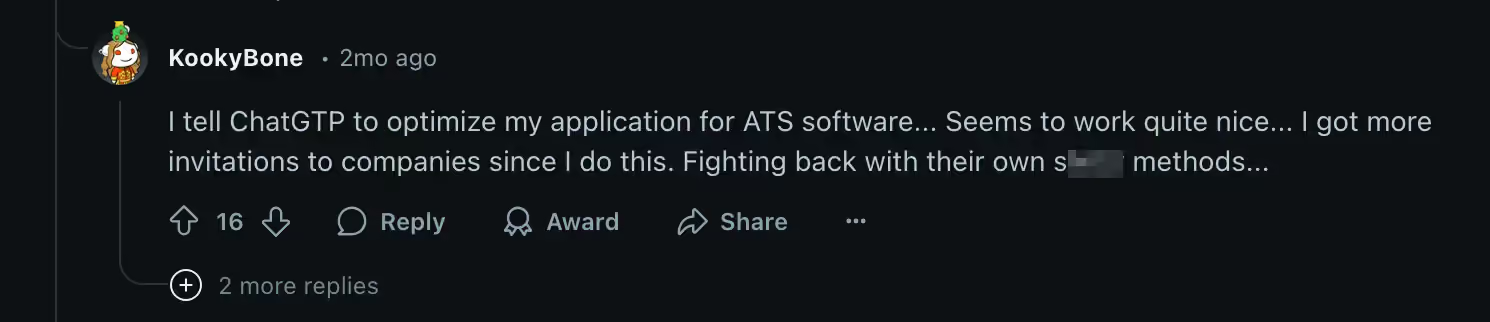
Alternatively, a top candidate who knows a company uses AI may feel they need to submit an optimized CV to progress rather than show off their unique character and skillset. This means the employer still can’t accurately assess their potential.
5. A Lack of Human Nuance Creates Poor Candidate Experiences
AI screening tools lack the human ability to assess context and nuance in resumes. They can’t recognize unique experiences or traits that don’t fit neatly into predefined criteria, such as:
- Career changes that justify limited work experience
- Unconventional skillsets that may aid performance
- Unpaid work that demonstrates leadership and adaptability
We’ve already discussed how this rigidity causes false positives and negatives, but it also hinders candidate experiences. Applicants may feel undervalued or frustrated when an automated system overlooks their qualifications (both formal and informal), especially if they don’t receive human feedback.
This frustrated Redditor rightly points out that companies are “missing out on a wealth of amazing candidates” and “distancing themselves [...] from human connection.”
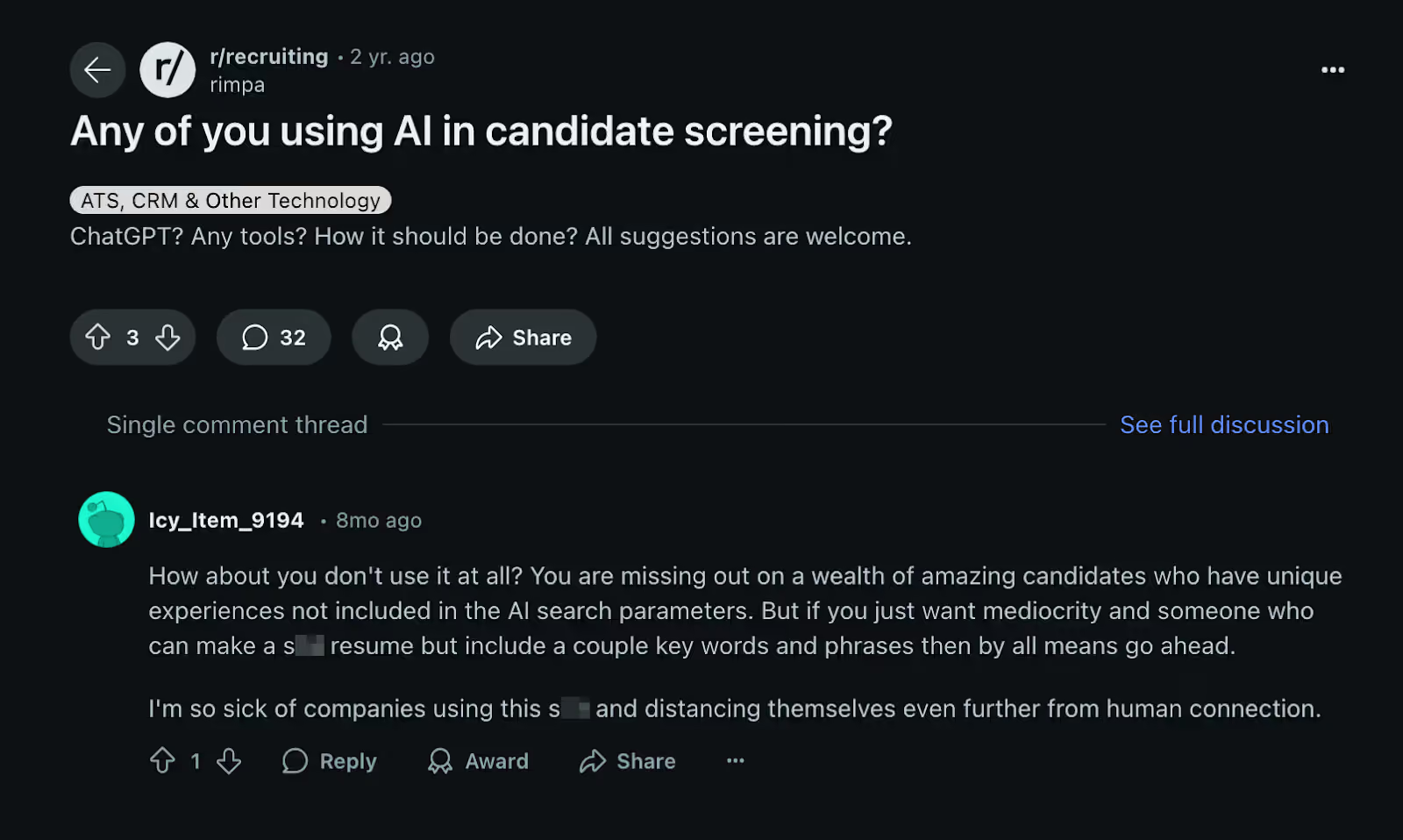
Over time, repeatedly frustrating applicants can damage a company’s employer brand, making it even more challenging to attract top talent.
Research shows that only 26% of candidates believe that AI will evaluate them fairly. Meanwhile, 25% said they trust employers less if they use AI to evaluate candidates’ information.
There’s a Better Way to Use AI for Talent Acquisition
The biggest issue with AI resume screening is that it can’t accurately predict candidates’ on-the-job performance. Fortunately, it’s only the “resume” aspect of the solution that causes problems. AI can still be a powerful tool for streamlining recruitment processes.
Companies can instead embed AI soft skills assessments high in their hiring funnel to support data-driven hiring decisions and see more accurately how applicants are likely to perform in specific roles. The AI analyzes candidates’ responses to real-world challenges for fluency, relevance, and tone, then generates objective scores to aid shortlisting.
For example, Fundraising Direct uses this AI-led approach to save time and increase quality of hire, as Operations Manager Sarah Wise explains:
“We’re using [AI skills assessments] to assess people so we don’t have to interview them. If they score above a certain percentage, they get put straight through.
“I used to batch candidates into group interviews to save time. Today I have the gift of time, and I am more confident than ever in our hires.”
Here’s what this kind of AI-driven pre-hiring assessment could look like:
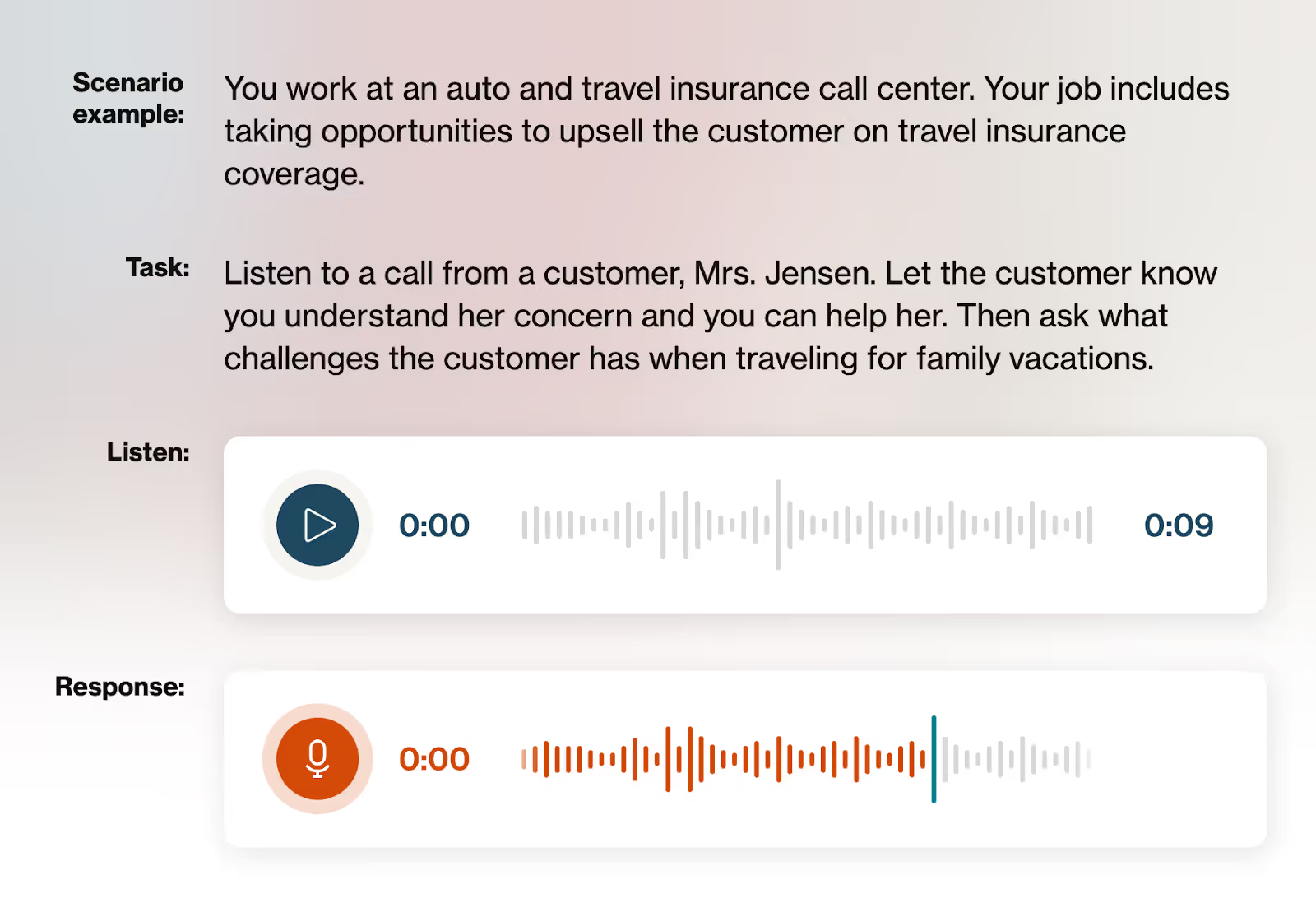
In addition to speaking fluency, the assessment tool’s AI analyzes candidates’ responses for signs of relationship-building, negotiation, and active listening skills. It then ranks applicants based on how well they demonstrated these core abilities, giving the company an accurate shortlist.
The shortlist contains people from various backgrounds with a broad range of qualifications, but the assessment has ensured what matters: they’re all capable of doing the job well. It means the hiring team can focus on the most qualified candidates, which speeds up their work. It also supports growth by handling large talent pools without compromising quality or fairness.
This approach is helping companies get real results. For instance, one Fortune 50 online retailer that used HiringBranch’s soft skills assessments to standardize its pre-hire screening processes reduced bad hires by 58% and achieved a 300% return on its AI investment.
Realizing AI’s Full Potential in Recruitment
Despite offering some benefits, AI screening tools are frequently let down by their dependence on an unreliable source of candidate information: resumes.
For a more accurate and fruitful recruitment process, consider pivoting to AI skills assessments. These tools measure real-world competencies, provide actionable insights, and lead to better hiring outcomes.
Ultimately, the future of recruitment lies in harnessing AI to enhance, not replace, the human element of hiring. Recruiters who do so can build stronger, more diverse teams while improving the candidate experience. Everybody wins!
Image Credits
Feature Image: Pexels/Markus Winkler
Image 1: Via Peoplebox
Image 2: Via Reddit
Image 3: Via Reddit
Image 4: Property of HiringBranch. Not to be reproduced without permission.
AI Resume Screening FAQs
AI screening relies on self-reported information, which may be incomplete, exaggerated, or misleading. The technology also struggles to interpret context on resumes. This can result in qualified candidates being overlooked or unqualified ones being shortlisted.
Recruiters use AI to support a wide range of tasks across the hiring process, starting with candidate sourcing and outreach. AI agents help identify potential candidates and personalize outreach. Some teams use AI assistants and sophisticated chatbots to manage the early stages of candidate engagement at scale.
As applicants move through the funnel, AI-powered interview scheduling tools automate in-person and video interview coordination. Meanwhile, some companies use AI interview platforms and conversational AI as part of the evaluation process.
While there are many tools available, hiring teams should be aware of the pitfalls of AI for recruiting and follow best practices for choosing and using the technology.
AI can support hiring more effectively by evaluating how candidates perform in job-relevant tasks rather than relying on resume content alone. The best AI-based hiring tools assess real performance through skills-based evaluations. This approach helps recruiting teams shortlist candidates based on their genuine ability, not just their self-reported experience.
![Understanding AI Bias at HiringBranch [Interview with Chief Research and Development Officer]](https://cdn.prod.website-files.com/674e2d80964f6d3e26a44653/69b7efff53d387870b592c78_6827a10e05ee0565d659a08e_brian-suman-dZDkJ9T_u98-unsplash.avif)

.avif)


.svg)