
BLOG ARTICLE

Talent Assessments: A Strategic Guide to Choosing the Right Candidates

Talent Assessments: A Strategic Guide to Choosing the Right Candidates
Published by
Chandal Nolasco da Silva
February 9, 2026
SUMMARY
Learn how talent assessments support faster, fairer hiring at scale, including how to choose the right assessment types for high-volume roles.
Table of Contents

    Talent assessments help employers predict job performance by revealing how candidates think, work, and respond to real situations they’ll face in the role.

    When hiring at scale, that clarity provides real value, preventing mishires, early attrition, and unnecessary strain on training and frontline teams.

    In this guide, you’ll learn how talent assessments support better hiring decisions in high-volume environments. You’ll also discover how to choose the right assessment tools and use them as part of a modern, scalable talent strategy.

    What Are Talent Assessments?

    Talent assessments are tools that help human resources teams evaluate candidates in a structured and consistent way. They allow hiring teams to evaluate how prospective employees will react to challenges they’re likely to face on the job. 

    Many traditional early assessment methods, like resumes and unstructured interviews, rely on self-reported information. They also leave plenty of room for personal interpretation. Pre-hire assessments bring structure to this part of the hiring process. Every candidate completes the same evaluation under the same conditions, promoting fairness. This approach also helps recruiters make consistent comparisons between candidates. 

    In high-volume recruitment, this consistency is especially important. Small differences in how teams evaluate candidates can quickly affect hiring outcomes at scale.

    What Talent Assessments Measure 

    Depending on the job, talent assessments measure different candidate characteristics. Some focus on their technical skills or soft skills. Others measure their decision-making, critical thinking, or specific competencies tied to the role.

    Some assessments evaluate behavior through tasks that reflect the role itself. When candidates complete realistic exercises, hiring teams can see how they approach the kind of work the job involves. For example, in retail hiring, teams may assess candidates’ customer service skills using realistic scenarios.

    Assessments don’t replace human judgment or company context. They support decision-making, especially when teams review large numbers of candidates at once. For this reason, assessments tend to work best when they focus on observable, job-related behavior that teams can evaluate in a consistent way.

    Where Do Talent Assessments Fit in Volume Hiring Funnels?

    In volume hiring, teams often see the strongest results when they use assessments at the start of the recruitment process.

    When candidates complete an assessment soon after applying, hiring teams get useful information before interviews begin. Recruiters can focus on candidates who’ve already shown they could do well in the role. Teams can screen out others earlier, before interviews take place.

    For frontline and hourly roles, assessments often act as the first real evaluation step. Candidates complete a short, role-based exercise early on in the recruitment process. Hiring teams then decide who should move further forward based on those results. 

    This approach helps keep interview volume under control as applications increase.

    Recruiters can also streamline the hiring workflow by connecting assessments to an ATS (applicant tracking system). In the example below, the hiring team uses a proprietary API to create this connection and streamline its processes.
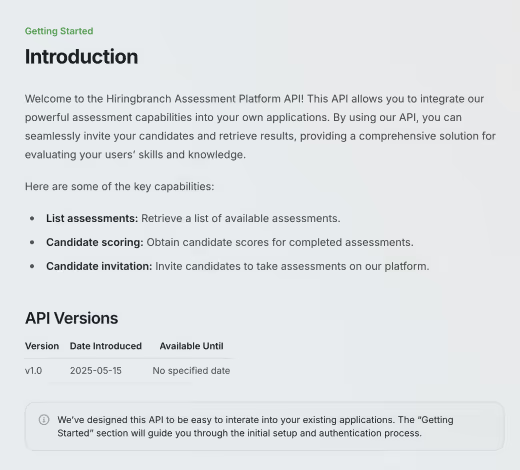
    HiringBranch talent assessment API information


    The connection gives recruiters and hiring managers clear, easy access to assessment results. This visibility is especially important when you’re reviewing large numbers of candidates at speed.

    5 Benefits of Talent Assessments for High-Volume Hiring

    In high-volume hiring, talent assessments help teams manage scale without losing clarity or control. Here are the main ways talent assessments support quality hiring at scale.

    1. Improving the Quality of Hire in High-Volume Scenarios 

    Talent assessments help teams hire the right people more consistently. When reviewing large numbers of applications, it’s hard to evaluate everyone in the same way. 

    Resumes vary widely in format and detail, making them difficult to compare at scale. Meanwhile, resume screening software is quite limited, as it reads only keywords. By contrast, talent assessments give teams a clearer basis for comparison.

    Talent assessments show how candidates actually perform, with skills assessments, work samples, and simulations all demonstrating how people handle job-related tasks. This way, recruiters identify top talent and high-performing individuals, no matter how many candidates are in the mix. 

    Case study: When JustPressOne started using assessments in HiringBranch, the talent team saw benefits that went far beyond hiring outcomes. Employees who scored higher on the HiringBranch assessment consistently earned better quality assurance ratings. Meanwhile, the JustPressOne team discovered that lower assessment scores predicted higher absenteeism. 

    As a result, the talent team now has a reliable way of anticipating performance outcomes and attendance patterns — before hiring.

    2. Reducing Early Turnover and Downstream Attrition

    Job-relevant assessments help candidates see what the work actually involves before they’re hired. When candidates accept roles they don’t fully understand, early turnover is hard to avoid. 

    In high-volume roles, downstream attrition is fairly common. New starters need to get up to speed quickly, but job expectations aren’t always clear at the start.

    By completing realistic tasks during hiring assessments, candidates get a clearer sense of day-to-day responsibilities and pace. This alignment supports stronger employee retention and engagement, especially in the first few months after hire.

    3. Avoiding Bias and Legal Risk Across Large Applicant Pools

    When high-volume hiring evaluations vary by recruiter, location, or shift, it becomes harder to prove that candidates were assessed fairly. Talent assessments reduce that risk by grounding decisions in clear, job-related criteria.

    Clear assessment results also make it easier to explain decisions. When questions come up, hiring managers can point to job-relevant evidence. This “explainability” supports objectivity, stronger compliance, and confidence across the hiring process.

    4. Minimizing Recruiter Workload and Bottlenecks

    Talent assessments change how recruiters spend their time. Instead of scanning large numbers of applications, recruiters work with a smaller group of candidates who’ve already shown they can handle the role. This efficiency prevents them from getting pulled into repetitive review work rather than into conversations that move potential hires forward.

    As a result, teams stay responsive during hiring spikes. Recruiters can optimize how they spend their time without rushing decisions or adding headcount.

    5. Improving the Candidate Experience at Scale

    When the hiring experience shows exactly what’s expected from a job, candidates stay engaged and move through the entire process with confidence. Well-designed assessments give applicants a purposeful step early on. Job-relevant tasks or scenarios show what the work actually involves, helping prospects form realistic expectations about the role and the company culture.

    When the hiring process feels clear and intentional, candidates are more likely to develop a positive impression of the company. In this way, talent assessments can also support your employer brand over time. 

    Types of Talent Assessments and When to Use Them

    In reality, there’s no single type of talent assessment that works for every role or hiring situation. 

    Different assessments answer different questions and ask different things of candidates and hiring teams. In high-volume hiring, the goal is to choose assessment types that fit the role, the pace of hiring, and the kind of decisions teams need to make. 

    Below outlines common assessment types and the hiring scenarios they tend to support best.

    Type of talent assessment: Cognitive ability tests

    When to use it:

    • Useful for behavioural assessment that is helpful for professional development signals. 
    • Useful for teams that have dedicated specialists to deliver tests and interpret results fairly.
    • Many types are available, such as numerical reasoning or error checking; however, these should not be used to predict accurate job-related performance.

    Type of talent assessment: Skills assessments and work samples

    When to use it:

    • Useful when observable job performance and other relevant skills should be demonstrated. 
    • Useful for high-volume teams that need to replace resume-based screening with demonstrated ability.
    • Useful for recruiters who want to identify the best candidates early in the process.
    • Best paired with roles that have clearly defined tasks that candidates can undertake independently.

    Type of talent assessment: Personality assessments and tests

    When to use it:

    • Useful for asking questions about personality traits with subjective answers.
    • Often used to assess likeability, rather than capability.
    • Is not linked to performance on the job, and is best used for professional development purposes.

    Type of talent assessment: Simulations and job-relevant scenarios 

    When to use it:

    • Useful for roles involving real-time decision-making or customer interaction.
    • Helpful if the candidate experience at scale is a priority.
    • Can show hiring teams real examples of a candidate’s work style.
    • Useful for standardized, global hiring across locations or hiring cycles.

    The impact of your chosen talent assessment depends on how closely it aligns with the real work of the role. 

    For example, in job-relevant simulations and scenarios, candidates respond to realistic prompts, and teams can compare results using shared criteria. For example, the tailored HiringBranch assessment below invites candidates to respond to a specific customer service scenario:
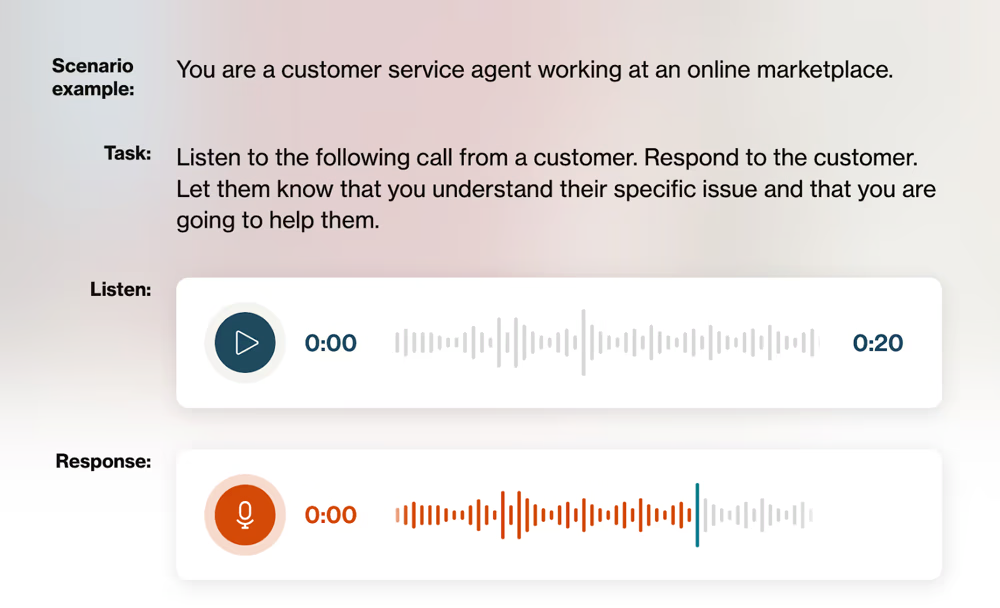
    HiringBranch talent assessment from the candidate view


    Teams often find it simplest to anchor early screening in realistic job scenarios. This approach keeps the hiring process focused, supports fairness, and helps candidates understand what the role actually involves from the start.

    How to Choose the Right Talent Assessment Tool or Vendor: The SCALE Framework

    The “SCALE” framework helps hiring teams evaluate assessment solutions for high-volume hiring. It focuses on how assessments perform when many candidates complete them. 

    Each dimension highlights what to look for as application numbers grow and decisions need to stay clear, fair, and easy to apply. You can use the framework to compare any assessment tool and assess whether it’s a good fit for hiring at scale.
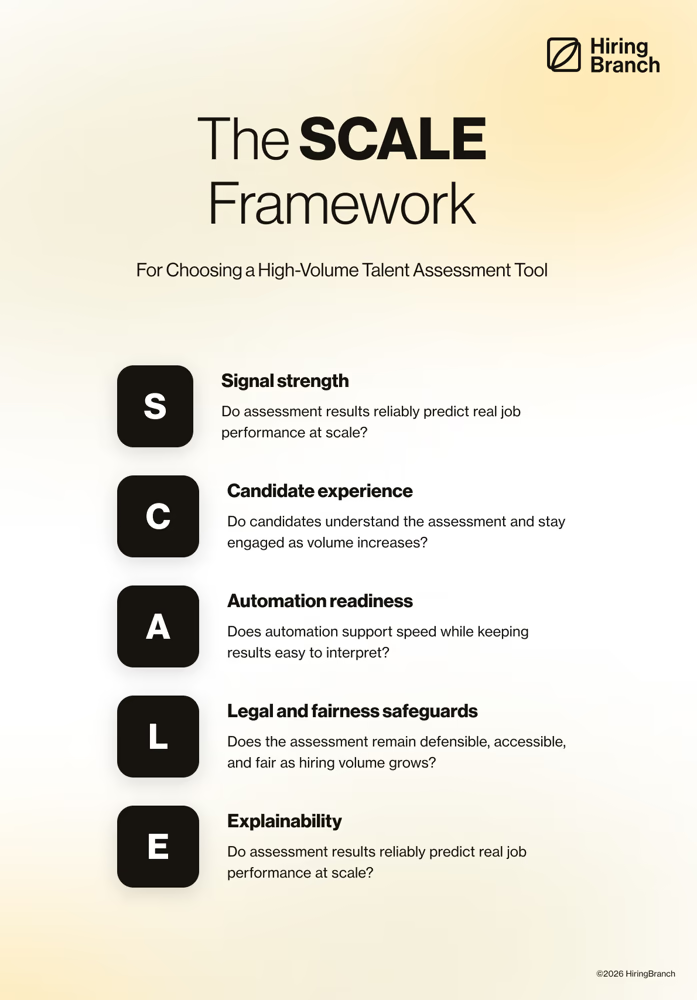
    Talent Assessment Tool Selection Framework

    S: Signal Strength 

    Signal strength looks at whether assessment results reliably reflect real job performance across large applicant pools. 

    While some tools appear effective in small hiring rounds, their results can become inconsistent as recruitment volume increases. Scores may fluctuate across cohorts, locations, or hiring cycles. This variance makes it harder to trust assessment outcomes. 

    At scale, the core challenge is whether a tool produces a stable and meaningful signal across many candidates. Assessments that reflect real job tasks are more likely to maintain that signal because they measure the same underlying capabilities regardless of when or where candidates apply.

    Here’s how to consider signal strength when evaluating talent assessment tools:
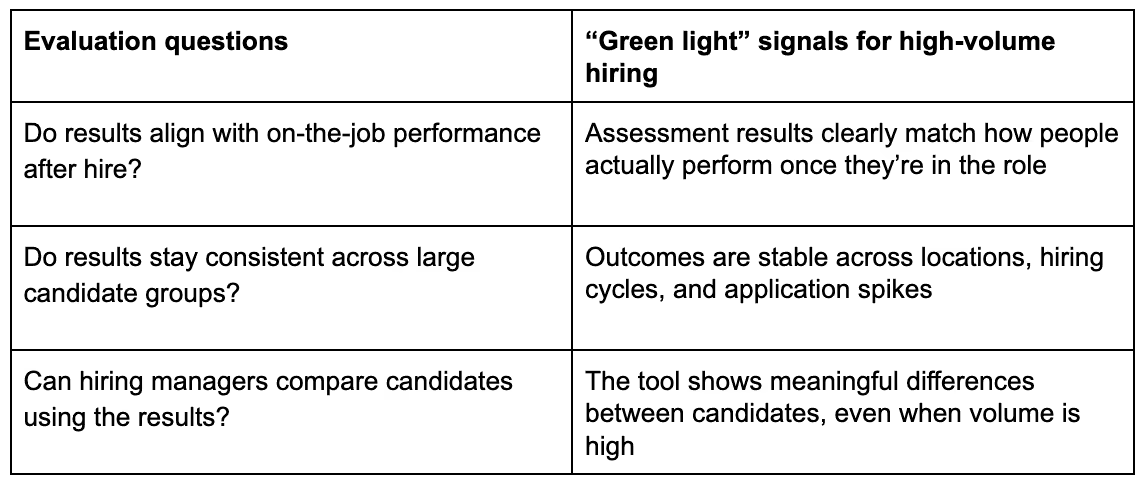
    Talent assessment signal strength

    When assessment results remain clear and reliable as volume increases, hiring teams can make confident decisions without second-guessing the data.

    C: Candidate Experience

    Candidate experience focuses on how smoothly and clearly candidates move through an assessment during high-volume hiring. 

    In this scenario, even small points of confusion can quickly compound into frustration, drop-off, or negative perceptions of the employer. As application volume increases, those individual moments start to affect time-to-hire and recruiter capacity. 

    Assessments that reflect the role and respect candidates’ time help teams keep more applicants moving forward, even when hiring at scale.

    Here’s how to consider candidate experience when evaluating talent assessment tools:
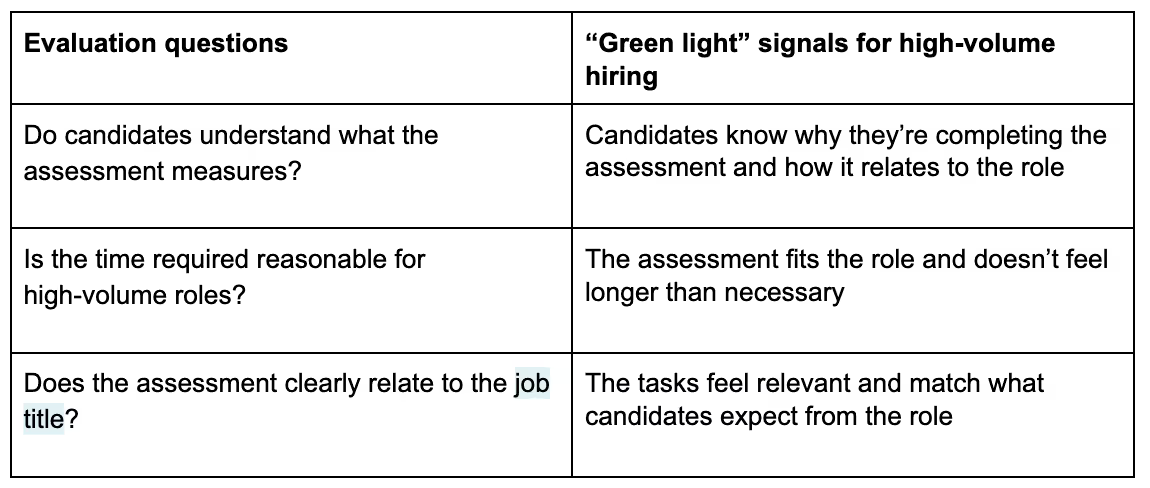
    Talent assessment candidate experience

    When candidates understand what they’re being asked to do and why, they’re more likely to complete the assessment and stay the course.

    A: Automation Readiness

    Automation readiness assesses whether automation speeds up hiring while keeping results clear and usable.

    High-volume hiring relies on automation to handle large numbers of candidates quickly and efficiently. However, that speed only helps if the results are easy for recruiters to interpret and act on. 

    Strong assessment tools combine automated scoring and processing with clear, practical outputs that recruiters can understand at a glance.

    Here’s how to consider automation readiness when evaluating talent assessment tools:
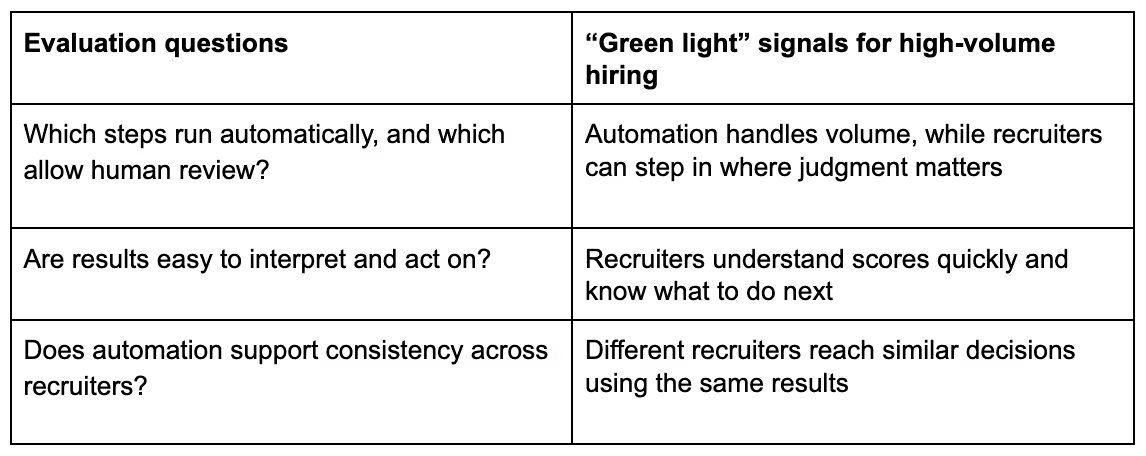
    Talent assessments automation readiness

    When automation delivers the right balance of speed and clarity, teams can keep hiring moving as applicant volumes grow.

    L: Legal and Fairness Safeguards

    Legal and fairness safeguards focus on whether an assessment can withstand scrutiny as more candidates move through the process.

    Small gaps in validation or consistency can quickly turn into larger legal or compliance risks if teams don’t address them early. Tools closely aligned with the role make it easier to validate scoring, explain hiring decisions, and maintain fairness standards over time.

    Here’s how to consider legal and fairness safeguards when evaluating talent assessment tools:
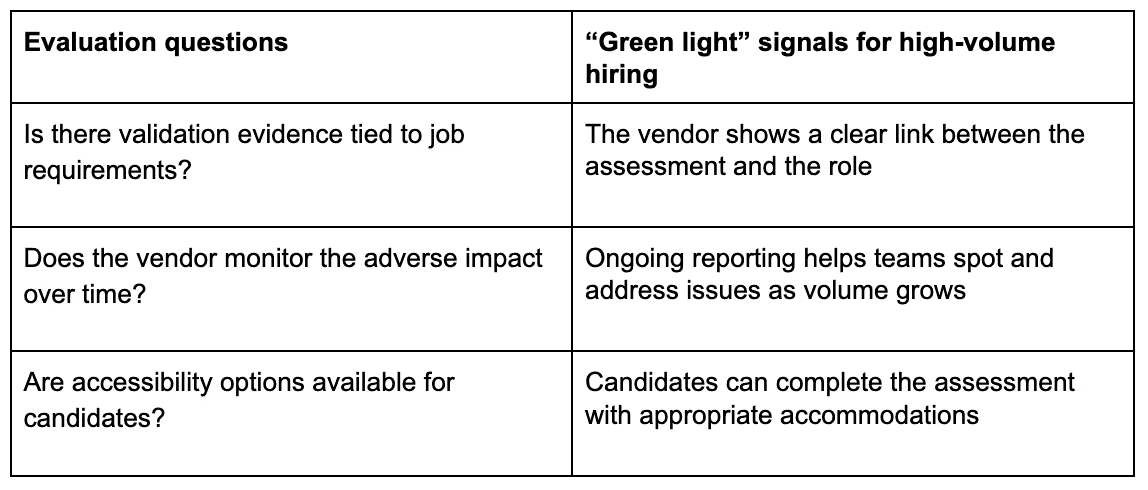
    Talent assessment legal and fairness safeguards

    These safeguards help teams use assessments consistently and document their decision logic. Employers can also respond confidently to audits, challenges, or regulatory review as application volume grows.

    E: Explainability

    Explainability measures how easy it is to understand and communicate assessment results. 

    In high-volume scenarios, unclear or abstract scores slow teams down and make decisions harder to justify, especially when hiring managers need to move quickly. Assessments that link results directly to job-related tasks solve this problem by making outcomes easier to interpret, discuss, and explain.

    Here’s how to consider explainability when evaluating talent assessment tools:
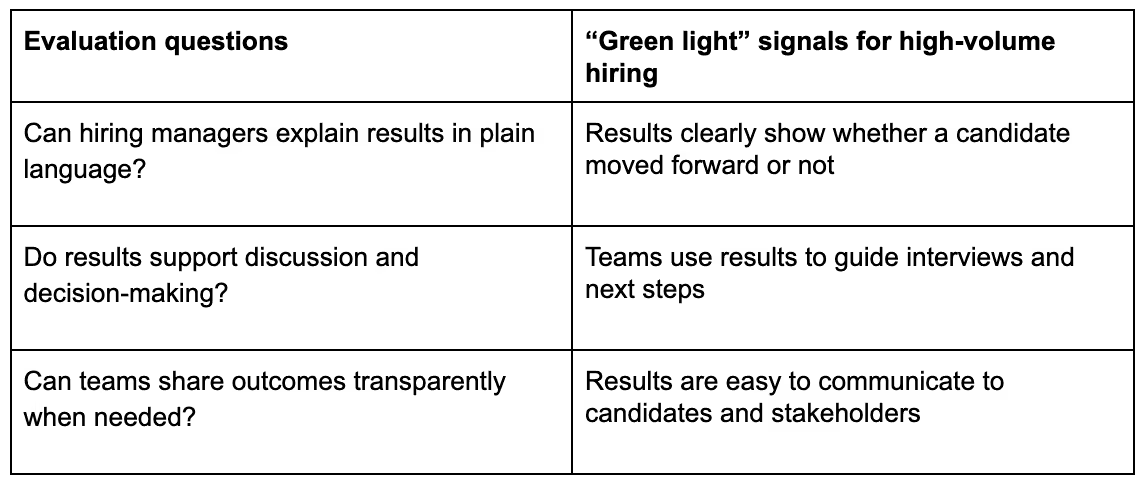
    Talent assessment explainability

    Clearly outlined results give hiring teams a shared language for discussing outcomes. Explainability also makes it easier to communicate decisions to candidates.

    Ultimately, the SCALE framework helps hiring teams identify the right assessment tools for their high-volume employment needs.

    How to Use Talent Assessments Within Your Talent Management Strategy

    Talent assessments give teams job-relevant information they can use to guide decisions across the entire employee lifecycle. Assessment data can support a modern talent strategy in all of the following areas.

    Hiring and Talent Acquisition

    Assessments help teams consistently evaluate candidates’ skills when application numbers are high. This makes it easier for hiring managers to spot top talent across roles and locations.

    Assessment results also support resume screening by giving teams another data point to compare candidates fairly. This approach helps teams:

    • Move candidates through the process faster without adding recruiter workload
    • Compare candidates using the same criteria across roles and locations
    • Match people to roles based on real job demands

    Early insights shape how teams make decisions throughout the hiring process.

    Employee Onboarding

    Assessment results give managers a clearer starting point once someone is hired. They show early strengths and highlight areas where new hires may need support.

    At scale, this helps teams:

    • Shorten ramp-up time for frontline and hourly roles
    • Keep onboarding expectations consistent across locations
    • Start early coaching conversations with more clarity

    For managers, assessment insights eliminate the guesswork from setting new hires up for a strong start.

    Employee Development

    Teams can also use assessment data to support development plans and identify development opportunities across groups.

    Managers use the same insights to guide upskilling and performance improvement activities for employees. Over time, this creates a shared reference point for development conversations.

    This approach supports:

    • Focused training investments that address genuine skills gaps
    • Ongoing feedback tied to real job skills
    • Development planning that works across teams and locations

    Using the same criteria helps teams compare needs and progress more easily.

    Succession Planning

    Talent assessments help teams identify high-potential employees who may be ready to grow into more senior roles.

    Assessment insights guide teams to:

    • Identify and compare the company’s top performers
    • Spot future leaders among current employees
    • Support internal mobility with clear evidence

    Using job-relevant criteria helps reduce bias and removes over-reliance on tenure or reputation.

    The Business Impact of Assessment Insights Over Time

    Assessment insights don’t lose value after hiring. Teams can use the same information to support decisions over time.

    Managers can use early results to set expectations. Or guide development and assess readiness for more responsibility. This approach reduces repeated evaluation work and supports clearer hiring decisions as applications increase. Assessment tools designed for high-volume environments make this kind of long-term use easier and more reliable.

    Build a Hiring Approach That Holds Up at Scale

    Talent assessments work best when they reflect real work and continue to deliver clear, reliable signals as hiring volume grows. Assessments grounded in real tasks help teams make decisions they can trust, even when application numbers increase.

    That same clarity improves the candidate experience. When people understand what the role involves and how the assessment connects to the job, they move through the recruitment process with greater engagement.

    For teams hiring at scale, effective assessment tools enable clearer hiring decisions and a smoother candidate journey. Learn how the right assessment tests can drive stronger outcomes across recruitment and the entire employee lifecycle. 

    Talent Assessments FAQs

    What is the best talent assessment for high-volume hiring?

    There’s no single best option for every role. The right assessment depends on what the job actually requires.

    For many high-volume roles, simulations, work samples, and skills assessments work well. They reflect real job tasks and help teams see how candidates are likely to perform once hired.


    Can talent assessments replace resumes entirely?

    Some teams rely less on resumes than they used to. They use assessments to gather basic information and understand fit earlier in the process.

    Most teams still use resumes in some form. In practice, assessments usually support resume review by adding clearer, job-related insight.


    What industries and roles work best for talent assessments?

    Talent assessments work well in roles with clear responsibilities and repeatable tasks. They’re especially helpful when teams need to hire at scale.

    As a result, talent assessments often support recruitment in retail, hospitality, logistics, healthcare, and customer support.


    Does HiringBranch have a talent assessment tool?

    HiringBranch assessments are built for high-volume hiring, supporting teams that need fair, consistent decisions at scale. Instead of abstract measures, HiringBranch uses simulations and work samples that reflect real tasks.As a result, teams evaluate candidates based on how they’re likely to perform on the job, not how well they write resumes or answer generic questions. Hiring managers see structured results that are easy to compare across large applicant pools. Scores tie back to specific job behaviors, so teams can explain decisions and move candidates forward with confidence.

    When candidates understand the work before they’re hired, they join with more realistic expectations and a stronger sense of fit. That foundation supports stronger engagement once successful applicants join the company. For more information about HiringBranch talent assessments, please reach out to our team.

    Image Credits

    Feature Image: Via Unsplash / Anton Ryazanov

    Image 1, 2, 3: Property of HiringBranch. Not to be reproduced without permission 

    Read More Blogs
    View all
    Read report
    Artificial Intelligence
    Talent Acquisition

    Can AI Pass Your Interview?

    Read report
    Artificial Intelligence
    Best Practices

    The Quick C-Suite Guide to Responsible AI Leadership

    Read report
    Read report
    Read report
    Best Practices
    High-Volume Recruitment

    What Hiring and Recruiting Strategies Look Like in 2026

    Read report
    Read report
    Read report
    Read report
    Read report
    Read report
    Read report
    Read report
    Read report
    Read report
    Contact Center
    Customer Service
    Soft Skills

    The Ultimate Guide to Call Center Soft Skills

    Read report
    Read report
    Contact Center
    Digital Transformation

    A Simple Guide to Customer Contact Center Software

    Read report
    Read report
    High-Volume Recruitment
    Digital Transformation

    Resume Screening Software Is Holding Recruiters Back

    Read report
    Contact Center
    Customer Service

    16 Best Call Center Tips for Customer Services

    Read report
    Read report
    Read report
    Read report
    Artificial Intelligence
    High-Volume Recruitment

    Create Your Volume Hiring Strategy with AI

    Read report
    Artificial Intelligence
    Soft Skills

    Building the World’s First Soft Skills AI

    Read report
    Read report
    Read report
    Read report
    Best Practices
    High-Volume Recruitment
    Contact Center

    The Retail Contact Center Hiring Success Guide [+ Bonus Cheat Sheet]

    Read report
    Read report
    Read report
    High-Volume Recruitment
    Talent Acquisition
    Assessments

    Why One-Way Interviews Are Dividing Recruiters and Candidates

    Read report
    Best Practices
    Soft Skills

    Santa’s Top Soft Skills Revealed

    Read report
    Read report
    News
    Digital Transformation
    Soft Skills

    Human Skills Have Never Been More Important

    Read report
    Read report
    Read report
    Read report
    Read report
    Read report
    High-Volume Recruitment
    Contact Center
    Best Practices

    Getting Through the Contact Center’s High-Volume Season with Ease

    Read report
    Contact Center
    Customer Service

    Cures for the Most Common Call Center Problems

    Read report
    Read report
    Digital Transformation
    Assessments
    Soft Skills

    5 Tech Companies Bringing Skills-Based Hiring to Life

    Read report
    Read report
    Read report
    Read report
    Read report
    Read report
    Read report
    Contact Center
    High-Volume Recruitment

    Addressing Call Center Turnover Rate

    Read report
    Contact Center
    High-Volume Recruitment
    Best Practices

    Average Attrition Rates in High-Volume Roles and How To Improve Them

    Read report
    Read report
    Read report
    Read report
    Read report
    Talent Acquisition
    Artificial Intelligence

    6 Quick-Read Stats About AI and Talent Acquisition

    Read report
    Assessments
    Talent Acquisition

    Candidates Speak Up About Assessments

    Read report
    Artificial Intelligence
    Digital Transformation

    Adding AI to Your HR Tech Stack: Build, Buy or Partner?

    Read report
    Talent Acquisition
    Best Practices

    Quality of Hire: Everything You Need to Know

    Read report
    Read report
    Events
    High-Volume Recruitment
    Artificial Intelligence

    Top 7 Moments in Our Summer Podcast Tour

    Read report
    Talent Acquisition
    High-Volume Recruitment

    The History of Interviews According to Kevin Wheeler

    Read report
    Read report
    Read report
    Assessments
    High-Volume Recruitment

    Proving That Multiple Choice Assessments Suck

    Read report
    Read report
    Assessments
    Soft Skills
    High-Volume Recruitment

    Employment Assessment Testing: A Comprehensive Guide

    Read report
    Artificial Intelligence
    High-Volume Recruitment
    Digital Transformation

    How is Artificial Intelligence Changing the Recruiting Process?

    Read report
    Read report
    High-Volume Recruitment
    Assessments
    Digital Transformation

    The No-Interview Hiring Model is Changing Talent Acquisition Forever

    Read report
    Read report
    Read report
    Artificial Intelligence
    Contact Center
    Customer Service
    Digital Transformation

    Do Your Call Center Agents Accurately Represent Your Brand Personality?

    Read report
    Assessments
    High-Volume Recruitment

    The Essential Guide To Pre-Hiring Assessments

    Read report
    Assessments
    Customer Service
    Digital Transformation
    High-Volume Recruitment

    How To Hire For Great Communication Skills Without Interviewing?

    Read report
    Artificial Intelligence
    Contact Center
    Customer Service
    Digital Transformation

    Are Bots The Key To Providing Outstanding Customer Support?

    Read report
    Assessments
    Contact Center
    High-Volume Recruitment

    Finding Candidates in the Digital Age with New Hire Assessments

    Read report
    Read report
    Read report
    Contact Center
    Digital Transformation
    High-Volume Recruitment

    How Do Virtual Contract Recruiters Help Companies Hire Fast And Accurately?

    Read report
    Contact Center
    Customer Service
    High-Volume Recruitment

    A Guide To Hiring And Managing Frontline Employees

    Read report
    Artificial Intelligence
    Contact Center
    Digital Transformation
    High-Volume Recruitment

    How To Scale Recruitment With A Virtual Recruiter: Accurate, Quick, and Performance-Based

    Read report
    Read report
    Read report
    Contact Center
    Customer Service
    High-Volume Recruitment
    Sales

    How To Guide: 3 Essential Steps For Hiring A Quality Frontline Employee

    Read report
    Artificial Intelligence
    Contact Center
    High-Volume Recruitment

    5 Ideas To Transform Your Contact Center

    Read report
    Read report
    Read report
    Contact Center
    Customer Service
    High-Volume Recruitment

    How To Hire Top Talent Remotely?

    Read report
    Read report
    Contact Center
    Customer Service
    High-Volume Recruitment

    How To Tackle 7 Common Contact Center Issues

    Read report
    Read report
    Contact Center
    Customer Service
    Digital Transformation
    High-Volume Recruitment

    Top 5 Things You Need to Know About Customer Support

    Read report
    Read report
    Read report
    Read report
    Artificial Intelligence
    Digital Transformation
    High-Volume Recruitment

    Case Study - The advantages of using AI for assessing voice and chat candidates

    Read report
    Read report

    Does your assessment guarantee a performance improvement?

    We do. Gone are the days of guessing skills in an interview. Rely on technology to do it for you with 98% accuracy and boost your hire quality, guaranteed.

    Some of our happy customers
    Infosys logoBell logoFortune 500 logocarelon logoFundraising Direct
    Talent Acquisition
    Assessments

    Talent Assessments: A Strategic Guide to Choosing the Right Candidates

    Chandal Nolasco da Silva
    Chandal Nolasco da Silva
    February 11, 2026
    In This Article
    Chandal Nolasco da Silva
    Chandal Nolasco da Silva
    February 11, 2026
    summary

    Learn how talent assessments support faster, fairer hiring at scale, including how to choose the right assessment types for high-volume roles.

    Subscribe to our Newsletter

    Like what you're reading? Leave us your email, and we'll deliver to your inbox on the last Thursday of the month.

    Talent assessments help employers predict job performance by revealing how candidates think, work, and respond to real situations they’ll face in the role.

    When hiring at scale, that clarity provides real value, preventing mishires, early attrition, and unnecessary strain on training and frontline teams.

    In this guide, you’ll learn how talent assessments support better hiring decisions in high-volume environments. You’ll also discover how to choose the right assessment tools and use them as part of a modern, scalable talent strategy.

    What Are Talent Assessments?

    Talent assessments are tools that help human resources teams evaluate candidates in a structured and consistent way. They allow hiring teams to evaluate how prospective employees will react to challenges they’re likely to face on the job. 

    Many traditional early assessment methods, like resumes and unstructured interviews, rely on self-reported information. They also leave plenty of room for personal interpretation. Pre-hire assessments bring structure to this part of the hiring process. Every candidate completes the same evaluation under the same conditions, promoting fairness. This approach also helps recruiters make consistent comparisons between candidates. 

    In high-volume recruitment, this consistency is especially important. Small differences in how teams evaluate candidates can quickly affect hiring outcomes at scale.

    What Talent Assessments Measure 

    Depending on the job, talent assessments measure different candidate characteristics. Some focus on their technical skills or soft skills. Others measure their decision-making, critical thinking, or specific competencies tied to the role.

    Some assessments evaluate behavior through tasks that reflect the role itself. When candidates complete realistic exercises, hiring teams can see how they approach the kind of work the job involves. For example, in retail hiring, teams may assess candidates’ customer service skills using realistic scenarios.

    Assessments don’t replace human judgment or company context. They support decision-making, especially when teams review large numbers of candidates at once. For this reason, assessments tend to work best when they focus on observable, job-related behavior that teams can evaluate in a consistent way.

    Where Do Talent Assessments Fit in Volume Hiring Funnels?

    In volume hiring, teams often see the strongest results when they use assessments at the start of the recruitment process.

    When candidates complete an assessment soon after applying, hiring teams get useful information before interviews begin. Recruiters can focus on candidates who’ve already shown they could do well in the role. Teams can screen out others earlier, before interviews take place.

    For frontline and hourly roles, assessments often act as the first real evaluation step. Candidates complete a short, role-based exercise early on in the recruitment process. Hiring teams then decide who should move further forward based on those results. 

    This approach helps keep interview volume under control as applications increase.

    Recruiters can also streamline the hiring workflow by connecting assessments to an ATS (applicant tracking system). In the example below, the hiring team uses a proprietary API to create this connection and streamline its processes.

    HiringBranch talent assessment API information


    The connection gives recruiters and hiring managers clear, easy access to assessment results. This visibility is especially important when you’re reviewing large numbers of candidates at speed.

    5 Benefits of Talent Assessments for High-Volume Hiring

    In high-volume hiring, talent assessments help teams manage scale without losing clarity or control. Here are the main ways talent assessments support quality hiring at scale.

    1. Improving the Quality of Hire in High-Volume Scenarios 

    Talent assessments help teams hire the right people more consistently. When reviewing large numbers of applications, it’s hard to evaluate everyone in the same way. 

    Resumes vary widely in format and detail, making them difficult to compare at scale. Meanwhile, resume screening software is quite limited, as it reads only keywords. By contrast, talent assessments give teams a clearer basis for comparison.

    Talent assessments show how candidates actually perform, with skills assessments, work samples, and simulations all demonstrating how people handle job-related tasks. This way, recruiters identify top talent and high-performing individuals, no matter how many candidates are in the mix. 

    Case study: When JustPressOne started using assessments in HiringBranch, the talent team saw benefits that went far beyond hiring outcomes. Employees who scored higher on the HiringBranch assessment consistently earned better quality assurance ratings. Meanwhile, the JustPressOne team discovered that lower assessment scores predicted higher absenteeism. 

    As a result, the talent team now has a reliable way of anticipating performance outcomes and attendance patterns — before hiring.

    2. Reducing Early Turnover and Downstream Attrition

    Job-relevant assessments help candidates see what the work actually involves before they’re hired. When candidates accept roles they don’t fully understand, early turnover is hard to avoid. 

    In high-volume roles, downstream attrition is fairly common. New starters need to get up to speed quickly, but job expectations aren’t always clear at the start.

    By completing realistic tasks during hiring assessments, candidates get a clearer sense of day-to-day responsibilities and pace. This alignment supports stronger employee retention and engagement, especially in the first few months after hire.

    3. Avoiding Bias and Legal Risk Across Large Applicant Pools

    When high-volume hiring evaluations vary by recruiter, location, or shift, it becomes harder to prove that candidates were assessed fairly. Talent assessments reduce that risk by grounding decisions in clear, job-related criteria.

    Clear assessment results also make it easier to explain decisions. When questions come up, hiring managers can point to job-relevant evidence. This “explainability” supports objectivity, stronger compliance, and confidence across the hiring process.

    4. Minimizing Recruiter Workload and Bottlenecks

    Talent assessments change how recruiters spend their time. Instead of scanning large numbers of applications, recruiters work with a smaller group of candidates who’ve already shown they can handle the role. This efficiency prevents them from getting pulled into repetitive review work rather than into conversations that move potential hires forward.

    As a result, teams stay responsive during hiring spikes. Recruiters can optimize how they spend their time without rushing decisions or adding headcount.

    5. Improving the Candidate Experience at Scale

    When the hiring experience shows exactly what’s expected from a job, candidates stay engaged and move through the entire process with confidence. Well-designed assessments give applicants a purposeful step early on. Job-relevant tasks or scenarios show what the work actually involves, helping prospects form realistic expectations about the role and the company culture.

    When the hiring process feels clear and intentional, candidates are more likely to develop a positive impression of the company. In this way, talent assessments can also support your employer brand over time. 

    Types of Talent Assessments and When to Use Them

    In reality, there’s no single type of talent assessment that works for every role or hiring situation. 

    Different assessments answer different questions and ask different things of candidates and hiring teams. In high-volume hiring, the goal is to choose assessment types that fit the role, the pace of hiring, and the kind of decisions teams need to make. 

    Below outlines common assessment types and the hiring scenarios they tend to support best.

    Type of talent assessment: Cognitive ability tests

    When to use it:

    • Useful for behavioural assessment that is helpful for professional development signals. 
    • Useful for teams that have dedicated specialists to deliver tests and interpret results fairly.
    • Many types are available, such as numerical reasoning or error checking; however, these should not be used to predict accurate job-related performance.

    Type of talent assessment: Skills assessments and work samples

    When to use it:

    • Useful when observable job performance and other relevant skills should be demonstrated. 
    • Useful for high-volume teams that need to replace resume-based screening with demonstrated ability.
    • Useful for recruiters who want to identify the best candidates early in the process.
    • Best paired with roles that have clearly defined tasks that candidates can undertake independently.

    Type of talent assessment: Personality assessments and tests

    When to use it:

    • Useful for asking questions about personality traits with subjective answers.
    • Often used to assess likeability, rather than capability.
    • Is not linked to performance on the job, and is best used for professional development purposes.

    Type of talent assessment: Simulations and job-relevant scenarios 

    When to use it:

    • Useful for roles involving real-time decision-making or customer interaction.
    • Helpful if the candidate experience at scale is a priority.
    • Can show hiring teams real examples of a candidate’s work style.
    • Useful for standardized, global hiring across locations or hiring cycles.

    The impact of your chosen talent assessment depends on how closely it aligns with the real work of the role. 

    For example, in job-relevant simulations and scenarios, candidates respond to realistic prompts, and teams can compare results using shared criteria. For example, the tailored HiringBranch assessment below invites candidates to respond to a specific customer service scenario:

    HiringBranch talent assessment from the candidate view


    Teams often find it simplest to anchor early screening in realistic job scenarios. This approach keeps the hiring process focused, supports fairness, and helps candidates understand what the role actually involves from the start.

    How to Choose the Right Talent Assessment Tool or Vendor: The SCALE Framework

    The “SCALE” framework helps hiring teams evaluate assessment solutions for high-volume hiring. It focuses on how assessments perform when many candidates complete them. 

    Each dimension highlights what to look for as application numbers grow and decisions need to stay clear, fair, and easy to apply. You can use the framework to compare any assessment tool and assess whether it’s a good fit for hiring at scale.

    Talent Assessment Tool Selection Framework

    S: Signal Strength 

    Signal strength looks at whether assessment results reliably reflect real job performance across large applicant pools. 

    While some tools appear effective in small hiring rounds, their results can become inconsistent as recruitment volume increases. Scores may fluctuate across cohorts, locations, or hiring cycles. This variance makes it harder to trust assessment outcomes. 

    At scale, the core challenge is whether a tool produces a stable and meaningful signal across many candidates. Assessments that reflect real job tasks are more likely to maintain that signal because they measure the same underlying capabilities regardless of when or where candidates apply.

    Here’s how to consider signal strength when evaluating talent assessment tools:

    Talent assessment signal strength

    When assessment results remain clear and reliable as volume increases, hiring teams can make confident decisions without second-guessing the data.

    C: Candidate Experience

    Candidate experience focuses on how smoothly and clearly candidates move through an assessment during high-volume hiring. 

    In this scenario, even small points of confusion can quickly compound into frustration, drop-off, or negative perceptions of the employer. As application volume increases, those individual moments start to affect time-to-hire and recruiter capacity. 

    Assessments that reflect the role and respect candidates’ time help teams keep more applicants moving forward, even when hiring at scale.

    Here’s how to consider candidate experience when evaluating talent assessment tools:

    Talent assessment candidate experience

    When candidates understand what they’re being asked to do and why, they’re more likely to complete the assessment and stay the course.

    A: Automation Readiness

    Automation readiness assesses whether automation speeds up hiring while keeping results clear and usable.

    High-volume hiring relies on automation to handle large numbers of candidates quickly and efficiently. However, that speed only helps if the results are easy for recruiters to interpret and act on. 

    Strong assessment tools combine automated scoring and processing with clear, practical outputs that recruiters can understand at a glance.

    Here’s how to consider automation readiness when evaluating talent assessment tools:

    Talent assessments automation readiness

    When automation delivers the right balance of speed and clarity, teams can keep hiring moving as applicant volumes grow.

    L: Legal and Fairness Safeguards

    Legal and fairness safeguards focus on whether an assessment can withstand scrutiny as more candidates move through the process.

    Small gaps in validation or consistency can quickly turn into larger legal or compliance risks if teams don’t address them early. Tools closely aligned with the role make it easier to validate scoring, explain hiring decisions, and maintain fairness standards over time.

    Here’s how to consider legal and fairness safeguards when evaluating talent assessment tools:

    Talent assessment legal and fairness safeguards

    These safeguards help teams use assessments consistently and document their decision logic. Employers can also respond confidently to audits, challenges, or regulatory review as application volume grows.

    E: Explainability

    Explainability measures how easy it is to understand and communicate assessment results. 

    In high-volume scenarios, unclear or abstract scores slow teams down and make decisions harder to justify, especially when hiring managers need to move quickly. Assessments that link results directly to job-related tasks solve this problem by making outcomes easier to interpret, discuss, and explain.

    Here’s how to consider explainability when evaluating talent assessment tools:

    Talent assessment explainability

    Clearly outlined results give hiring teams a shared language for discussing outcomes. Explainability also makes it easier to communicate decisions to candidates.

    Ultimately, the SCALE framework helps hiring teams identify the right assessment tools for their high-volume employment needs.

    How to Use Talent Assessments Within Your Talent Management Strategy

    Talent assessments give teams job-relevant information they can use to guide decisions across the entire employee lifecycle. Assessment data can support a modern talent strategy in all of the following areas.

    Hiring and Talent Acquisition

    Assessments help teams consistently evaluate candidates’ skills when application numbers are high. This makes it easier for hiring managers to spot top talent across roles and locations.

    Assessment results also support resume screening by giving teams another data point to compare candidates fairly. This approach helps teams:

    • Move candidates through the process faster without adding recruiter workload
    • Compare candidates using the same criteria across roles and locations
    • Match people to roles based on real job demands

    Early insights shape how teams make decisions throughout the hiring process.

    Employee Onboarding

    Assessment results give managers a clearer starting point once someone is hired. They show early strengths and highlight areas where new hires may need support.

    At scale, this helps teams:

    • Shorten ramp-up time for frontline and hourly roles
    • Keep onboarding expectations consistent across locations
    • Start early coaching conversations with more clarity

    For managers, assessment insights eliminate the guesswork from setting new hires up for a strong start.

    Employee Development

    Teams can also use assessment data to support development plans and identify development opportunities across groups.

    Managers use the same insights to guide upskilling and performance improvement activities for employees. Over time, this creates a shared reference point for development conversations.

    This approach supports:

    • Focused training investments that address genuine skills gaps
    • Ongoing feedback tied to real job skills
    • Development planning that works across teams and locations

    Using the same criteria helps teams compare needs and progress more easily.

    Succession Planning

    Talent assessments help teams identify high-potential employees who may be ready to grow into more senior roles.

    Assessment insights guide teams to:

    • Identify and compare the company’s top performers
    • Spot future leaders among current employees
    • Support internal mobility with clear evidence

    Using job-relevant criteria helps reduce bias and removes over-reliance on tenure or reputation.

    The Business Impact of Assessment Insights Over Time

    Assessment insights don’t lose value after hiring. Teams can use the same information to support decisions over time.

    Managers can use early results to set expectations. Or guide development and assess readiness for more responsibility. This approach reduces repeated evaluation work and supports clearer hiring decisions as applications increase. Assessment tools designed for high-volume environments make this kind of long-term use easier and more reliable.

    Build a Hiring Approach That Holds Up at Scale

    Talent assessments work best when they reflect real work and continue to deliver clear, reliable signals as hiring volume grows. Assessments grounded in real tasks help teams make decisions they can trust, even when application numbers increase.

    That same clarity improves the candidate experience. When people understand what the role involves and how the assessment connects to the job, they move through the recruitment process with greater engagement.

    For teams hiring at scale, effective assessment tools enable clearer hiring decisions and a smoother candidate journey. Learn how the right assessment tests can drive stronger outcomes across recruitment and the entire employee lifecycle. 

    Talent Assessments FAQs

    What is the best talent assessment for high-volume hiring?

    There’s no single best option for every role. The right assessment depends on what the job actually requires.

    For many high-volume roles, simulations, work samples, and skills assessments work well. They reflect real job tasks and help teams see how candidates are likely to perform once hired.


    Can talent assessments replace resumes entirely?

    Some teams rely less on resumes than they used to. They use assessments to gather basic information and understand fit earlier in the process.

    Most teams still use resumes in some form. In practice, assessments usually support resume review by adding clearer, job-related insight.


    What industries and roles work best for talent assessments?

    Talent assessments work well in roles with clear responsibilities and repeatable tasks. They’re especially helpful when teams need to hire at scale.

    As a result, talent assessments often support recruitment in retail, hospitality, logistics, healthcare, and customer support.


    Does HiringBranch have a talent assessment tool?

    HiringBranch assessments are built for high-volume hiring, supporting teams that need fair, consistent decisions at scale. Instead of abstract measures, HiringBranch uses simulations and work samples that reflect real tasks.As a result, teams evaluate candidates based on how they’re likely to perform on the job, not how well they write resumes or answer generic questions. Hiring managers see structured results that are easy to compare across large applicant pools. Scores tie back to specific job behaviors, so teams can explain decisions and move candidates forward with confidence.

    When candidates understand the work before they’re hired, they join with more realistic expectations and a stronger sense of fit. That foundation supports stronger engagement once successful applicants join the company. For more information about HiringBranch talent assessments, please reach out to our team.

    Image Credits

    Feature Image: Via Unsplash / Anton Ryazanov

    Image 1, 2, 3: Property of HiringBranch. Not to be reproduced without permission 

    Explore more blog posts

    Artificial Intelligence Resume Screening: Game-Changer or Overrated?
    Artificial Intelligence
    Assessments

    Artificial Intelligence Resume Screening: Game-Changer or Overrated?

    6 Tips to prevent online cheating with HiringBranch
    Assessments
    Contact Center

    6 Tips to prevent online cheating with HiringBranch

    How To Hire For Great Communication Skills Without Interviewing?
    Assessments
    Customer Service
    Digital Transformation
    High-Volume Recruitment

    How To Hire For Great Communication Skills Without Interviewing?