



Automated resume screening software is outdated and unreliable. Learn how today’s high-volume recruiters choose the best-performing candidates in less time.
Subscribe to our Newsletter
Like what you're reading? Leave us your email, and we'll deliver to your inbox on the last Thursday of the month.
As opposed to manual reviews, automated resume screening software was built to help high-volume recruiters move faster, meet internal SLAs, and keep hiring pipelines flowing. While recruiters can move faster with automated resume screeners, they may be missing out on good talent and filtering out skilled candidates because their CVs don’t match rigid criteria or specific keywords.
In this post, you’ll learn why relying on resumes is outdated, where most automated screeners fall short, and how skills-based applicant screening leads to better-performing hires.
Why Do High-Volume Recruiters Use Automated Resume Screening Software?
Automated resume screening software streamlines two of the most time-consuming hiring tasks: sorting through large candidate pools and performing initial document checks.
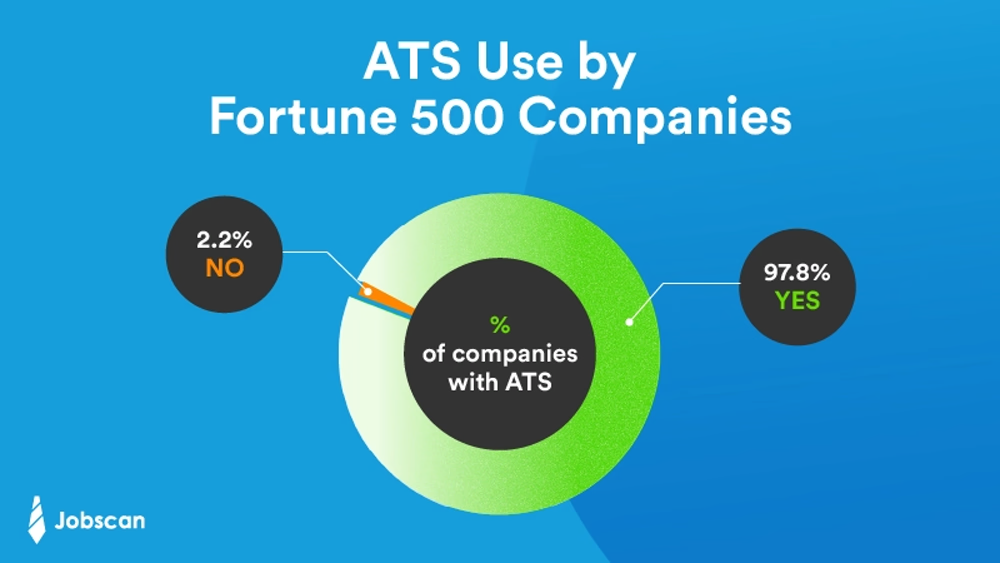
High-volume recruiting teams face immense pressure when hundreds (or even thousands) of applicants submit resumes for a single role. It’s no wonder almost 98% of Fortune 500 companies rely on applicant tracking systems (ATS) to cut candidate screening time.
Note: Around 97% of HR recruiters also use LinkedIn as a first point of assessment. If this social media profile lacks depth, job seekers may not even get their resumes opened.
For most recruiters and HR teams, automated resume screening software has become the default. Not because it predicts job performance effectively, but as a familiar, scalable solution to deal with:
- Volume pressure. Reviewing every application in detail is impossible when hundreds or thousands arrive for one job listing.
- Limited time and unrealistic SLAs. Hiring managers expect quick turnaround from recruiters, often before a role is fully closed.
- Resumes as a default. Many teams assess CVs because it’s standard practice, rather than more reliable signals of ability (like skills).
While this type of automation helps human resources teams manage their workload, it often overlooks strong candidates.
Typical Problems with Automated Resume Screening Tools
For high-volume recruiters, automated resume screening software often filters out qualified candidates before a human team member ever sees them. In fact, around 88% of employers report that current hiring processes eliminate highly skilled candidates because they don’t match the exact criteria defined in the job description.
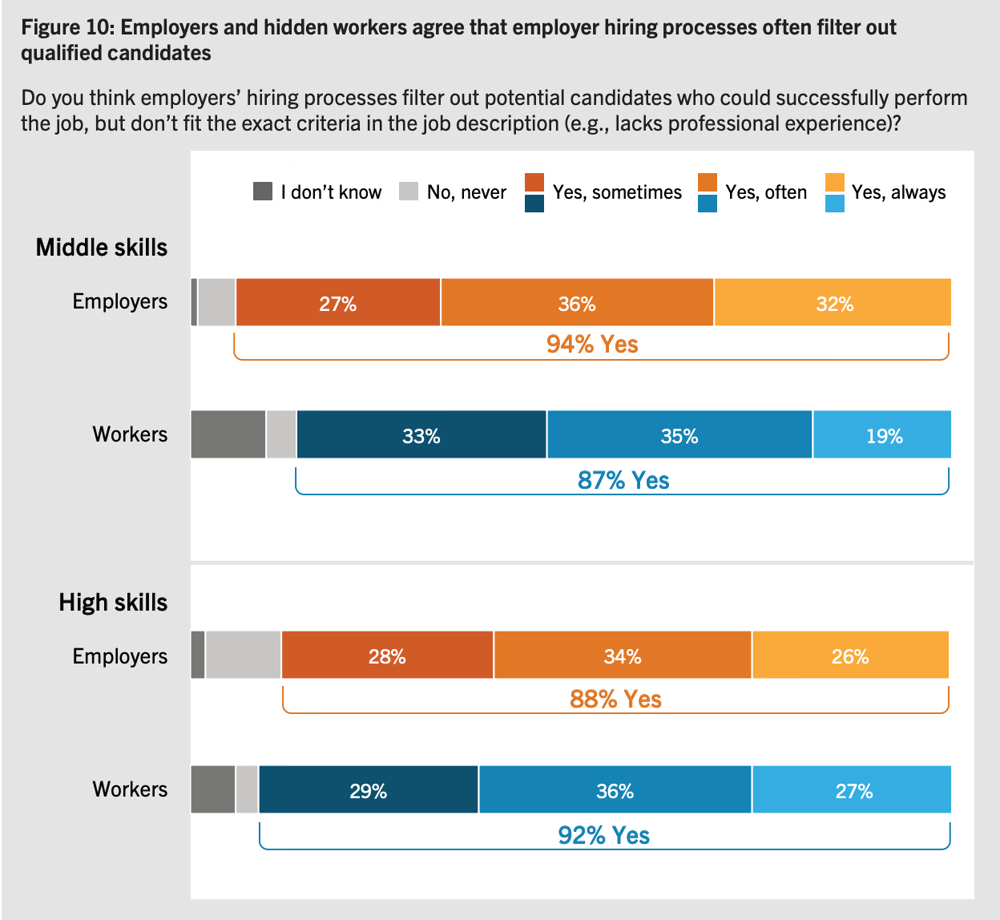
Here’s a breakdown of four typical types of automated resume screening tools and why they often fail at scale.
1. Keyword-Based Resume Parsers
What they do: Scan resumes for specific terms, job titles, certifications, or years of experience. Then, reject those without exact matches. For example, a keyword-based system will look for specific phrases like this:
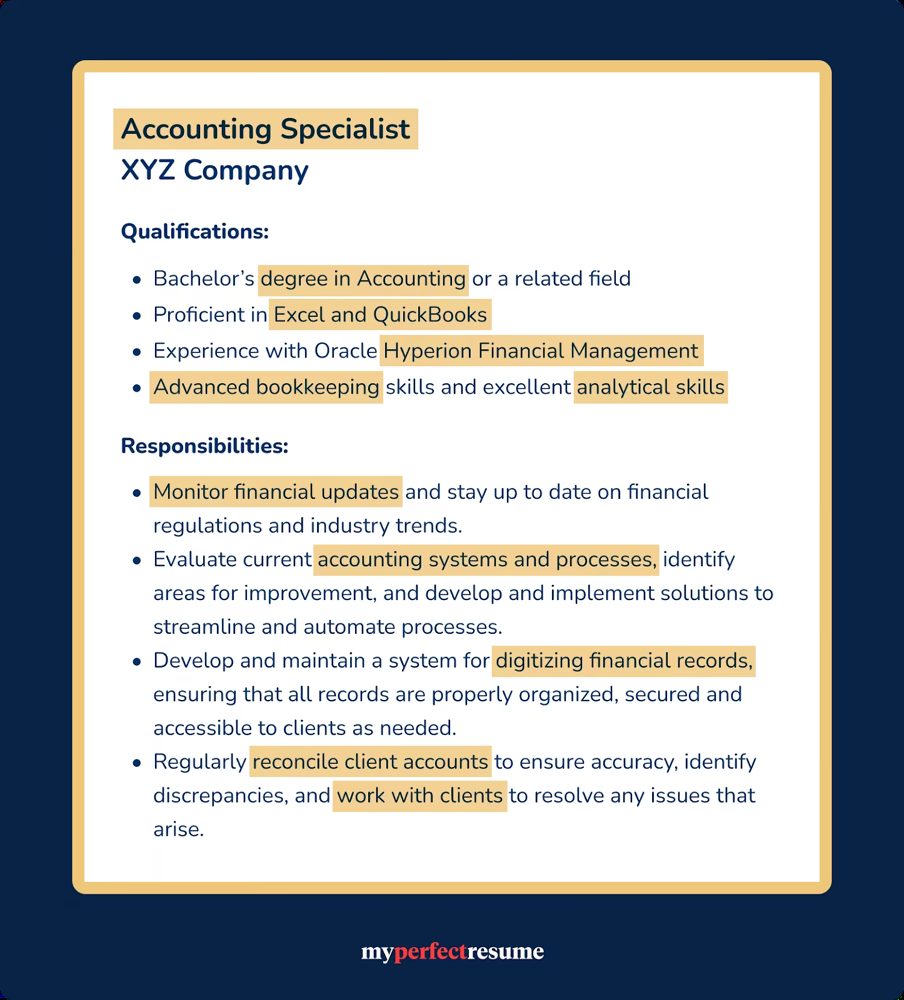
If a candidate writes “Bachelor’s in Accounting” without the word “degree,” they could be automatically rejected, even though they are qualified.
Typical problems with using keyword-based parsers at scale include missing transferable or adjacent skills, penalizing unconventional career paths, and candidates gaming the software with keyword stuffing. This type of screening reduces hiring to a vocabulary test. At high volume, small wording differences can disregard large numbers of qualified candidates, long before recruiters can assess ability or potential.
2. Rule-Based Filtering Systems
What they do: Apply knockout questions or hard requirements to quickly eliminate candidates.
For instance, candidates can be auto-rejected if they say “no” to working weekends:
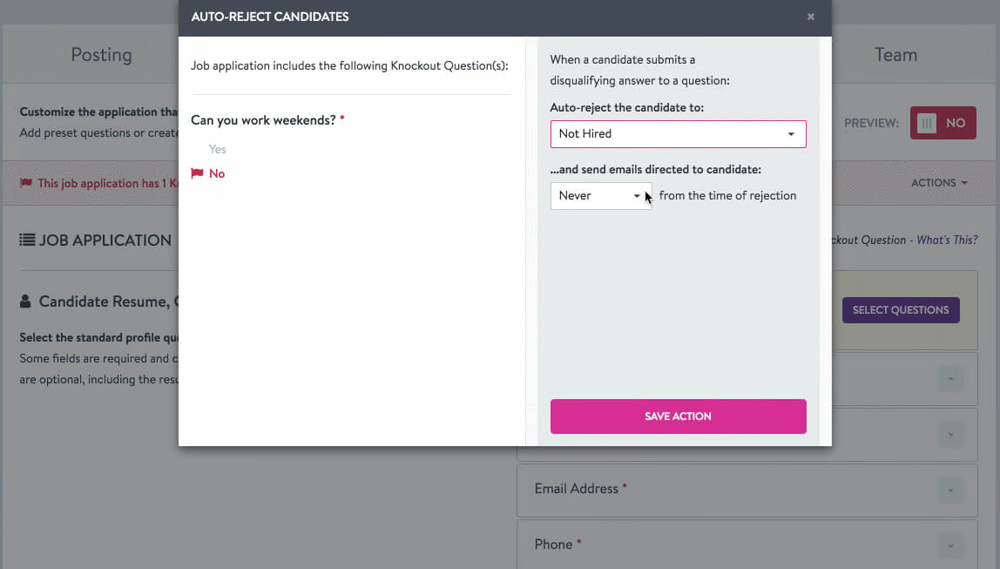
These filters are often extended to culture-fit or character-based questions, such as “Describe your preferred work style” or “What are your passions?”
Rule-based systems pose several key problems at scale. They’re fast but brutally exclusionary, so likely to discard capable candidates who don’t fit rigid criteria. Plus, they’re overly sensitive to formatting or phrasing. By removing human judgment at the exact stage where context matters most, this type of automated screener treats nuance as a liability.
3. AI-Powered Screeners
What they do: Use machine or deep learning capabilities trained on historical hires to score resumes and cover letters. For example, AI algorithms analyze factors such as resume keywords, grammar, and context. Then, they compare them against job requirements to assign relevant scores and create a shortlist:
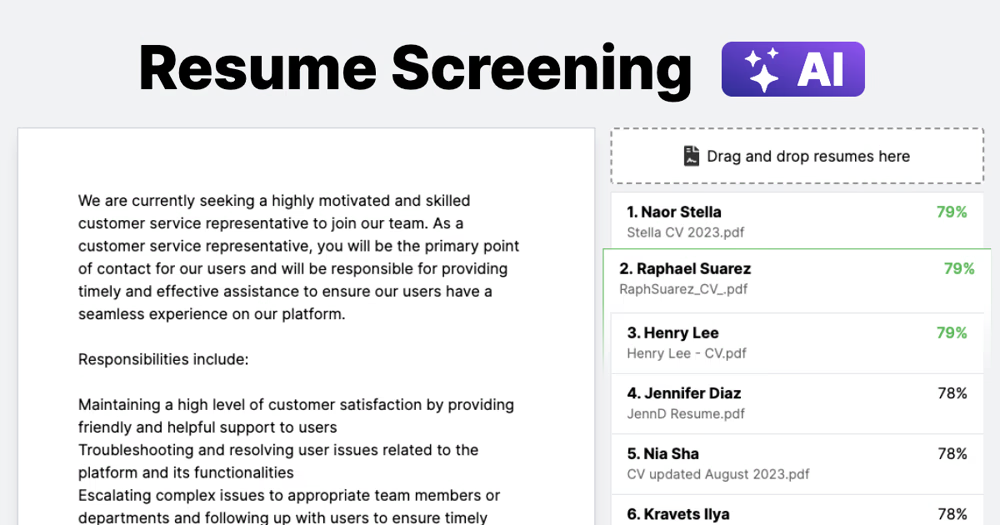
While this approach and scored metrics appear more advanced, they still rely on resumes as the primary signal. AI screeners tend to replicate past biases from training data, reinforce legacy hiring patterns, and prioritize writing skills over performance potential. Many AI-powered tools can unintentionally reward familiarity rather than adaptability and real-world capability.
4. Hybrid ATS and Resume Screening Platforms
What they do: Combine resume parsing, candidate scoring, and workflow management features to manage large volumes of job applications within a single system. Hybrid platforms all work differently. Some let hiring teams automate nearly the entire screening process, from sourcing to ranking candidates:
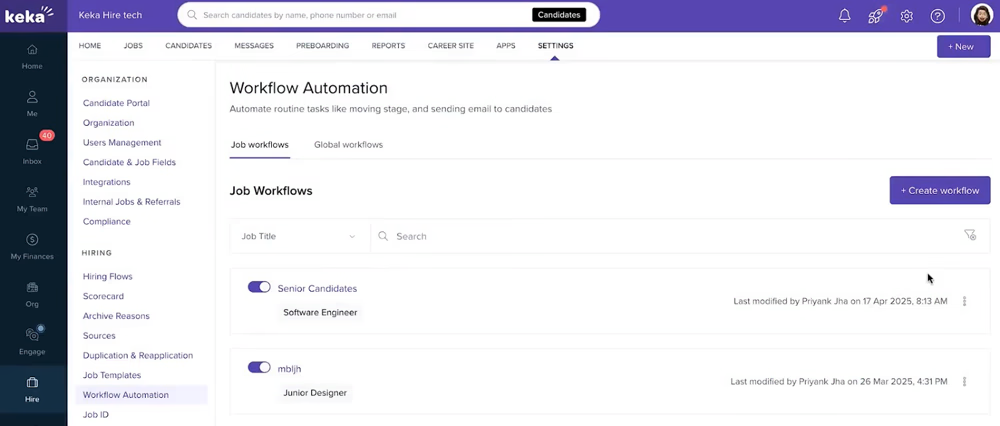
In theory, this creates a seamless, end-to-end hiring pipeline. However, key problems still remain at scale. For one, technology still uses resumes as a deciding factor. Additionally, automation amplifies the risk of missing strong candidates, leading systems to prioritize efficiency over accuracy.
Hybrid platforms may make hiring faster. But they compound the same blind spots across a larger candidate pool.
4 Typical Automated Resume Screening Tools and Their Problems

At high volumes, each of these four methods amplifies errors. Qualified candidates get filtered out, false positives waste time, and the hiring team’s ability to predict performance remains limited.
But it’s important to note that automation isn’t the bad guy here. In fact, AI-driven technology is extremely helpful and powerful when teams use it to screen based on candidate ability (more on that soon).
Why ATS and Automated Resume Screening Hurt Companies
ATS resume screening forces both HR teams and candidates into a system that rewards compliance over capability. They promise to solve top-of-funnel hiring problems (those in the earliest stages of recruiting), such as too many applicants and not enough time to review them; however, in reality, ATS screeners may just exacerbate the pace paradox instead, focusing on speed while making hiring quality worse.
Even the most advanced automated screening systems still rely on resumes, which are increasingly flawed. Consider that some candidates focus on beating the ATS scans rather than accurately reflecting what they can do. As many as 77% of recruiters have found lies on candidate resumes. Others simply use ChatGPT to create a resume for them. In fact, Gartner reported that four in ten candidates use AI to create their resumes.
Aside from the resume’s problem as a document, other problems can arise post-hire. For example, unintentional bias can occur, and wrong-fit candidates can get a job. When this happens, attrition rates can increase.
While automated resume screening software may be costing hiring teams more than it's worth, the industry’s reliance on resumes isn’t a failure of HR teams. For decades, they were the only scalable option available. Today, the technology needed to assess human skills at scale exists, changing the game for hiring teams near and far.
How to Implement Skills-First Applicant Screening Instead
Skills-first applicant screening allows recruiters to assess the abilities that actually predict on-the-job success at one of the earliest stages of the hiring process. By shifting the focus from paper credentials to actual job performance, companies can make hiring fairer and more predictive without losing the speed and efficiency of automation.
Since technical skills may only be valid for a couple of years, employers are interested in soft skills like communication, empathy, and problem-solving that are durable for nearly a decade and are often far more indicative of best-fit candidates than a resume. For example, since switching to this screening and hiring process, 90% of Bell’s telecommunication agents reach day 90 (when hiring around 8,000 per year).
Tools like our Job Skills Screen replace unreliable resumes with a five-task process that mirrors real work scenarios. Candidates must read instructions and respond to fictional customer scenarios (by voice or typing) as they would in their role:
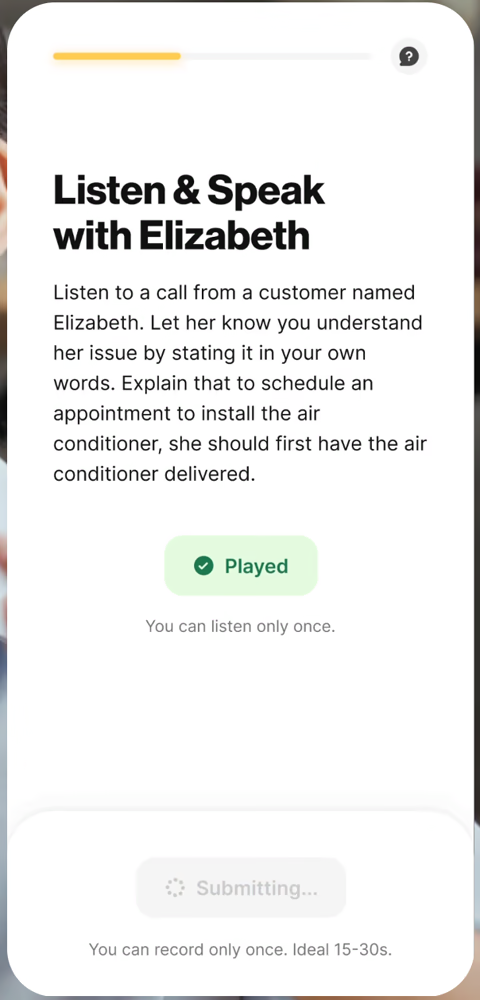
This type of screening gives recruiters first-hand insight into how potential employees communicate, think, and perform in context. Not just how they describe themselves on paper.
Compared to resume screening, skills-first applicant screening offers clear advantages for high-volume hiring teams. It evaluates candidates on ability, not background or the best resume, reducing bias created by job titles and document formatting. Moreover, candidates get a realistic preview of the role, leading to smoother onboarding.
Automated resume screening software once helped recruiters handle high volumes of applicants quickly, but we now know they filter out best-fit candidates, reinforces bias, and rewards formatting over performance. Paired with AI, skills-based assessments keep hiring decisions fast while giving teams (and applicants) a fairer, more predictive way to identify top talent. By focusing on how candidates actually perform, companies can hire just as quickly, but with much more confidence than resume screening ever allowed.
Image Credits
Feature Image: Via Unsplash / Resume Genius
Image 1: Via Jobscan
Image 2: Via HBS
Image 3: Via MyPerfectResume
Image 4: Via Jobscan
Image 5: Via Resume Screening AI
Image 6: Via SSR
Image 7: Property of HiringBranch. Not to be reproduced without permission.







.svg)