


Understand key contact center performance metrics and discover a hiring approach that improves customer experience and drives performance at scale.
Subscribe to our Newsletter
Like what you're reading? Leave us your email, and we'll deliver to your inbox on the last Thursday of the month.
In a contact center environment, how agents communicate, resolve issues, and manage the pace of interactions can make all the difference to customer retention.
When hiring, focusing on a candidate’s availability or experience isn’t always the best way to bring the right skills into the team.
In this article, we’ll explore a better approach: how hiring based on the real requirements of the role can lead to better performance outcomes on the job. We’ll also outline the most important call center KPIs to track and what they reveal about your operation.
Why Contact Center Performance Metrics Matter
Contact center performance metrics, also known as call center KPIs (key performance indicators), make the customer experience measurable.
But what do we mean when we talk about customer experience (CX) in a contact center? The answer largely depends on the area of the business:
- For support teams, it’s about resolving customer issues clearly and efficiently
- For operations teams, it means managing wait times, call volume, and service levels
- For workforce teams, it comes down to coverage, forecasting, and consistency across shifts
However, here’s one universal truth about CX in a call center, regardless of department. The customer experience is shaped by the agents you bring into your team.
Call center performance metrics allow you to measure the impact your agents are having on customer satisfaction and which skills would add the most value to the team when you make your next hire.
4 Types of Contact Center Performance Metrics Worth Tracking
Contact center metrics gauge how effectively your team performs across the entire call center operation. The most important metrics fall into the following four categories.
1. Customer Experience Metrics
These metrics capture how customers experience each interaction and how effectively their issues are resolved. Here are the key CX metrics.
Customer Satisfaction Score (CSAT)
CSAT is a measure of customer satisfaction after an interaction, typically collected through a short post-call survey. It’s a direct signal of the quality of support the team provides based on customer feedback. A high CSAT score indicates that teams are delivering excellent customer service and a consistently positive customer experience.
Net Promoter Score (NPS)
NPS tracks customer loyalty by asking how likely someone is to recommend your company. It indicates how support interactions influence customers’ broader brand perceptions. Strong performance is characterized by a high share of “promoters” (advocates) and a lower share of “detractors” (critics).
Customer Effort Score (CES)
CES indicates how easy it was for a customer to resolve their issue. High-performing contact center agents guide customers through the process smoothly, without having to repeat information or escalate the issue.
First Contact Resolution (FCR)
FCR tracks the percentage of calls where the agent resolved the customer’s issue during the first interaction. Indicators of strong performance in this area include a high resolution rate and fewer follow-up interactions.
First Response Time
First Response Time measures how quickly callers receive an initial response from an agent after reaching out. A high score in this area reflects fast and consistent response times that align with customer expectations across channels.
How These Metrics Play Out on the Contact Center Floor
Customer experience metrics reflect how effectively agents manage conversations in real time, from the first response through to resolution.
An agent who structures the conversation clearly can understand the issue more quickly and guide the customer to a resolution within the same interaction. This efficiency:
- Improves first call resolution
- Minimizes the need for follow-ups
- Reduces customer frustration
As a result, each interaction becomes smoother and more reliable, reinforcing a consistently positive customer experience.
2. Operational Efficiency Metrics
Efficiency metrics measure how effectively the contact center manages workload, time, and costs. Here are the key metrics in this category.
Average Handle Time (AHT)
AHT tracks the average time per customer interaction, including talk time, hold time, and after-call work. It’s a measure of how efficiently agents move through conversations while still resolving the issue. Effective call center agents balance speed with service quality to keep interactions focused without rushing issue resolution.
Average Speed of Answer (ASA)
ASA measures the total time customers wait in the queue before speaking to an agent. It indicates how quickly support becomes available. High-performing teams consistently meet or exceed these targets, even during peak hours.
Service Level
Service level tracks the percentage of customer queries answered within a defined timeframe, such as 80 percent within 20 seconds. A high score in this area suggests that contact staffing decisions align with incoming demand from inbound calls.
Call Abandonment Rate
Call abandonment rate is an important metric for customer retention. It shows the percentage of customers who leave the queue before reaching an agent. Research from Velaro found looked at how common that scenario is. 60% of customers are not prepared to wait more than one minute for their call to be answered. Thirty-two percent will not wait at all.

The call abandonment rate reflects how wait times align with customer expectations. Strong performance in this area is characterized by low abandonment rates, even during periods of high volume.
Cost per Call (CPC)
CPC indicates the average cost of handled calls. It’s a measure of a call center’s overall operational efficiency across staffing, processes, and tools.
Agents who manage conversations with clarity and pace can resolve issues more efficiently, helping reduce handling time while maintaining service levels and controlling costs.
How These Metrics Play Out on the Contact Center Floor
Operational efficiency metrics reflect agent productivity and efficiency, measuring how well agents manage the pace and volume of customer calls.
An agent with these skills can reduce unnecessary hold times, avoid excessive callbacks, and improve overall flow through the system. That keeps average handle time within target while supporting faster queue movement.
As teams handle more interactions efficiently, performance improves across key areas:
- Wait times decrease
- Abandonment drops
- Overall service levels remain stable during busy periods
Many teams use contact center solutions with automated call distribution, queue management, and call routing to achieve these outcomes more efficiently.
3. Agent Performance Metrics
Agent performance metrics track how effectively and consistently individual agents contribute to team results. Below are some of the most important metrics in this category.
Agent Utilization Rate
Agent utilization rate measures the percentage of time agents spend actively handling customer interactions. It shows how consistently agents stay engaged with incoming work during their shift. Strong performance is reflected in steady engagement with short gaps to recover between interactions.
Occupancy Rate
Occupancy rate indicates how much of an agent’s logged-in time is spent on customer calls or related tasks. It reflects workload intensity throughout a shift. Agents that can handle a sustained workload without compromising the quality of their interactions perform well in this area.
Calls Handled
The “calls handled” metric tracks the number of interactions an agent manages within a given timeframe. Effective teams can handle a consistent volume of calls while delivering high-quality interactions.
After-Call Work (ACW)
After-call work captures the amount of time an agent spends on tasks after each interaction, such as completing documentation or drafting follow-ups. High-performing call center teams can finish these tasks in a structured, timely way to keep workflows moving.
Quality Assurance (QA) Scores
QA scores indicate how well agents follow processes, communicate clearly, and resolve issues based on internal evaluation criteria. A high score in this area indicates that an agent consistently delivers high-quality interactions.
How These Metrics Play Out on the Contact Center Floor
Agent performance metrics reflect how consistently individuals manage workload, communication, and task execution.
An agent who balances call handling with efficient after-call work can maintain steady output throughout a shift. That supports higher utilization and occupancy while maintaining strong QA performance. Consistency at the individual level contributes to more predictable performance across the entire team.
4. Volume and Demand Metrics
These metrics track how much demand the contact center needs to handle and how that demand changes over time. Here are some of the most important volume and demand metrics.
Call Volume
Call volume tracks the total number of calls over a given period. It’s a measure of the overall demand on a contact center, which looks likely to intensify in the months ahead. In a recent McKinsey study, 57% of customer care leaders said they expect call volumes to increase over the next one or two years.
Call Arrival Rate
Call arrival rate shows how frequently calls enter the queue and how demand fluctuates throughout the day. It’s a metric that helps teams forecast call volume more accurately.
Answered Calls
The “answered calls” metric counts the number of calls agents successfully handle, showing how effectively the team is meeting customer demand. A high proportion of answered calls relative to total volume signals strong performance in this area.
Repeat Calls
The “repeat calls” metric indicates how often customers contact the center again for the same issue. It signals how effectively problems are resolved during the initial interaction. Low repeat rates typically indicate clearer communication and more complete resolution.
How These Metrics Play Out on the Contact Center Floor
Volume and demand metrics reflect how demand flows through the system and how effectively interactions are resolved.
When agents resolve issues fully during the first interaction, repeat calls decrease, and overall call volume stabilizes. That reduces pressure on queues and allows staffing to better align with demand. As a result, service levels improve, and teams can maintain performance during peak periods.
Call center systems with self-service options and AI-powered automation can help reduce unnecessary demand by resolving simple queries before they reach an agent.
How Contact Center Performance Metrics Work Together
While each contact center metric we’ve listed here is important, remember that individual numbers only reveal part of the performance picture. The real insight comes from seeing how your KPIs interact with one another.
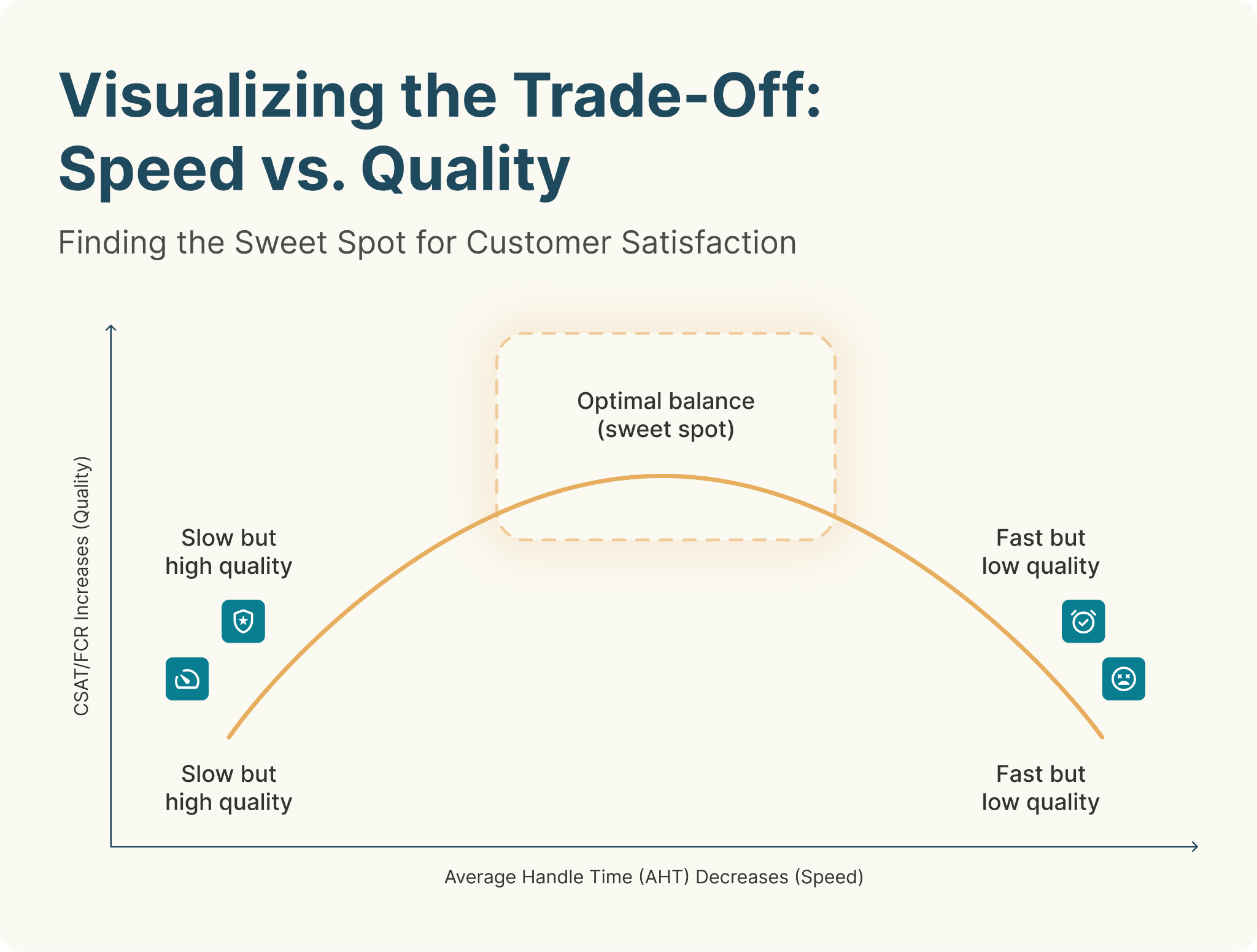
Consider the relationship between speed and quality, for example. A low average handle time might suggest that interactions are efficient. However, if that efficiency comes at the cost of issue resolution or a strong CSAT score, it’s not an indicator of strong performance; it’s a sign of a problem.
The relationship between staffing and demand is another important example. Demand metrics like service level and abandonment rate depend on whether the team has enough agents available to handle the incoming call volume. When repeat calls increase, demand rises, making it difficult for teams to perform well in this area if staffing levels stay the same.
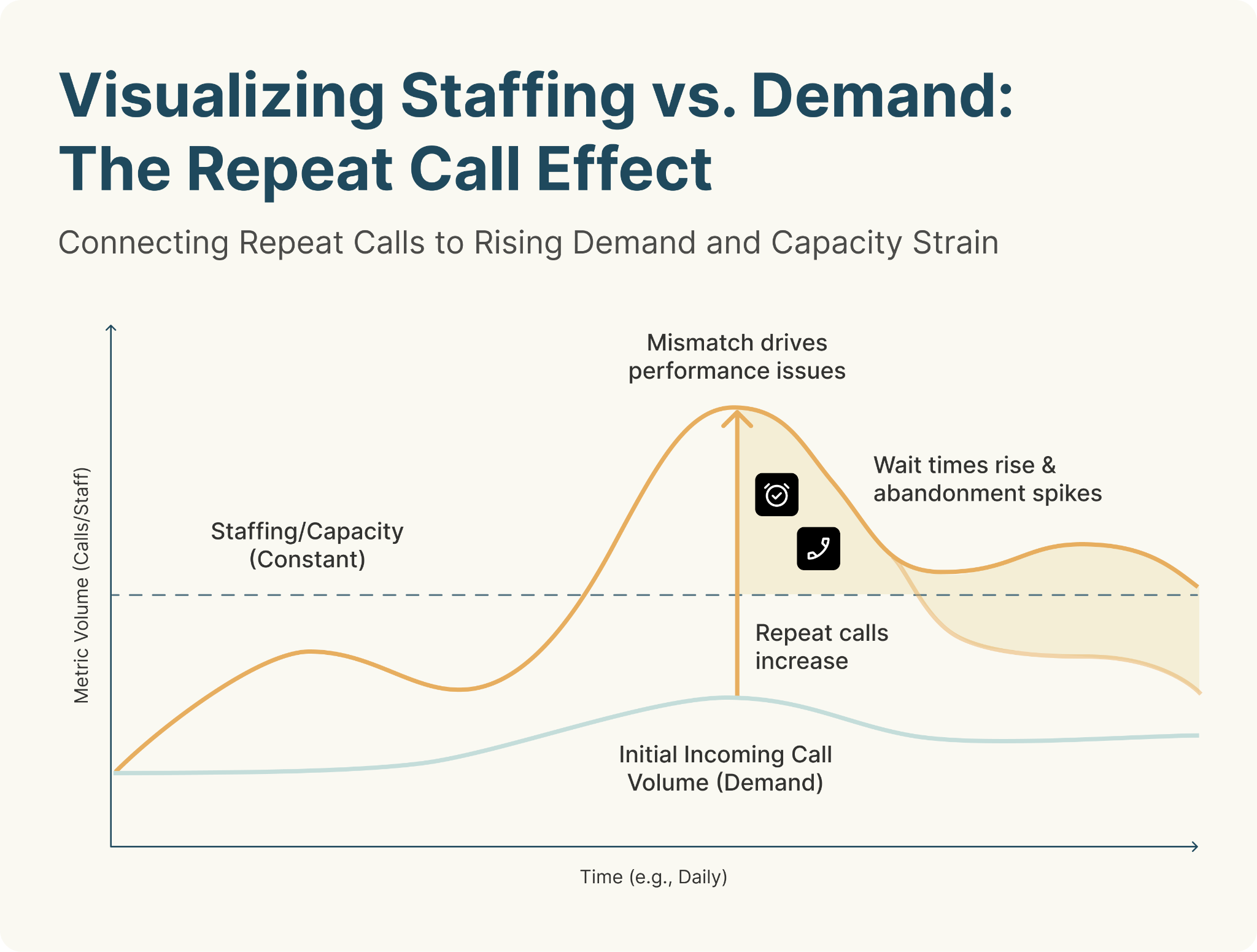
Looking at multiple metrics at once helps teams understand how changes in one area affect outcomes in other parts of the operation and where they can optimize performance.
Many teams use integrated CRM (customer relationship management) systems and dashboards to track how metrics such as handle time, service level, call volume, and repeat contact rate interact over time.
How Hiring Impacts Call Center Performance Metrics
Call center metrics might seem like purely operational outcomes, shaped by processes, training, and day-to-day management. But that’s not the whole story. In practice, performance really comes down to who’s hired into the team in the first place. The people who talk to your customers day in and day out are at the heart of these results.
Research shows that human-led interactions aren’t going anywhere, even in the era of automation and AI. McKinsey highlights the ongoing importance of agent-led conversations, with human-to-human interactions growing by around 2% annually.
Here’s how the skills, behaviors, and communication styles that agents bring to these interactions shape team performance across every group of KPIs.
Hiring Decisions Shape Customer Experience Metrics
Customer experience metrics reflect how well agents handle real conversations and respond to customer needs. The quality of those interactions comes down to:
- How clearly candidates communicate
- How quickly they understand the issue
- How effectively they guide the customer toward issue resolution
Candidates with strong communication skills can structure conversations effectively from the start, asking the right questions, clarifying the problem early, and moving toward resolution efficiently. That flow supports CX metrics like higher first call resolution, reduces customer effort, and leads to more consistent satisfaction scores.
When agents are less skilled in these areas, conversations tend to take longer and require more clarification. Customers may need to repeat information or follow up to fully resolve the issue. Over time, that pattern increases effort, lowers satisfaction, and drives more repeat contacts.
In high-volume environments, the impact of those differences can scale quickly. A small gap in communication quality across hundreds of agents can translate into thousands of additional interactions and a significantly worse customer experience.
Hiring Quality Drives Efficiency Metrics
Efficiency metrics reflect how quickly and reliably agents move through interactions. That pace depends on how easily new hires can interpret information and move customers toward a resolution without unnecessary steps.
Agents who can resolve situations effectively tend to spend less time diagnosing issues and more time progressing the interaction. That keeps average handle time under control while maintaining resolution quality and reducing the need for follow-up work.
Stronger hires also reach full productivity faster. A shorter ramp period means teams can handle demand more effectively during peak periods, which helps stabilize service levels and the average speed of answer.
When these skills take longer to develop, interactions involve more pauses, repeated explanations, and extended after-call work. That added time builds across the queue, increasing the risk of long wait times, raising cost per call, and putting additional pressure on the rest of the team.
Over time, these outcomes affect how efficiently the contact center operates, from handling speed and response times to managing costs.
Consistent Hiring Improves Agent Performance at Scale
Consistent hiring practices directly improve agent performance metrics across the team. When hiring teams evaluate candidates against the same role-specific criteria, recruiters are more likely to bring in agents who can meet individual performance expectations from the outset.
A structured approach to hiring also supports stronger outcomes across the team, including:
- More balanced utilization and occupancy across agents
- Higher and more stable QA scores
- Lower attrition and reduced agent training overhead
A consistent approach to hiring helps make call center performance more predictable while allowing teams to maintain high standards as they scale.
Hiring Outcomes Influence Volume and Demand Metrics
Volume and demand metrics reflect how often customers need support and how effectively the contact center meets that demand. Hiring plays a significant role here. The agents that recruiters bring into the team determine how many issues can be resolved on the first interaction.
Candidates with strong communication and problem-solving skills are more likely to identify the real issue, explain next steps clearly, and reduce the need for customers to call back. That helps lower repeat calls and keeps total call volume easier to manage.
These outcomes also support forecasting and resource allocation. When teams hire agents who can handle the right volume of customer queries, demand patterns become easier to understand, and staffing plans become more reliable during peak hours.
Building a Performance-Driven Contact Center Starts With Hiring
Hiring the right people from the very beginning gives teams far more control over contact center performance. Every metric covered in this guide ties back to the same set of candidate capabilities:
- Communication determines how clearly issues are understood and resolved
- Problem-solving affects how quickly agents move through interactions
- Consistency shapes how predictable performance is across the team
When a new agent joins the team with these capabilities already in place, metrics like CSAT, FCR, and AHT start moving in the right direction from day one. By contrast, when someone without these skills joins the team, it will take far longer for them to have a positive impact on performance.
Contact center skills assessments let you evaluate candidates’ real capabilities before they join your team. Instead of relying on resumes or unstructured interviews, teams assess how candidates communicate, respond, and solve problems in scenarios that reflect real customer interactions. This approach creates a clearer link between hiring decisions and on-the-job performance.
Skills test software delivers these assessments at scale, helping teams embed them into hiring workflows and evaluate candidates efficiently.
In the example below, our Job Skills Screen tool assesses a candidate’s verbal response to a customer support scenario by category, with each category made up of the skills for the role:
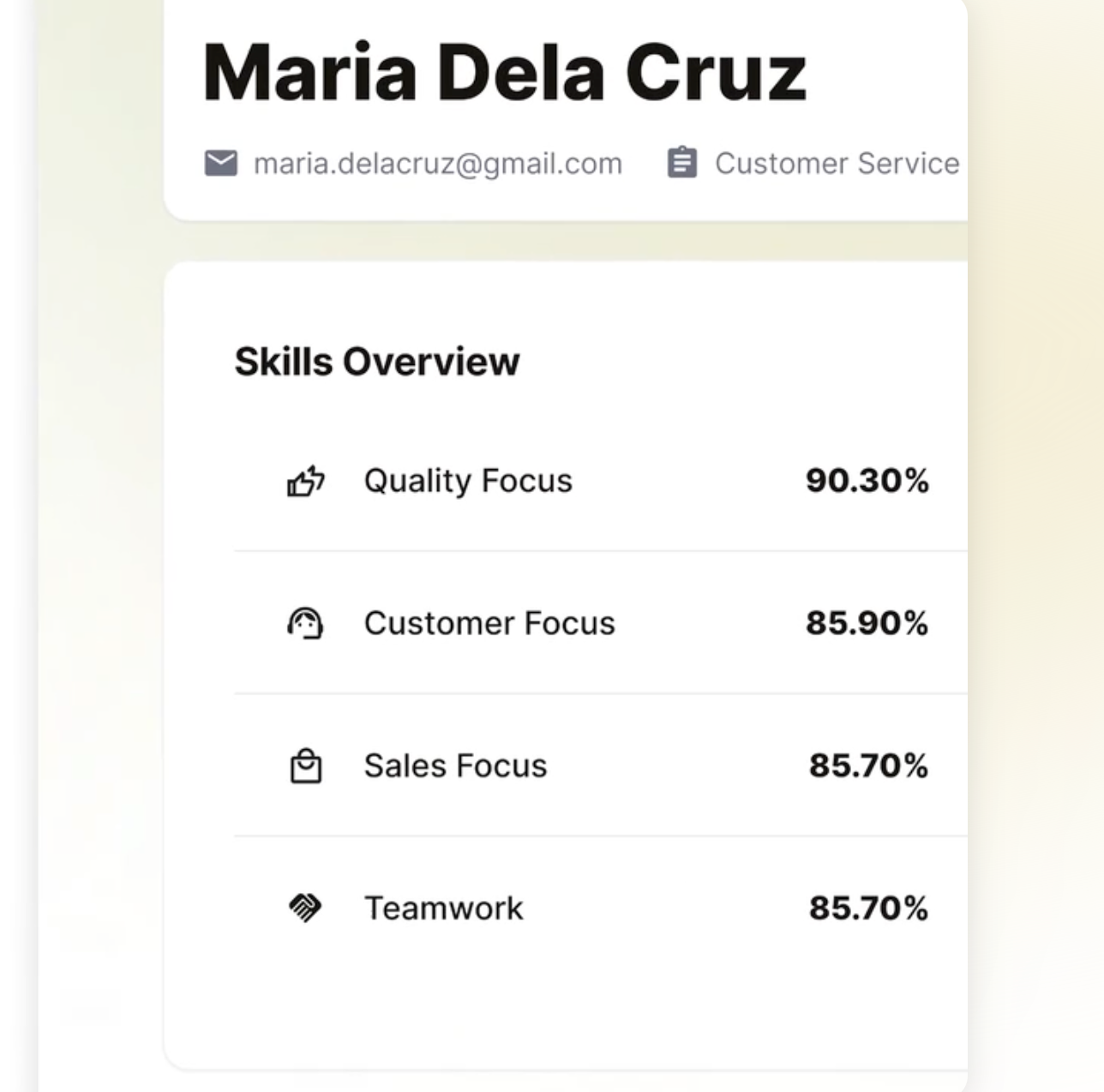
At scale, the shift toward skills-based assessments can fundamentally change how well a contact center operates. Stronger hires reach productivity faster, perform more consistently, and require less downstream correction. That consistency supports more stable service levels, more predictable cost control, and a better customer experience.
Wrapping Up Contact Center Performance Metrics
Aligning your hiring practices with the real demands of an agent’s role creates a solid foundation for strong contact center performance. Teams that consistently hire agents who have the right capabilities from day one can deliver better customer experiences and contribute to smoother day-to-day operations.
Image Credits
Featured Image: Unsplash / 1981 Digital
Image 2: Property of HiringBranch. Not to be reproduced without permission.
Image 3: Property of HiringBranch. Not to be reproduced without permission.
Image 4: Property of HiringBranch. Not to be reproduced without permission.
Image 4: Property of HiringBranch. Not to be reproduced without permission.






.svg)