



Many enterprises apply skills intelligence after hiring. Learn five practical tips to use it earlier and build stronger interview shortlists at scale.
Subscribe to our Newsletter
Like what you're reading? Leave us your email, and we'll deliver to your inbox on the last Thursday of the month.
Skills intelligence is becoming the foundation of how enterprises hire, develop, and retain talent.
When almost two-thirds of employers now rely on skills-based hiring, and 55% of enterprises map skills directly to jobs, the message is clear: organizations are moving away from credentials and job titles as proxies for capability.
But skills intelligence is only as valuable as the data behind it. Many companies focus on supporting internal mobility, workforce planning, and employee development. Yet those initiatives depend on having the right people in the business to begin with.
In this post, you’ll learn five practical tips to embed skills intelligence into hiring to easily identify qualified candidates at scale.
What Is Skills Intelligence?
Skills intelligence is the process of collecting, organizing, and analyzing your company’s skills data to understand what employees can actually do.
HR teams often use it to identify skill gaps within internal talent. But it’s just as valuable for high-volume hiring teams to get a clearer picture of capability than resumes, job titles, or keyword matching could ever offer.
Imagine a retailer hiring hundreds of frontline employees across multiple locations.
Recruiters could spend time collecting fragmented data from CVs, work history, certifications, or application responses.
Or, they could use a single skills intelligence platform that sends assessments, analyzes real-time ability, and scores profiles for quick review.
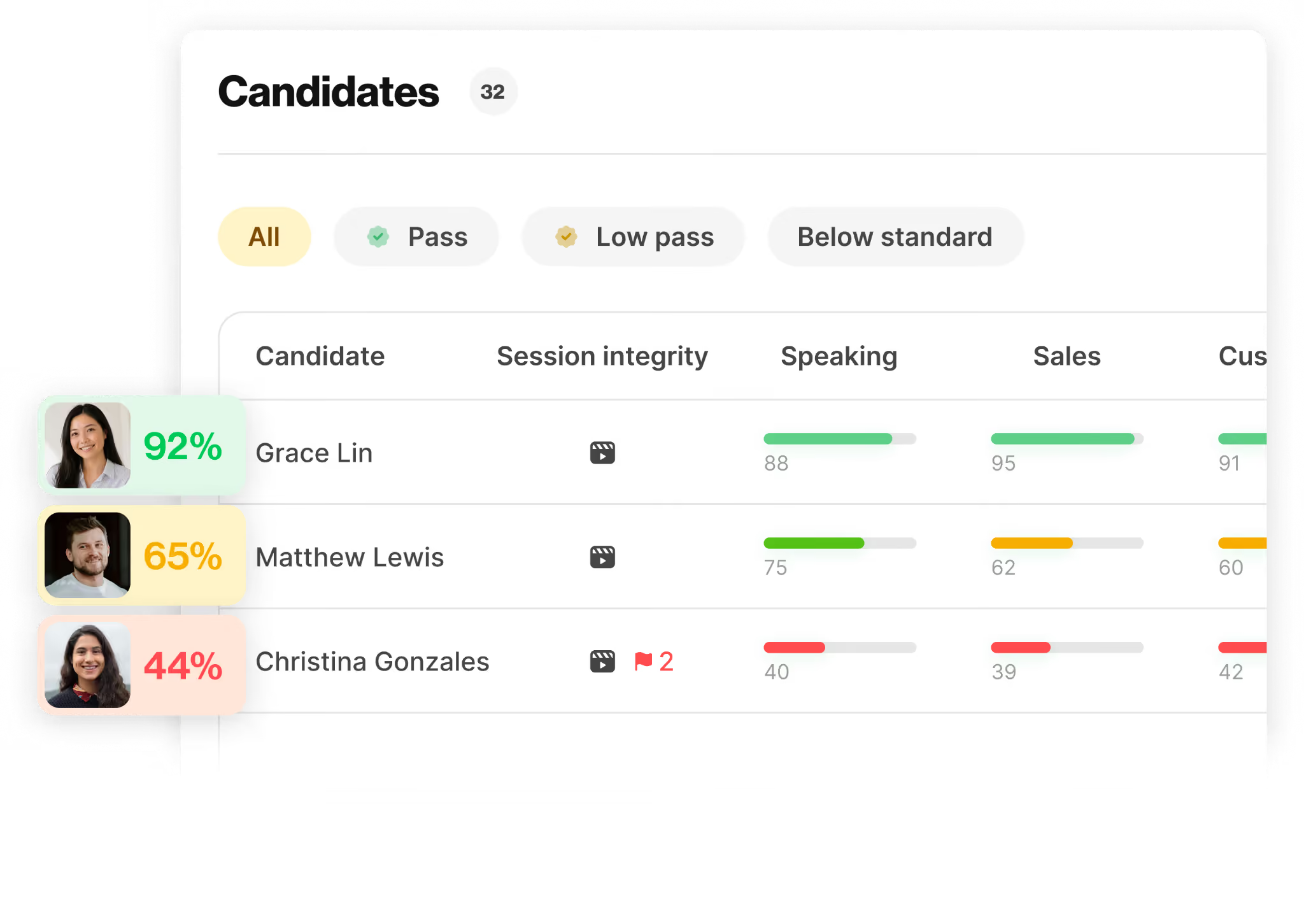
Instead of relying on self-reported skills across multiple platforms, assessment solutions help teams quickly see who demonstrates role-specific ability, where gaps exist, and which applicants are most likely to succeed.
Here are some key components of a skills intelligence ecosystem:
- Skills data sources. Assessments, work history, certifications, learning records, resumes, and candidate profiles (the less self-reported, the better).
- Skills taxonomy. A standardized framework for defining and categorizing skills.
- Skills ontology. A map of how skills relate, overlap, and transfer across roles.
- Skills profiles and job architecture. Dynamic records of individual capabilities and role requirements.
- Benchmarking and labor market data. Internal, verified skills insights combined with external workforce data.
- Analytics and insights. Goal metrics and recommendations that improve hiring, workforce strategy, and candidate and employee engagement.
As mentioned earlier, skills intelligence is used throughout the employee lifecycle, from hiring and onboarding to internal mobility.
And with the World Economic Forum estimating that 59% of the global workforce will need training by 2030, it’s no wonder most discussions focus on future-ready talent development and workforce transformation.
However, this guide will explore the front end of the talent lifecycle. Because if hiring decisions shift from resumes to demonstrated ability, workforce data becomes more reliable from day one.
Why Does Skills Intelligence Matter for High-Volume Hiring?
Skills intelligence helps recruiting teams spot capability faster, make more informed decisions, and optimize hiring outcomes at scale.
Here are three of its top benefits for high-volume hiring.
Screen Thousands of Applicants Consistently
Skills intelligence helps teams evaluate every job seeker against the same criteria. That way, it’s easier to identify qualified candidates at scale.
Recruiters don’t have time to review thousands of applications. As a result, candidates may be screened differently depending on who reviews them, how much time is available, or which keywords appear on their CV.
It’s not surprising that 90% of organizations missed their hiring goals in 2025, with one in three being much further from the goal post than others.
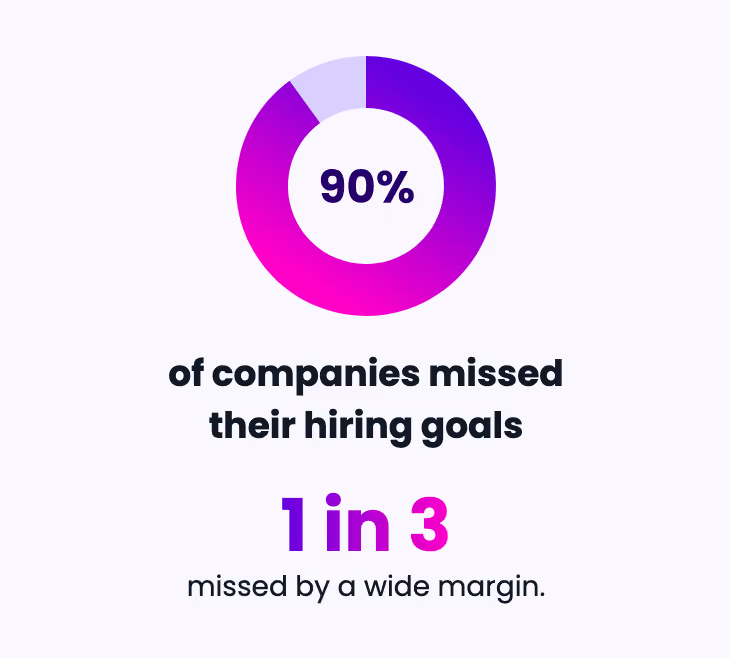
Skills intelligence creates a standardized process for comparing candidates fairly and moving qualified people through the funnel faster.
Hire for Proven Capability (Not Credentials)
Skills intelligence shifts talent decisions from credentials and pedigree to demonstrated ability.
According to Everest Group, more and more enterprises are adopting assessment solutions as they evolve into skills-based organizations.
It’s one of the top drivers accelerating demand for this type of software, according to Everist Group data:
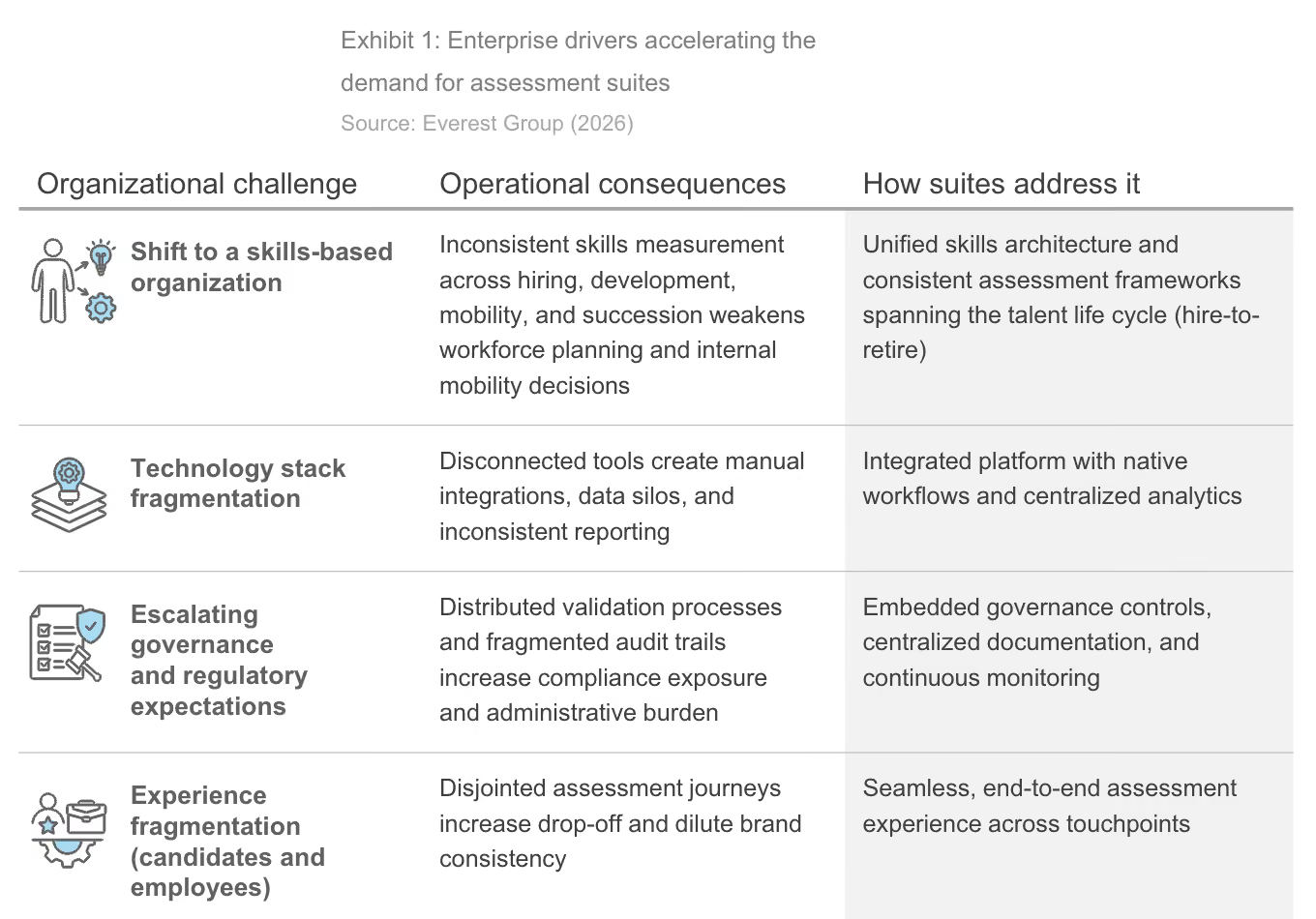
This approach expands talent pools by cutting unnecessary education or experience requirements. Instead, it gives those with limited work history or nontraditional backgrounds the chance to show what they can do.
Reduce Attrition in High-Turnover Roles
Skills intelligence helps match candidates to roles where they’re more likely to succeed and stay longer-term.
When decision-making is based on capability, organizations reduce costly mis-hires and spend less time backfilling vacant positions.
The relationship between skill and retention can be significant. For every top-skilled customer service employee hired, our research found that 27.3 bottom-skilled candidates attrited.
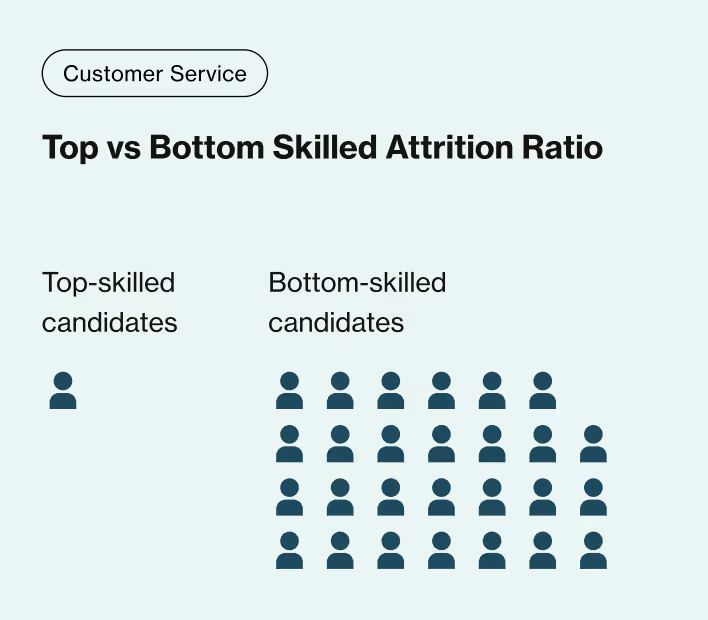
Verified data also supports future skills development, helping employees move into roles that align with their strengths rather than leaving.
The Problem: Most Skills Intelligence Is Self-Reported
Many skills intelligence platforms still rely on self-reported inputs that recruiters have had no other choice but to use for years (e.g., resumes, LinkedIn profiles, and self-assessments).
None of those sources proves competency. They simply show where someone worked, what they claim to have done, and how well they present themselves on paper.
It’s no wonder McKinsey found that 87% of executives report team skills gaps. Especially when Mercer’s Skills Snapshot Survey suggests that only 38% of enterprises log skill findings in an organization-wide library.
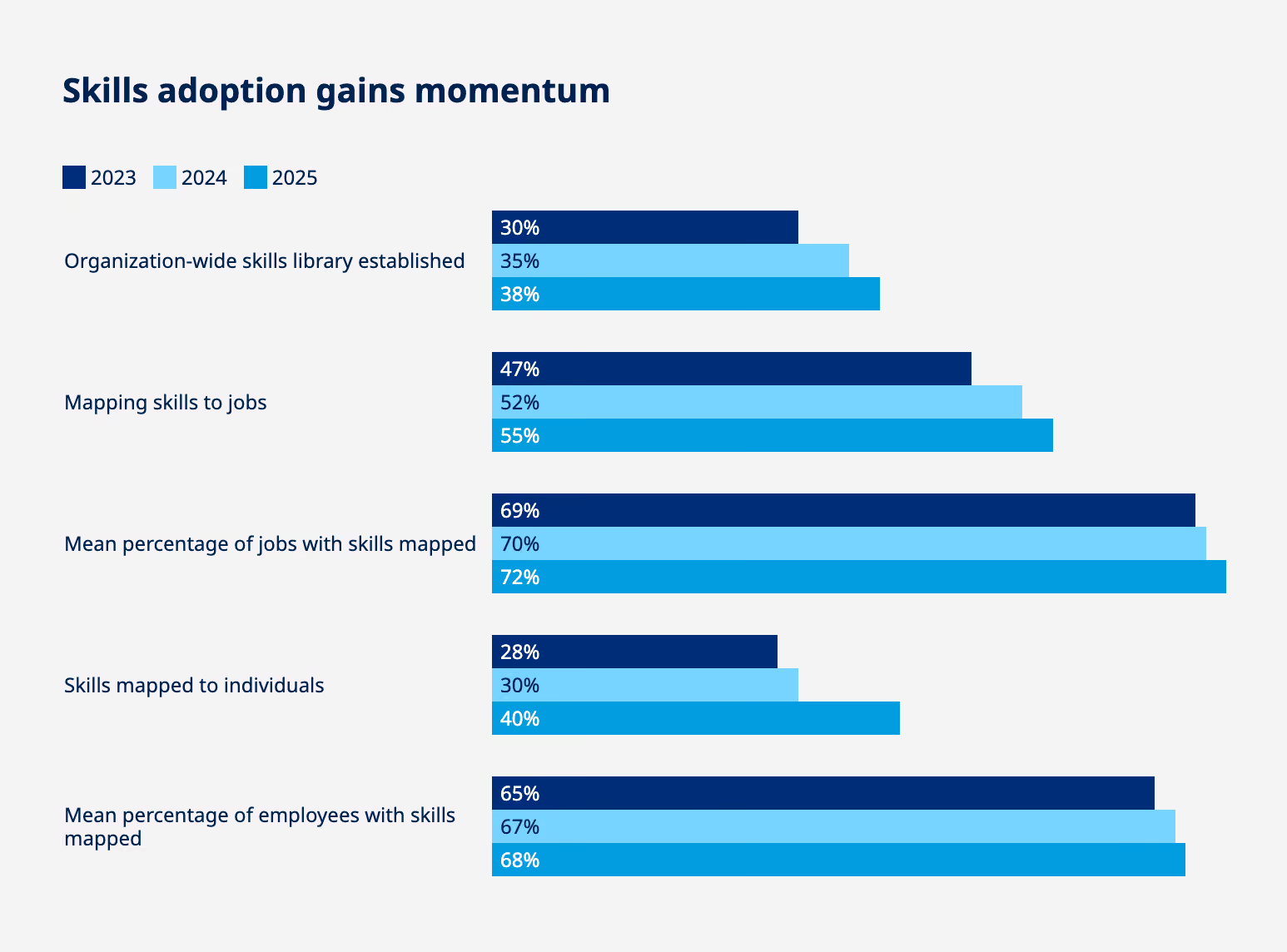
These skills gaps are becoming an even bigger challenge thanks to AI-generated resumes. When every application is polished, keyword-optimized, and tailored to the job description, it becomes harder to distinguish genuine capability.
Many organizations have added video interviews to the process to gather better signals. And AI or automation tools can help collect and organize recordings.
But recruiters still need to manually review to determine which candidates’ current skills suggest they should or shouldn’t move forward.
This same approach extends beyond hiring. The skills data collected during recruitment can help organizations understand workforce capabilities, identify skill gaps, and guide upskilling and reskilling programs.
5 Skills Intelligence Tips To Build Better Interview Shortlists at Scale
Skills intelligence helps recruiters answer the most important question before any interview: “Does this candidate have the skills needed to succeed in this role?”
Here are five practical tips to apply this method to the earliest stages of the hiring funnel.
1. Assess Skills Before the Interview
When HR leaders verify capability before interviews, they spend less time screening and more time evaluating fit.
Without objective skills data, high-volume hiring teams often rely on resumes, application questions, or recruiter judgment to decide who moves forward.
AI-driven skills assessments measure role-relevant ability at scale. So, every applicant gets the same opportunity to show what they can do right off the bat.
For example, Job Skills Screen sends five short tests that simulate real-world, customer-facing interactions.
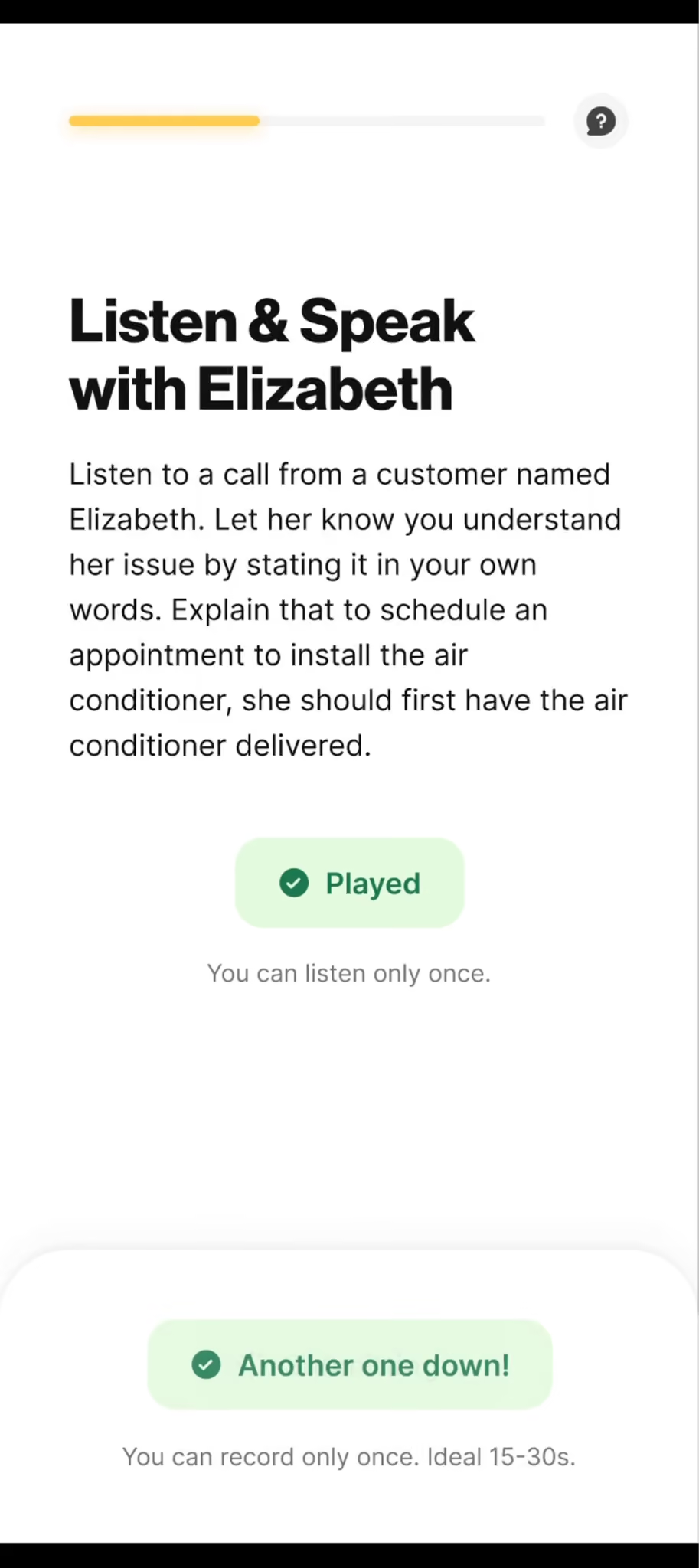
Candidates respond either by typing or voice, proving whether they have the right skills for the job (e.g., acknowledgment or positive language).
AI scores the responses based on custom human inputs. Then, recruiters review dashboards to spot best-fit applicants in seconds.
Here’s how to best use these types of skills assessments pre-interview:
- Use short, role-specific tests early in the application process
- Select and measure the employee skills that predict success in the role (not just generic aptitude)
- Keep assessments brief to minimize candidate drop-off
- Establish clear benchmarks that determine who progresses to the next stage
When teams assess skills upfront, interviews become a confirmation step rather than a discovery exercise.
2. Replace Resume Screening With Verified Evidence
Skills intelligence works best when hiring teams rely on proof of ability over self-reported claims.
Recruiters don’t have time to manually review every CV. So, most candidates end up being filtered based on keywords, job titles, or years of experience.
But those signals don’t always predict who can actually do the job.
For example, a financial institution hiring 200 agents may receive thousands of resumes with nearly identical experience.
Short scenarios and tasks can quickly show which candidates have the communication and problem-solving skills needed to succeed.
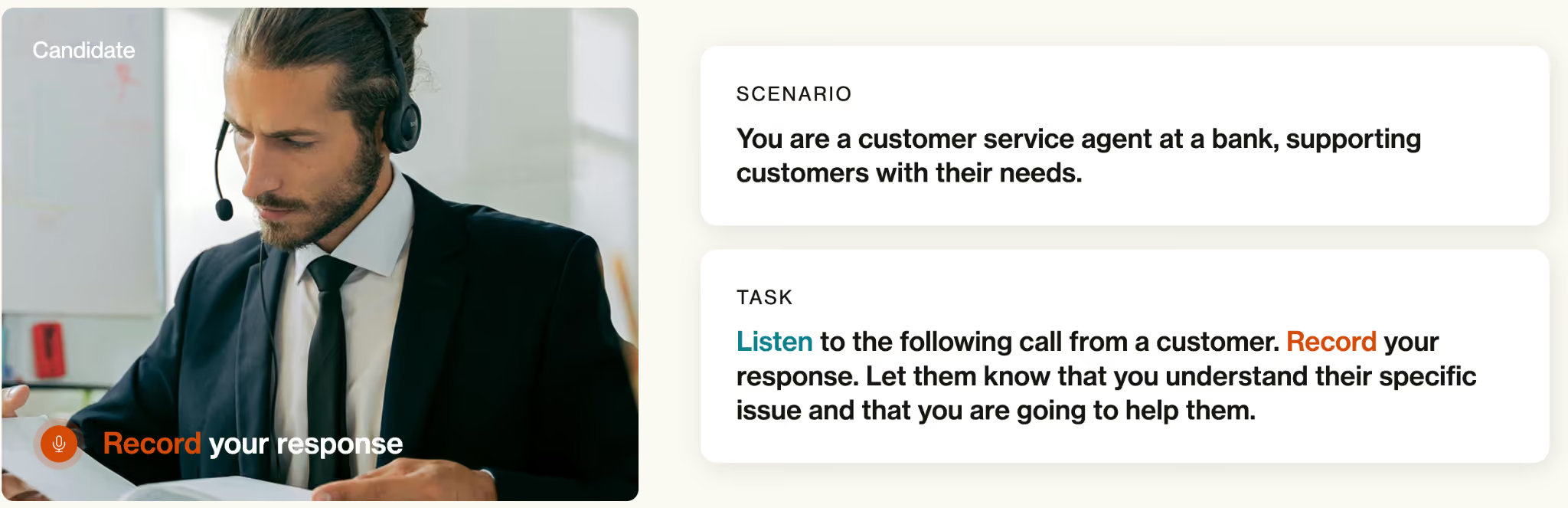
Here are some ways to replace resume screening with verified evidence:
- Use data-based tests or activities as the main qualification step
- Treat CVs as background information
- Rank and move candidates forward solely based on what they’ve demonstrated they can do
Instead of asking job seekers to describe their skills, start giving them opportunities to prove them.
3. Define What “Good” Looks Like for Each Role
Skills intelligence is only useful if there's a clear definition of what success looks like in the role.
Different hiring managers often have varying ideas about what makes a candidate qualified. That can lead to inconsistent screening decisions and strong applicants being overlooked.
Take a retailer hiring store associates across 50 locations.
One recruiter may prioritize customer service experience, while another may focus on prior sales roles.
Defining the skills needed for success and weighting them helps everyone evaluate candidates against the same standard.

To define what “good” looks like for each role:
- Identify the skills that top performers consistently share
- Separate “must-have” skills from “nice-to-haves”
- Set clear proficiency levels for each competency
- Align recruiters and HR managers on hiring criteria and actionable insights
- Use the same benchmarks throughout applicant screening, interviewing, and hiring
Make it clear what candidates need to demonstrate before they reach the interview stage. And review benchmarks regularly as roles and business needs change.
4. Use Interview Time To Add Context to Skills Data
Interviews should focus on things skills tests can’t fully capture, such as motivation, context, and team fit.
When assessment results already prove capability, high-volume hiring teams don’t need to spend interviews rechecking basic skills. That shifts the conversation toward how someone works and whether company culture is the right match.
Say a telecommunications enterprise is interviewing support agents. Recruiters already know the shortlist can handle difficult conversations, follow troubleshooting steps, and communicate clearly.
Interviews then become a space to understand how each person handles pressure, why they want the role, and how they approach customer interactions.
Hiring teams can use this crucial context to build a more complete picture of every shortlisted candidate’s motivations and potential.
To make better use of interview time, ask questions that explore:
- Motivation (e.g., “What attracted you to customer support in telecom?”)
- Career paths (e.g., “What type of role are you hoping this position leads to?”)
- Past decisions (e.g., “Tell me about a time you handled an upset customer and what you learned from it.”)
- Working style (e.g., “How do you stay calm during back-to-back high-pressure calls?”)
- Team fit (e.g., “What kind of team environment helps you do your best work?”)
Avoid re-testing skills already proven through assessment. Instead, confirm company fit or ask more detailed questions for senior roles.
5. Measure Against Real Outcomes
Skills intelligence only works if it translates into better hiring results. Look beyond who passes tests or reaches the interview stage, and focus on how those hires actually perform once they start the job.
Small improvements in hiring quality have a large impact across hundreds or thousands of roles.
With outcome tracking, teams learn whether skills-based hiring is truly improving performance or just changing the process.
Imagine a chain of restaurants hired a new batch of servers, hosts, and kitchen staff. Recruiting teams decide to track new hires who scored well on assessments of communication, multitasking, and service.
Performance rating and manager feedback reveal whether these employees actually perform better on the floor, handle busy shifts more effectively, and stay in the role longer.
Here are some typical performance outcomes to track:
- Quality of hire (QoH). A combined score of performance reviews, manager feedback, and productivity. Shows whether hiring decisions are leading to strong on-the-job performance.
- Time to productivity. The average time it takes a new hire to reach full performance expectations. Indicates how quickly candidates ramp up in real operations.
- Retention rate (90-day vs. 1-year). The percentage of hires still employed after key milestones. Suggests whether workforce decisions lead to longer-term fit.
- Performance uplift vs. baseline. The performance difference between assessed and historical hires. Shows whether skills intelligence is improving outcomes.
- Revenue or output per employee. Direct productivity impact per hire. Demonstrates whether stronger candidates contribute more to business performance.
- Error or rework rate. Frequency of mistakes or quality issues in early tenure. Suggests whether new hires are truly job-ready.
Over time, review whether top assessment performers become the best team members. Use all of this data to refine assessment benchmarks over time.
Wrapping Up Skills Intelligence
Skills intelligence helps your enterprise make better talent decisions across the entire employee lifecycle. But its impact should start long before internal mobility or workforce planning.
Capture skills data at the recruitment stage to improve hiring quality, accelerate productivity, and create a more capable organization from day one.
Image Credits
Feature Image: Via Pexels / Yan Krukau
Image 1: Property of HiringBranch. Not to be reproduced without permission.
Image 2: Via GoodTime
Image 3: Via Everest
Image 4: Property of HiringBranch. Not to be reproduced without permission.
Image 5: Via Mercer
Image 6–8: Property of HiringBranch. Not to be reproduced without permission.
Skills Intelligence FAQs
Skills intelligence involves collecting and analyzing data to understand workforce skills and make better talent acquisition decisions.
Skills management is the practice of using that data to develop, deploy, and track new skills across the organization.
Talent intelligence is broader. It combines skills data with workforce, recruiting, performance, and labor market data to support strategic talent management and external hiring.
The most effective skills intelligence programs rely on verified data rather than only self-assessments.
That means measuring skills through:
- AI-powered tests
- On-the-job performance
- Certifications
- Training outcomes
- Other evidence-based sources
The more directly you measure capability, the more reliable the resulting insights become.
Yes. In fact, hiring is one of the most valuable times to apply skills gap analysis.
By assessing candidates early in the recruitment process, HR teams can identify top talent faster and prioritize interviews more effectively.
Yes, but artificial intelligence shouldn’t completely replace human decision-making.
AI can help:
- Identify best-fit skills for specific roles
- Analyze large volumes of candidate data
- Close any shortage gaps and speed up succession planning
- Surface insights that would be difficult to uncover manually
The strongest skills frameworks combine AI-powered assessments with human oversight.





.svg)