



Retail recruiting poses unique challenges for today’s stores. Learn how skills-based screening fixes these, and five tips to hire faster and better.
Subscribe to our Newsletter
Like what you're reading? Leave us your email, and we'll deliver to your inbox on the last Thursday of the month.
Retail recruiting never really stops. There’s always another role to fill, a shift to cover, or a store that needs support. For high-volume teams, that constant demand is difficult to balance with consistent, quality hires.
That’s why more retail teams are relying on skills-based screening to make faster, more confident decisions based on real ability.
In this post, you’ll learn how one powerful hiring process helps retail recruiters confidently identify talented employees at scale.
What Does Retail Recruiting Look Like in 2026?
Retail recruiting is the process of hiring employees for customer-facing and operational roles across physical stores, online channels, or both.
It looks very different today than it did a decade ago, mostly thanks to retail’s shift toward omnichannel experiences. Now, buyers move seamlessly between in-store, online, and mobile.
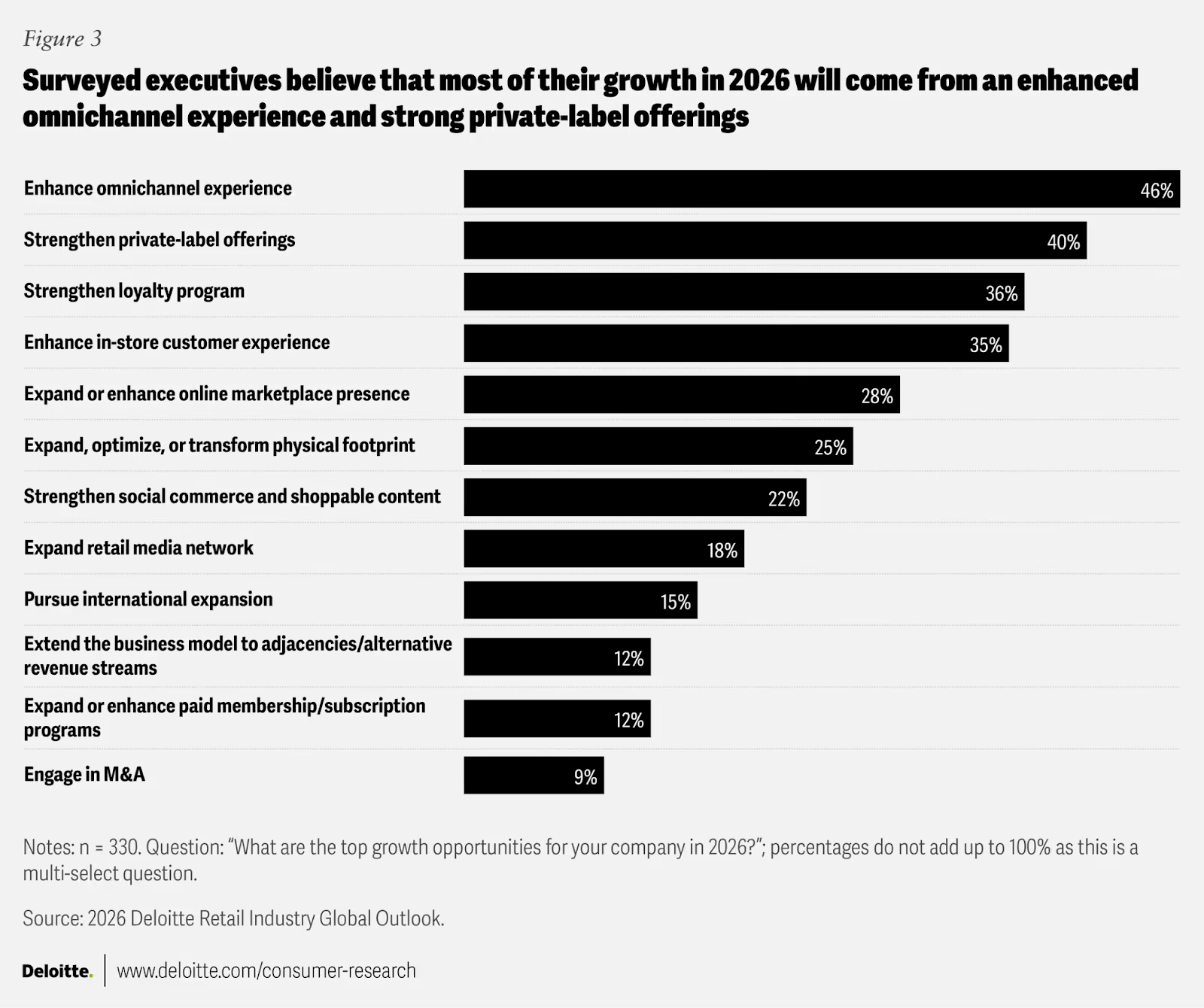
It’s no wonder that enhancing omnichannel offerings is a top priority for retail executives to drive growth in 2026.
At the same time, customer expectations have risen. Buyers want faster service, better support, and more personalized interactions.
So, retail roles are no longer one-dimensional. In-store employees must help shoppers and drive upsells through knowledge and friendly interaction.
On the other hand, online-facing roles that support online retail stores require a different skill set. Take a customer support rep who works over live chat and email. They need to respond clearly and resolve issues quickly, mostly without face-to-face interaction.
Talent acquisition teams often hire for a range of retail jobs at the same time. For example:
- Sales associates or in-store assistants
- Cashiers
- Store managers
- Customer support reps (online or call center)
- E-commerce or fulfillment associates
- Visual merchandisers
- Stock or inventory associates
The type of retail business also shapes hiring priorities. For example, a luxury retailer will have buyers who expect high-touch, consultative experiences. So, it needs assistants with strong communication and deep product knowledge.
In contrast, a grocery store is more likely to focus on someone with great inventory management skills who can handle a steady flow of customers.
Retail recruiters must match the right skills to the right environments, often under tight timelines and constant demand.
What Are the Biggest Challenges With Retail Recruiting?
Retail recruiting is uniquely challenging due to its high volume and turnover rate, plus the number of brands competing for a limited talent pool.
Here are four of the biggest obstacles retail HR leaders face.
1 Hiring Lots of Different Roles at Once
Retail teams are almost always hiring for roles across stores, roles, and seasons. And peak periods like Black Friday only increase staffing pressure.
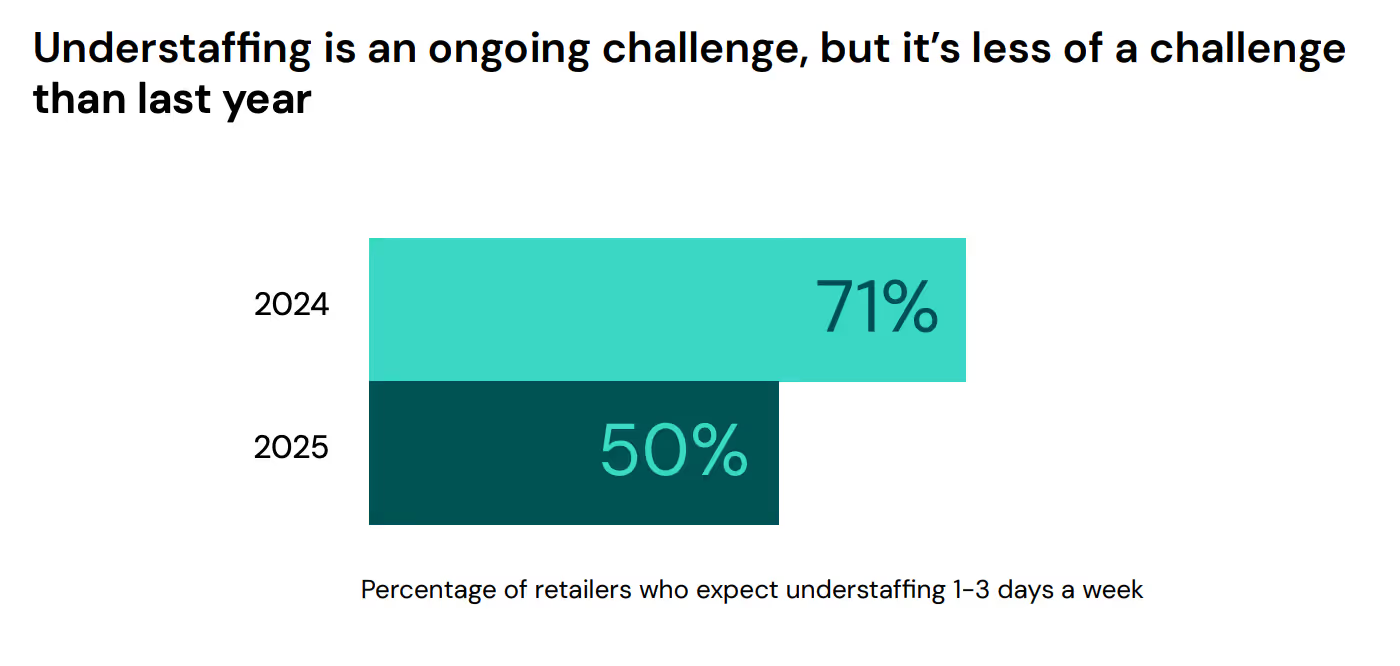
According to UKG research, some 77% of retailers struggle to fill labor gaps during the holiday season. Half also expect understaffing up to three days a week.
When roles stay unfilled, it directly impacts customer experience and store performance. It also adds stress to existing team members who have to work harder to minimize gaps.
2 Standardized Hiring Across Various Locations
Hiring often happens at the individual retail store level, which can lead to inconsistent evaluation and decision-making.
For example, JYSK uses applicant tracking software (ATS) across 3,000+ stores to automate job postings. Then relies on each store manager to subjectively hire candidates from there.
Without one core approach, it’s tricky to maintain a consistent brand experience across locations. Over time, this can create uneven team quality and customer interactions across stores.
3 Traditional Screening Fails to Predict On-the-Job Performance
Resumes and automated screeners can’t reflect or assess how someone will actually perform with customers.
According to GoodTime research, the top issue for recruiters is a skills mismatch (i.e., what applicants claim and what they can actually demonstrate).

A Monster survey also found that more than 1 in 10 job seekers include misleading information in their resumes. Retail hiring managers must often take candidates at their word, which doesn’t always play out as they expect.
4 High Turnover and Short Employee Lifecycles
Retail roles tend to have shorter tenures, which means recruiting services are constantly backfilling positions.
In fact, Mercer research suggests that turnover is highest (26.7%) in the wholesale and retail industry. This rate of replacement is also the top concern for retail HR managers, according to Checkr.
When employees leave, recruiters often focus on filling roles quickly rather than building stable, high-performing teams.
Skills-Based Hiring: How Retailers Can Recruit Faster, More Confident Candidates
Instead of relying on CVs or unstructured interviews, retail teams can use skills-based screening to evaluate how candidates actually perform in situations they’ll face on the job.
Many of retail recruiting’s challenges can be solved by simply assessing this ability earlier in the process.
For instance, recruiters start by defining role-specific tasks. These mirror real scenarios, such as handling a return, responding to a frustrated customer, or helping someone choose between products.
Thousands of candidates then get a link to complete these tasks, using a mix of voice and written responses. This standardizes the process for every single store and applicant.
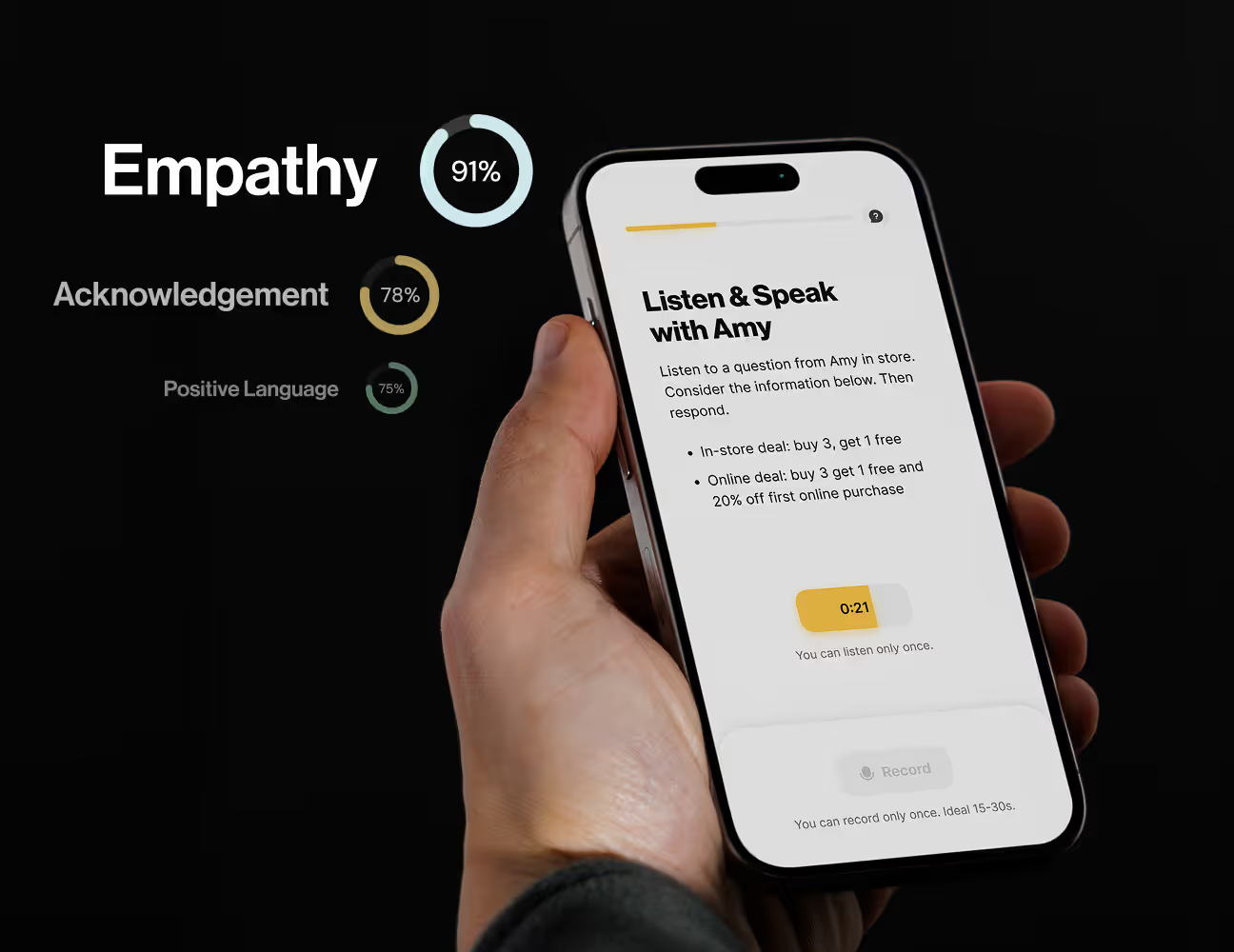
From there, AI evaluates each recording. But instead of traditional keyword screening, it looks at things like communication, tone, and language comprehension. All these factors matter in customer-facing roles, but resumes struggle to measure them.
Recruiters can then review AI-scored results. Or go a step further by listening to or reading candidate responses to get a clear view of how each person actually communicates.
Teams can screen large volumes of applicants quickly, introduce consistency across locations, and focus on real-world performance over guesswork.
Other benefits of this recruitment solution include:
- Reduced bias compared to resume-based filtering
- Clear proof of ability (not just claims), which saves time for both sides
- Improved candidate experience and a higher likelihood of retention once in the role
- Enhanced employer brand and perceived company culture, as applicants feel valued from the first interaction
5 Tips for Improving High-Volume Retail Recruitment Strategies
High-volume recruiters must move quickly without sacrificing quality, stay consistent across store locations, and focus on what actually predicts on-the-job retail performance.
Here are five tips to help retail professionals hire more effectively at scale.
1. Forget Resumes and Focus on Ability Instead
Shifting screening to demonstrated ability helps HR teams make more confident decisions when hiring in high volumes.
It prevents decisions relying too heavily on experience, where strong candidates without “perfect” backgrounds or track records get filtered out.
For example, a job seeker applying for a sales associate role might not have direct retail experience. But they could still be excellent at handling customer questions and guiding decisions.
Short, scenario-based tasks using tools like a job skills screener can capture that natural talent. Here’s how to do it:
- Introduce role-specific assessments early in the recruitment process
- Use real-world scenarios to evaluate skills like communication and problem-solving
- Prioritize how applicants respond over where they’ve worked before
This approach reduces bad hiring rates by 400%. It also creates a fairer, more effective way to quickly identify qualified candidates.
2. Use the Right AI to Speed Up Hiring Processes
Instead of manually screening every application, AI can handle repetitive early-stage tasks like evaluating responses, identifying strong communicators, and shortlisting candidates. This technology then frees up recruiters to focus on higher-value decisions.
Like when candidates complete screening tasks. AI can quickly assess communication, tone, and language comprehension to surface the best retail talent in minutes.
Faster teams can identify and move forward with the right candidates, with less risk of losing them to other opportunities.
To make this work:
- Use AI to automate early-stage screening and shortlisting
- Focus the technology on evaluating real responses, rather than resumes and keywords
- Combine AI scoring with human review for final decisions
The right AI helps teams make faster, more confident decisions while keeping the hiring process smooth and efficient.
3. Standardize Applicant Evaluation
Standardization measures every candidate against the same expectations, no matter where they apply.
Without a shared approach, two applicants with similar abilities can be judged very differently by different interviewers. That creates uneven hiring quality and an inconsistent experience across stores.
But say retail teams use the same set of role-specific scenarios and scoring criteria across all job openings and locations.
Instead of subjective interviews, a retail sales manager in one store is evaluated the same way as one in another. And both results are based on how they handle real customer situations.
To implement this:
- Use consistent, role-based assessment criteria across all locations
- Define clear scoring benchmarks for crucial skills like acknowledgment or using positive language
- Centralize evaluation data so hiring decisions are comparable
By creating a more reliable process, retail teams can meet scaling hiring needs more fairly and without sacrificing quality.
4. Ensure a Positive Candidate Experience
A strong candidate experience involves a retail hiring process that’s simple, clear, and respectful of time. Giving job seekers a better sense of the role early on also helps set expectations on both sides.
When applications feel slow or unclear, candidates often drop off or move on to other opportunities. Even small improvements can make a big difference in completion rates.
Replacing long forms and delayed responses with interactive tasks keeps applicants engaged while offering a clearer understanding of the job.
To improve candidate experience:
- Keep applications for open positions short and easy to complete on mobile
- Provide clear next steps after each stage
- Reduce delays between application and feedback
- Make expectations for the job post transparent from the start
A smoother experience will retain more applicants through the process and help teams make faster hiring decisions.
5. Ensure Reliability and Availability Alongside Skills
In high-volume retail, consistently showing up and working the required schedule is just as crucial as capability.
Full-time roles often don’t follow a regular 9–5 schedule. So, skilled candidates must have availability that aligns with peak hours, weekends, or seasonal demand. Without it, managers face early turnover or constant rota gaps.
For example, a candidate might perform well in assessments and interviews, but only be available for limited weekday hours. As the retail sector often depends heavily on evenings and weekends, that quickly becomes a hiring risk.
To avoid this outcome:
- Include availability specifications in job board postings
- Align hiring criteria with peak trading hours (e.g., weekends or holidays)
- Build flexibility requirements into job descriptions upfront
- Prioritize skilled candidates who can consistently cover high-need shifts
Focusing on reliability and availability helps retail teams reduce turnover and build more stable teams during high-pressure trading periods.
Wrapping Up Retail Recruiting
Retail recruiting works best when teams have the technology to quickly and consistently spot real ability across every role and location. When quality hiring keeps pace with demand, onboarding gets smoother, and top talent is ready to contribute from day one.
Image Credits
Feature Image: Via Pexels / MART PRODUCTION
Image 1: Via Deloitte
Image 2: Via UKG
Image 3: Via GoodTime
Image 4: Property of HiringBranch. Not to be reproduced without permission.
Retail Recruiting FAQs
Retail hiring is often high-volume, fast-paced, and spread across many locations. Roles also vary widely, from customer-facing sales to back-end operations. Recruitment teams must assess varying skill types to find the best talent at scale.
Yes, resumes are still helpful for retail executive searches (like CMO or Vice President) where there are fewer candidates and more time for in-depth interviews.
For most roles, CVs are mainly helpful as background context. They show experience history, but don’t reliably predict how someone will perform with customers, handle in-store situations, or be a good cultural fit.
Skills-based hiring focuses on real ability instead of credentials. By testing how potential candidates respond to realistic scenarios, retail professionals get a clearer view of communication, problem-solving, and customer service skills before hiring.
Retail companies can hire faster using structured, skills-based assessments and automating early screening. Instead of using a recruitment agency, teams can reduce manual review time while getting better signals to make quicker, more confident decisions.


_compressed.avif)




.svg)