



High-volume recruitment no longer relies on resumes. Learn how top-performing companies use a new form of screening for faster, better-quality hires.
Subscribe to our Newsletter
Like what you're reading? Leave us your email, and we'll deliver to your inbox on the last Thursday of the month.
Today’s high-volume recruitment processes were built for speed. But when screening starts with resumes, it can be hard to consistently identify candidates who will perform best on the job at scale.
That’s why more teams are shifting toward skills-based approaches that assess real capability earlier in the hiring funnel.
In this post, you’ll learn a data-driven way to approach high-volume recruitment to move faster and reduce pressure while improving the quality of every hire.
What Is High-Volume Recruitment?
High-volume recruitment refers to hiring a large number of candidates within a relatively short timeframe — usually for similar or repeat roles, such as customer support or sales roles.
This hiring model exists for businesses that need to scale quickly due to rapid company growth, seasonal demand spikes, expansion into new locations, or naturally high turnover. According to 2025 Gem research, even the average recruiter handles 56% more job openings and 2.7x more applications (now over 2,500) than three years previously.
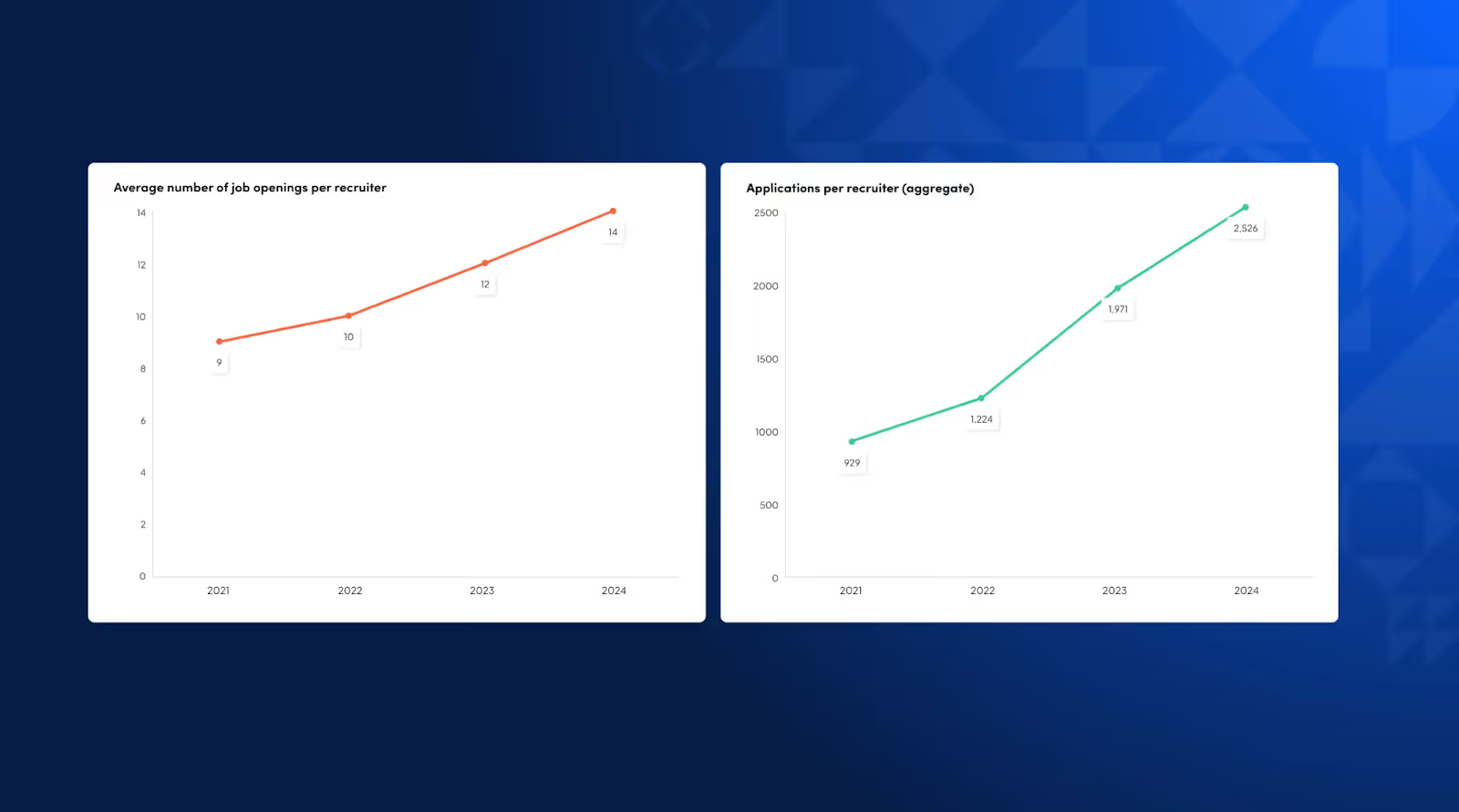
Say an enterprise retailer opens several new locations ahead of the holiday season and needs to hire hundreds of store associates. The hiring team posts job openings online, which quickly attract a large number of applicants.
Candidates submit resumes, the company’s applicant tracking system (ATS) filters the pool, and recruiters begin reviewing and screening to move the strongest ones forward.
High-volume hiring needs are especially common in industries like:
- Retail
- Customer support and contact centers
- Hospitality
- Banking and insurance
- Healthcare support and insurance roles
- Sales development teams
- Logistics and delivery
- Manufacturing, warehousing, and fulfillment
Ray Simon of Crisp Resumes highlights just how time-consuming this process can be as a recruiter:
“Instead of looking after ten candidates, you’re suddenly managing fifty at once across screening, interviews, compliance, offers going out, offers being withdrawn, and then the backfills. It’s busy and a bit chaotic, and the pace really matters. A short delay that wouldn’t be an issue in a corporate role can cost you several strong candidates in a volume intake.”
Recruiters and hiring teams need ways to quickly narrow down huge talent pools. But that pressure for speed often shapes how companies evaluate candidates in the early stages. And it’s not always in both parties’ best interests.
The Reality of High-Volume Recruiting: Speed, Scale, and Trade-Offs
High-volume recruiters must manage hundreds or thousands of job applications per role while working against tight, business-critical hiring timelines.
When a new contact center needs staffing or a retailer prepares for peak season, job advertising can’t sit open for long. Hiring teams need to move quickly to keep businesses running.
This pressure is exactly why today’s hiring workflows evolved the way they did. When application numbers grew, recruiters needed systems that could efficiently process large volumes.
Alex Kovalenko of Kovasys IT Recruitment details some of his biggest recruiting challenges:
“Managing expectations is the biggest headache. A candidate thinks sending seven follow-ups in one week shows ‘initiative,’ while a client thinks three weeks to review a résumé is totally reasonable. You’re stuck in the middle: buffer, translator, and firefighter all at once.”
Over time, structured processes formed around job postings, resume submissions, ATS filtering, and interview scheduling to keep things manageable.
From an operational perspective, these systems streamline recruiting efforts by offering advantages like:
- The ability to process very large candidate pools in minutes
- Fast initial filtering of applications from job boards, social media, or referrals
- Standardized workflows from sourcing to onboarding across recruiting teams
- Predictable talent acquisition and hiring funnels
For organizations managing lengthy hiring pipelines, this structure reduces overwhelm and makes the work manageable. Kathleen Steffey of Naviga Recruiting & Executive Search highlights the importance of using the right tools throughout:
“What has changed are the tools that support the work. Software, automation, and AI have dramatically increased efficiency and the speed of delivery. The process evolved from hands-on, manual labor to a streamlined, technology-driven workflow.”
But the reality of working at this scale also comes with trade-offs that recruiters experience every day. Common challenges include:
- Large numbers of resumes to review, even after filtering
- Limited time available per candidate to offer human-to-human experiences
- Difficulty spotting strong applicants in crowded pools or based on resumes only
- The pressure to move quickly while still making good hiring decisions
These systems manage volume well, but don’t often evaluate ability. And that distinction matters when hiring happens at scale, and teams are even more stretched.
Why Traditional Screening Methods Break at Scale
Many of the screening tools used in today’s high-volume recruitment are built around one core input: the resume. But these documents were originally designed as career summaries, not as reliable indicators of whether someone can perform a specific job well.
A resume can show where someone has worked, the roles they’ve held, and the responsibilities they’ve listed. What it doesn’t show is how effectively that person performed the tasks that matter for the job they’re applying for.
When resume parsing software and screeners evaluate document content, recruiters filter using limited signals (like matching keywords) that may not even reflect a candidate’s ability:
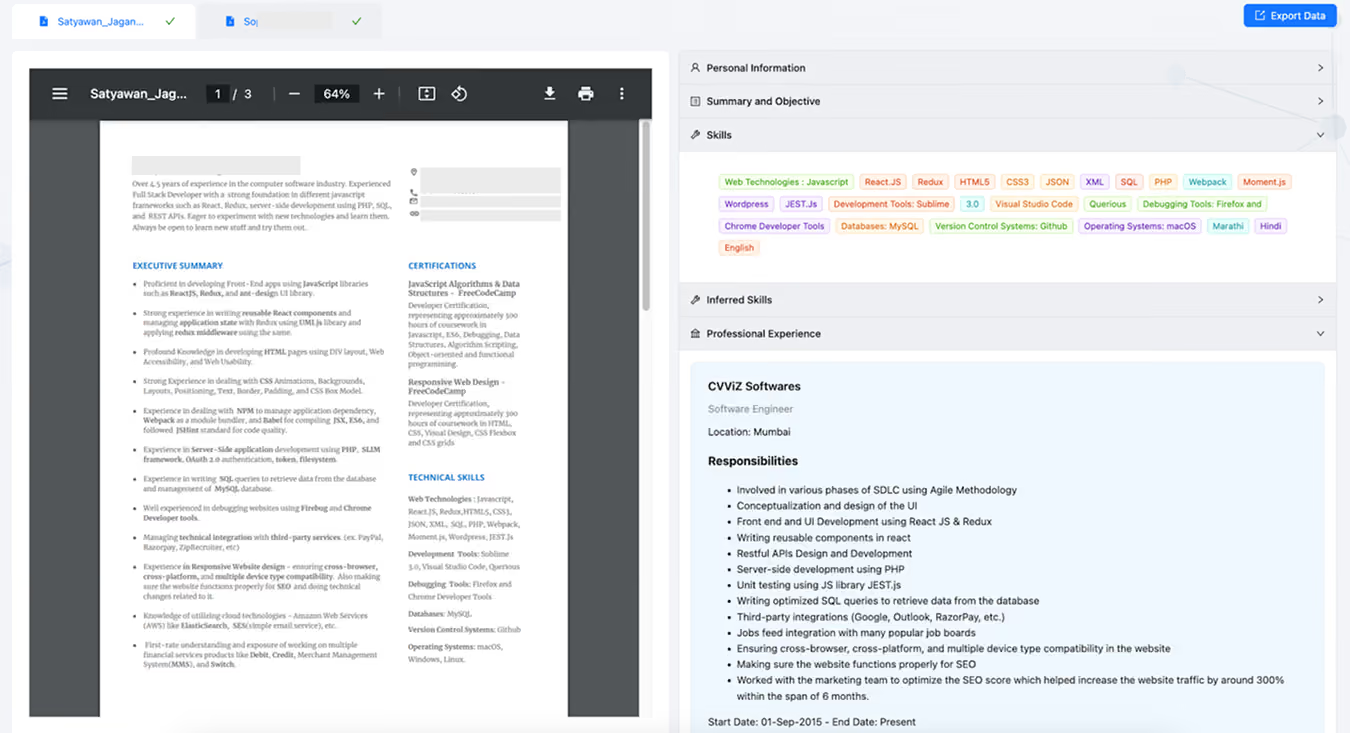
Here are a few core limitations of these traditional screening methods:
- CVs highlight experience, but don’t always demonstrate whether someone can actually do the work required in a role
- Many candidates now optimize their resumes for ATS and screeners, adding keywords that improve their chances of passing automated filters
- A resume might reveal where someone worked, but not how well they handled customer interactions, solved problems, communicated with clients, or performed day-to-day tasks that matter most for the job
This approach makes it harder to identify top talent with transferable skills or nontraditional backgrounds. In other words, people who may not match a keyword profile but could still perform well in the role.
In many ways, this is a design mismatch. Resumes were created for smaller-scale hiring conversations, where hiring managers had the time to interpret context and explore a candidate’s experience in more depth.
That’s why more organizations are beginning to evaluate skills and capabilities earlier in the hiring process, rather than relying on resumes as the first filter.
How Skills-Based Screening Helps Recruiters Move Faster and Hire Better
Skills-based hiring lets recruiters prioritize candidates who demonstrate real capability (rather than spending time manually filtering CVs), resulting in better-quality hires.
For example, our skills screener sends candidates a five-task written or spoken assessment relevant to their role:
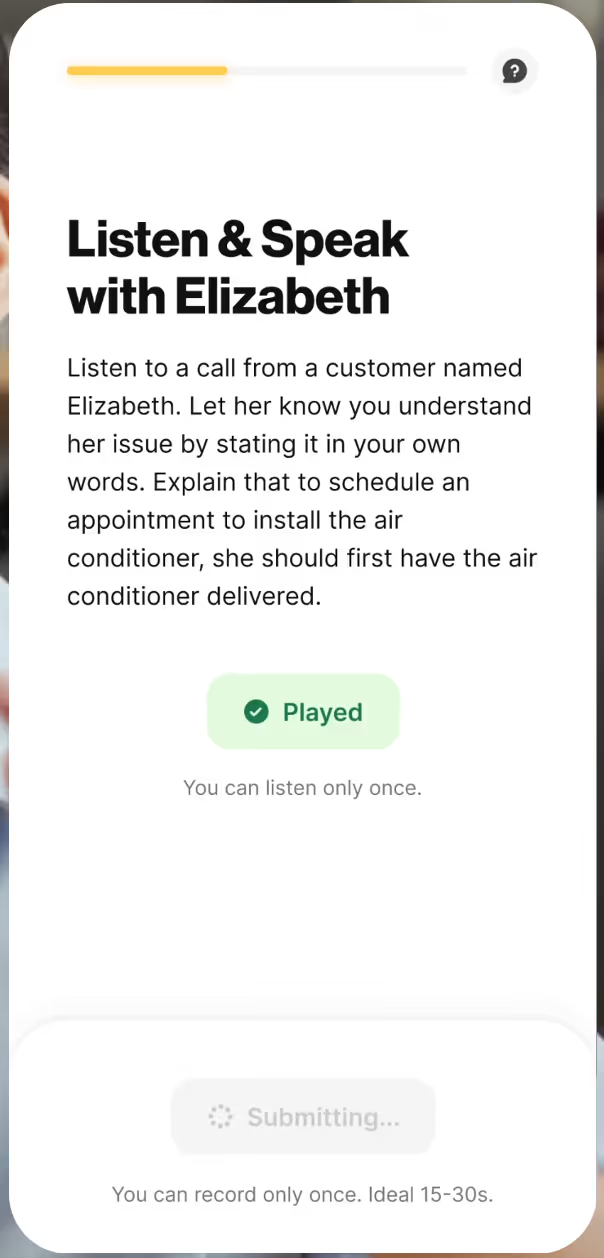
A customer support candidate might respond to realistic customer scenarios, while a sales development applicant demonstrates communication or problem-solving. This method increases candidate engagement by allowing people to showcase their abilities.
AI-powered algorithms then score soft skills and language comprehension and send rankings to recruiters to more easily prioritize the strongest-performing candidates.
Automation still plays a key role in keeping this process scalable. Technology’s focus just shifts from analyzing keywords and job descriptions to capability. According to HR.com research, around 95% of organizations plan to use AI to support high-volume recruiting.
For recruiters, skills-based screening processes help:
- Surface qualified candidates faster
- Reduce time spent reviewing resumes and LinkedIn profiles
- Allow interviews to focus on applicants most likely to succeed
- Create more positive candidate experiences and improve your employer brand, as job seekers appreciate getting to show what they can do in real-world scenarios
It’s no wonder this type of hiring is growing in popularity and surfacing more often in forums like Reddit:
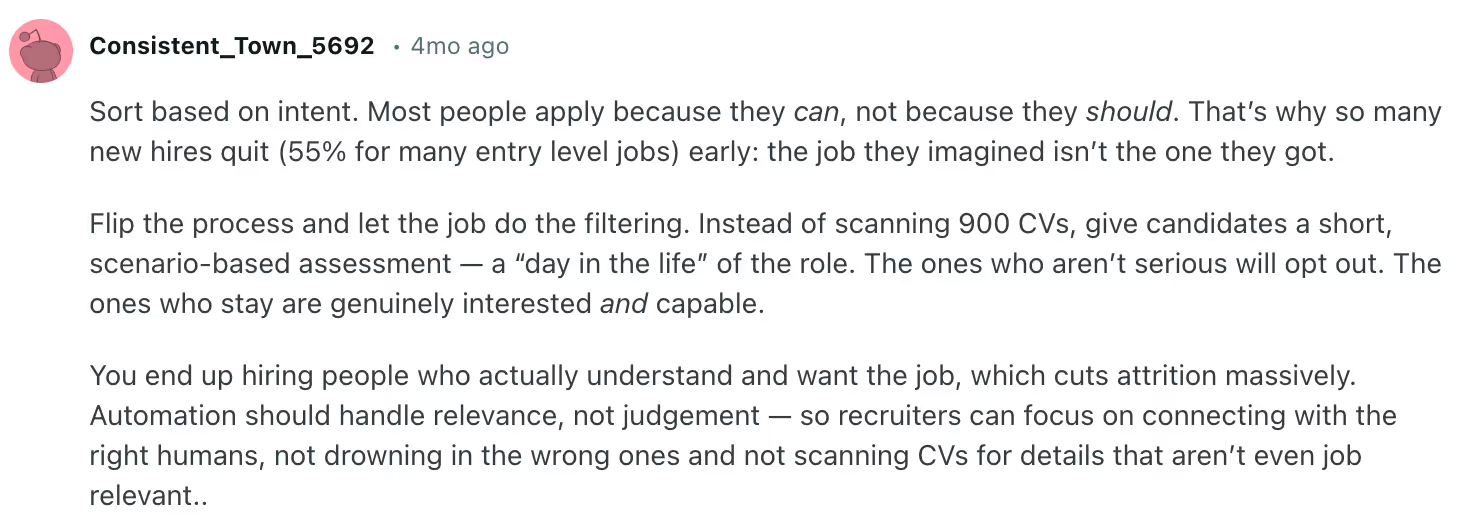
Of course, any hiring approach needs to prove its value. That’s why the next step for teams is tracking KPIs to measure their success.
8 Metrics That Actually Matter in High-Volume Hiring
Tracking the right metrics is essential to determine whether a high-volume recruiting strategy effectively identifies strong candidates. Without clear measures, it’s difficult to know if teams are improving hiring outcomes or just moving applications through the funnel faster.
Quality of hire is often the most crucial outcome for many high-volume hiring teams, according to the same HR.com research (usually measured through first-year performance or retention).
Eight key metrics that recruiters commonly track include:
- Time-to-hire or time-to-fill. How quickly roles are filled from posting to job offer acceptance.
- Quality of hire. Often measured through performance ratings or manager feedback.
- Application-to-hire ratio. Demonstrates the efficiency of the hiring funnel.
- Retention rate. How long new hires stay in the role.
- Screening-to-interview conversion rate. Whether screening identifies potential candidates who make it to in-person or video interviews (where applicable).
- Candidate drop-off rate. Where job seekers leave the application process.
- Recruiter workload. Time spent reviewing applications for open positions.
- Cost per hire. Operational efficiency of the high-volume hiring process.
By monitoring these metrics, hiring teams can identify bottlenecks, refine screening methods, and ensure that the recruitment process is both fast and effective at selecting the right talent.
For example, ATI Business Group replaced its resume-heavy recruitment flow and cut time-to-hire by 50% by implementing skills-based assessments.
And by analyzing Fundraising Direct’s key metrics that led to campaign success, HiringBranch created a custom 20-minute automated speaking test that analyzed seven core skills. The new assessment reduced interviews by 80% and time-to-hire to two days.
Wrapping Up High-Volume Recruitment
High-volume recruitment will always depend on automation to speed up the earliest stages of the hiring funnel and prevent burnout. But by shifting that technology from resume to skills screening, teams can move quickly and be more confident in every hiring decision.
Image Credits
Feature Image: Via Pexels / Tima Miroshnichenko
Image 1: Via Gem
Image 2: Via CVViZ
Image 3: Property of HiringBranch. Not to be reproduced without permission.
Image 4: Via Reddit
High-Volume Recruitment FAQs
The main challenges of high-volume recruitment are handling large volumes of applications, identifying strong candidates quickly, and managing recruiter workload. At scale, balancing speed and quality becomes difficult, especially when early screening relies on limited signals.
Resumes show past experience but don’t reliably indicate whether someone can perform the role. They’re often used as the primary filter in high-volume recruiting, which can lead to strong candidates being overlooked (especially if they don’t match specific keywords or have nontraditional backgrounds).
Skills-based hiring evaluates candidates based on demonstrated ability rather than work history or credentials. This approach often involves using assessments or simulations to measure how well candidates can perform real tasks relevant to the role.
The best skills depend on the role, but typical abilities include communication, problem-solving, customer interaction, role-specific tasks, and technical knowledge. The goal is to assess specific skills that directly impact on-the-job performance.
.avif)





.svg)