



Compare talent assessment tool types, see how tools fit into hiring workflows, and learn how to evaluate and implement them to improve hiring outcomes.
Subscribe to our Newsletter
Like what you're reading? Leave us your email, and we'll deliver to your inbox on the last Thursday of the month.
Hiring teams are under more pressure than ever to move quickly while maintaining consistent hiring standards at scale. But when screening relies heavily on resumes and interviews, it can be difficult to identify candidates who’ll actually perform well in the role.
That’s why many organizations are turning to talent assessment tools to bring structure and evidence into the evaluation process.
In this guide, you’ll learn about the most effective talent assessment tools, how they fit into modern hiring workflows, and how to evaluate and implement them to improve hiring outcomes in your organization.
How Talent Assessment Tools Fit Into Modern Hiring Workflows
Talent assessment tools are software platforms that evaluate candidates’ skills, competencies, and potential as part of a structured, data-driven approach to recruiting.
Here’s how the tools support talent acquisition teams at each stage of the modern hiring process.
Early Candidate Screening
Many hiring teams use screening assessments at the start to reduce the time they spend reviewing resumes. Assessments help teams quickly identify candidates with the right baseline skills while filtering large applicant pools more efficiently.
This approach is especially valuable in high-volume recruiting, where speed and consistency both matter.
Skills Validation
Talent assessments allow recruiters to validate a candidate’s specific skills and job-relevant abilities. These tools produce measurable signals, or indicators, of how well a candidate can perform specific tasks or demonstrate key competencies.
Recruiters can use these actionable insights to evaluate how ready a candidate is for a role, rather than trying to gauge this from their resume.
Structured Candidate Comparison
Assessment results bring consistent data into the candidate evaluation process. Recruiters can compare applicants using the same criteria rather than relying on individual judgment or unstructured feedback.
Evaluating candidates fairly across roles and hiring teams is crucial when multiple stakeholders need to align on hiring decisions.
Data-Informed Hiring Decisions
In the final hiring stages, assessment tools translate candidates’ test performance into clear, usable insights. Recruiters and hiring managers can prioritize top talent based on evidence tied to role requirements, rather than subjective criteria such as cultural fit.
The shift toward data-informed decision-making helps teams assess candidates more consistently throughout the hiring process. It also sets the foundation for the evaluation and implementation steps we’ll cover later in this guide.
Let’s explore the types of talent assessment tools that best support this skills-based hiring approach.
The 7 Best Types of Talent Assessment Tools for Hiring Teams
Organizations increasingly rely on talent assessment platforms to bring structure and measurable evidence into recruiting decisions.
Here are the seven best talent assessment tools for hiring teams.
1. Soft Skills Tests
Soft skills tests evaluate interpersonal competencies that influence how candidates communicate, collaborate, and handle real-world interactions. These capabilities are especially important in customer-facing roles, where communication quality and emotional intelligence directly affect performance.
Unlike traditional behavioural assessments or personality assessments, soft skills tests focus on how candidates apply communication and problem-solving skills in real scenarios rather than relying on inferred personality traits.
Soft skills tests evaluate skills such as communication, empathy, adaptability, and conflict resolution. Because these traits are difficult to measure through resume screening or traditional interviews, structured assessments provide more consistent signals for candidate evaluation.
For example, HiringBranch uses AI-powered job simulations to test how candidates respond in realistic scenarios, generating standardized skills scores across key communication competencies.
In the example below, the platform’s Job Skills Screen assesses a candidate’s verbal response to a customer support scenario:
The AI-powered software transcribes the candidate’s response in real time, then scores defined competencies such as acknowledgment, empathy, and positive language.
2. Coding Skills Tests
Coding skills tests evaluate candidates’ ability to write code and solve technical problems in a structured environment. These assessments focus on how candidates approach real development tasks rather than how they describe their experience.
Coding and technical skills tests are built for roles where applied knowledge is non-negotiable. Used primarily in software engineering, IT, and data functions, they evaluate practical ability across areas like programming language proficiency, debugging, SQL, scripting, system troubleshooting, and cloud infrastructure, confirming that candidates can do the work, not just describe it.
Codility stands out for its ability to replicate real engineering tasks in a controlled environment. It allows hiring teams to evaluate how candidates write, test, and debug code under realistic conditions.
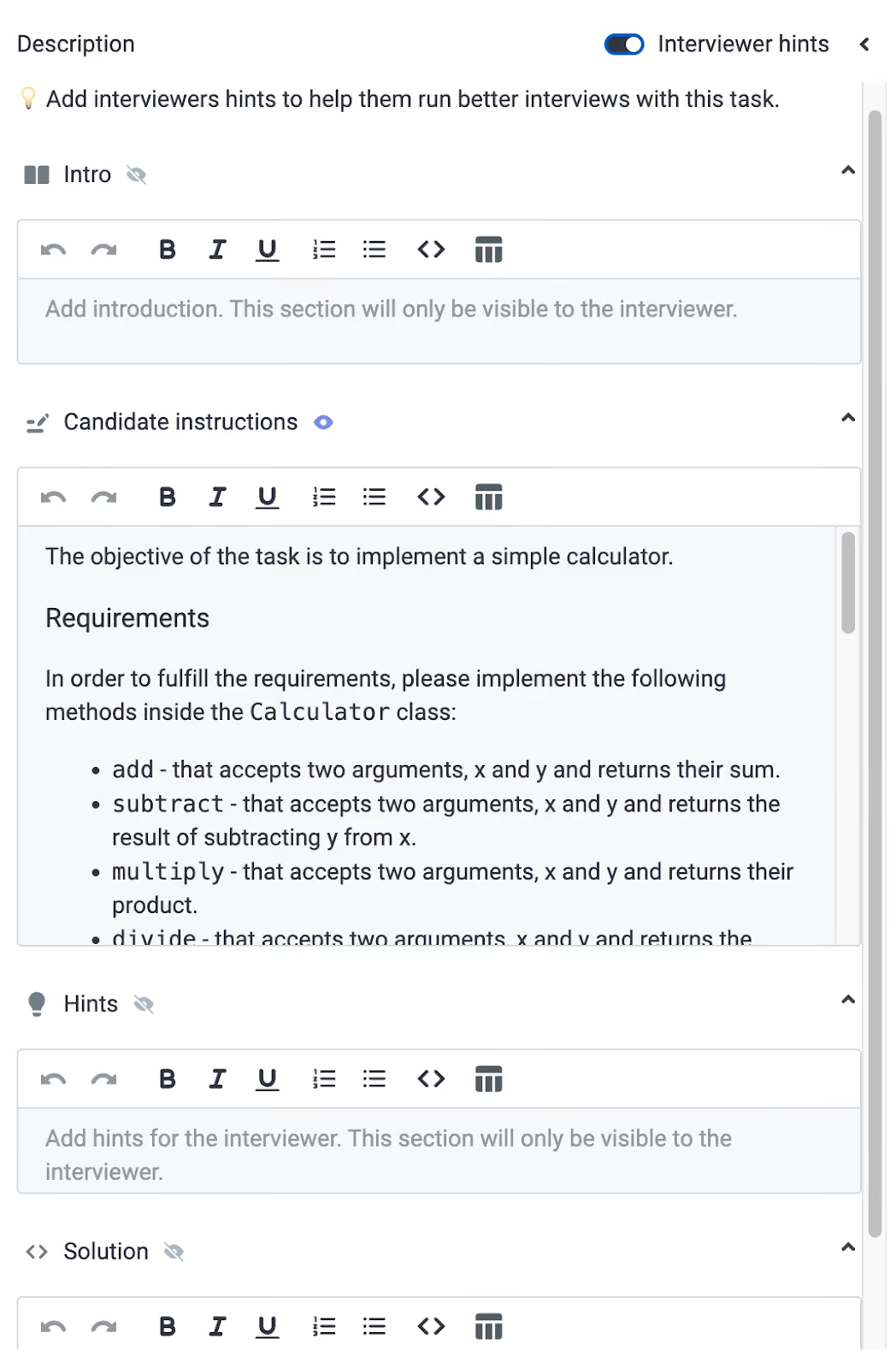
Ultimately, Codility’s approach identifies candidates who can apply technical skills in practice.
TestDome stands out for its library of role-specific technical challenges, covering areas such as programming, SQL, and system administration.
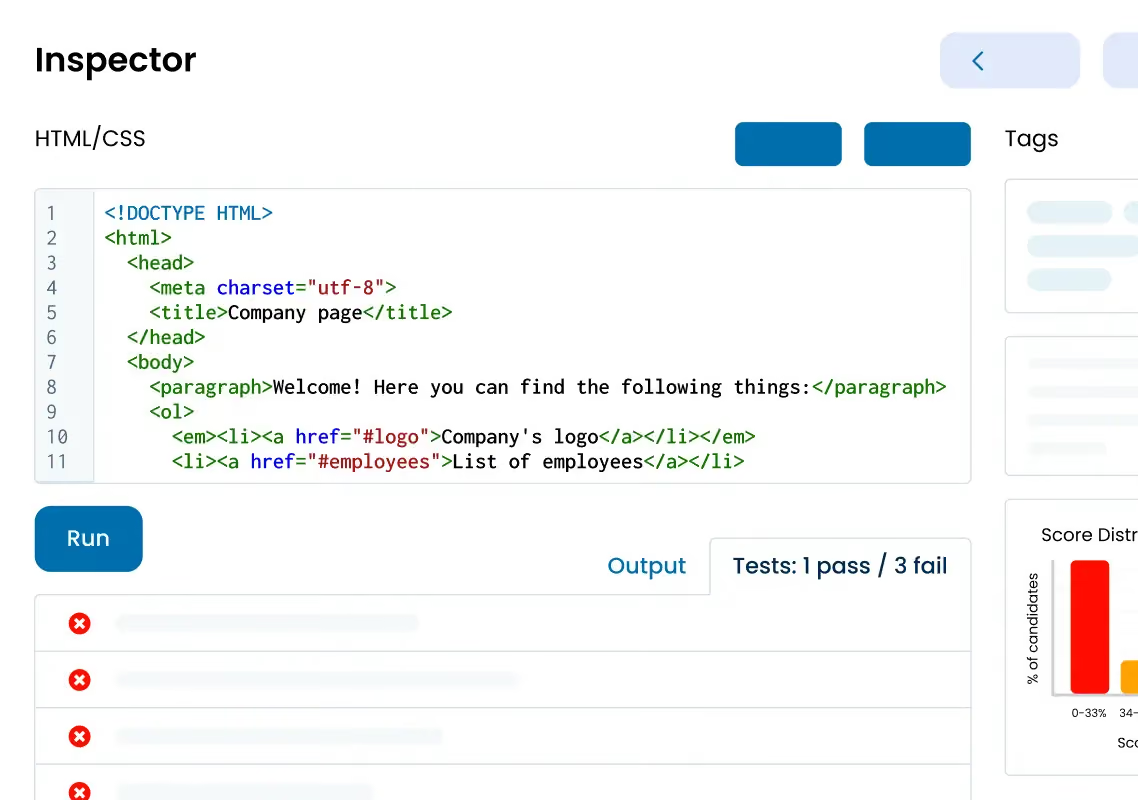
TestDome assessments focus on applied problem-solving, helping hiring teams evaluate whether applicants can perform real tasks required in technical roles.
3. Software Proficiency Tests
Software proficiency tests gauge how effectively candidates use the tools required in day-to-day work. These assessments focus on practical execution, ensuring candidates can operate key systems without extensive onboarding.
The tests are often used in specific roles across marketing, finance, operations, and administration that require software proficiency. Assessments often cover tools such as Microsoft Office applications and design software, including Adobe Creative Suite.
eSkill is a strong example in this category. The platform offers role-specific assessments across widely used business tools, for instance, Excel and CRM systems.
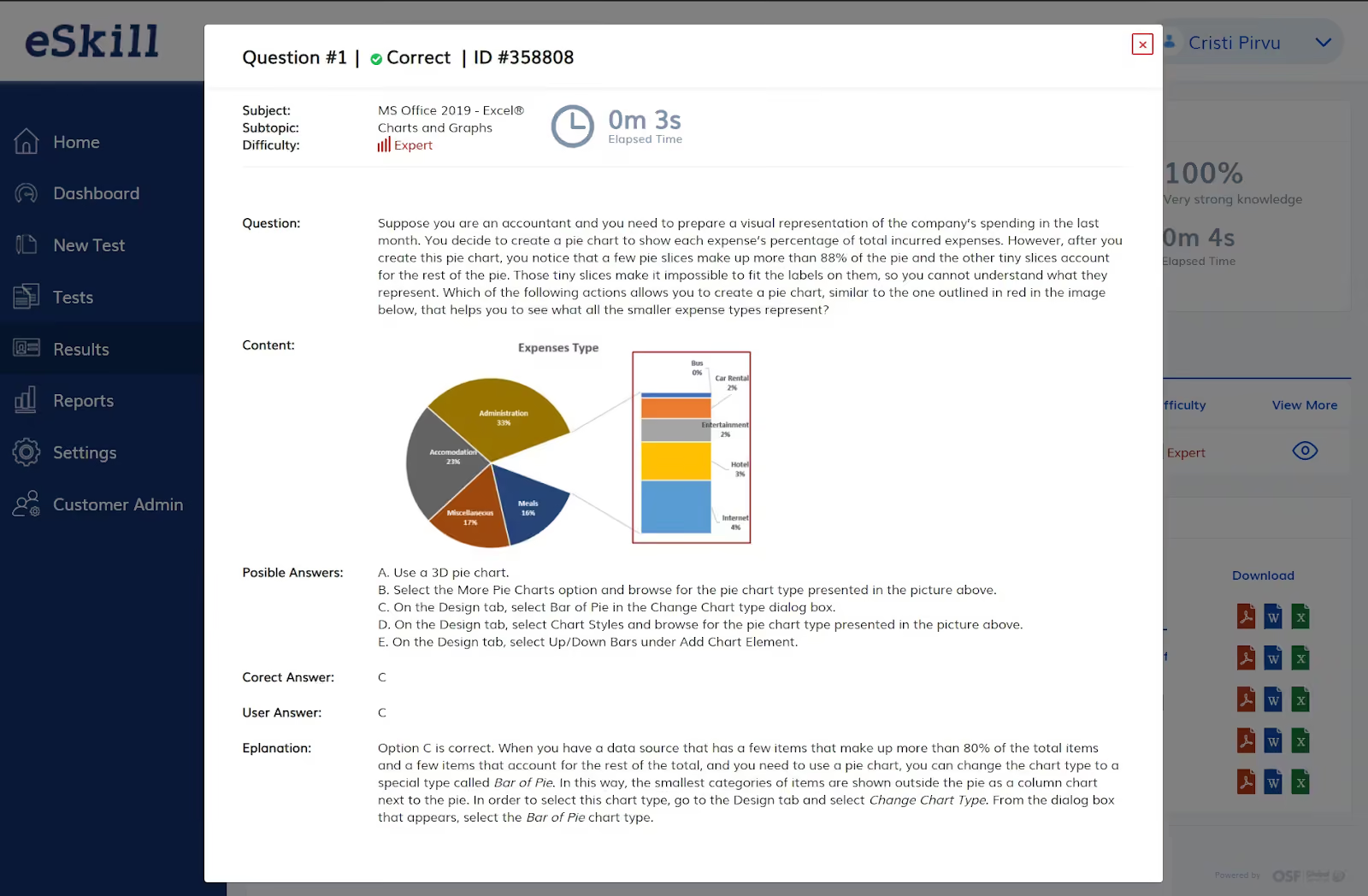
eSkill’s assessments focus on practical software execution, helping hiring teams confirm candidates’ familiarity with the necessary tools.
4. Cognitive Ability Tests
Cognitive ability tests measure how candidates process information, solve problems, and adapt to new challenges. The tests are often used in environments that require strong analytical thinking, such as consulting roles and graduate hiring programs.
Cognitive assessments typically require candidates to interpret data, identify patterns, or solve unfamiliar problems under timed conditions. Candidates’ responses to these tasks provide measurable indicators of how they think and process new information.
Thomas International’s General Intelligence Assessment (GIA) is widely used for its structured approach to measuring reasoning, learning speed, and problem-solving ability. Here’s what a typical GIA report looks like:
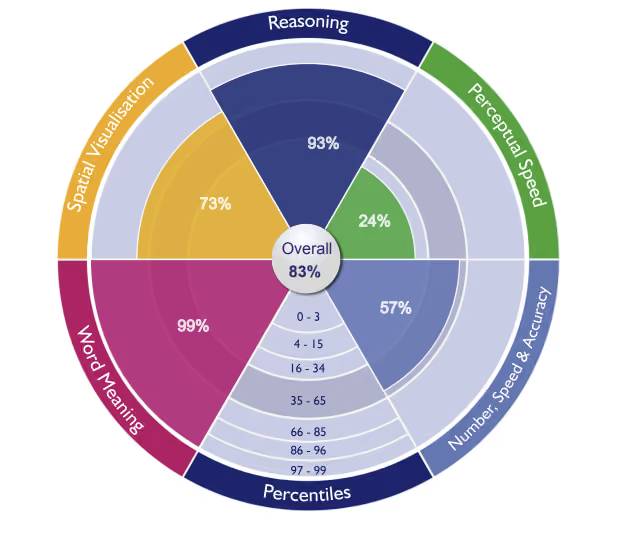
The GIA provides a clear view of how candidates process information across multiple cognitive dimensions. These are high-level indicators, and don’t necessarily correlate to on-the-job performance.
Note: Cognitive ability tests are a type of psychometric assessment. Other psychometric tools evaluate personality traits, work style, and behavioural patterns, often through personality assessments.
5. Typing and Data Entry Tests
Typing and data entry tests evaluate how accurately and efficiently candidates handle routine input tasks. The assessments focus on speed, precision, attention to detail, and the ability to process information quickly and reliably in structured workflows.
These tests are most relevant for administrative, clerical, and operations roles where quick, consistent data handling is a core part of the job.
TypingTest Pro is a strong example in this category, offering standardized tests that measure typing speed and accuracy under timed conditions.
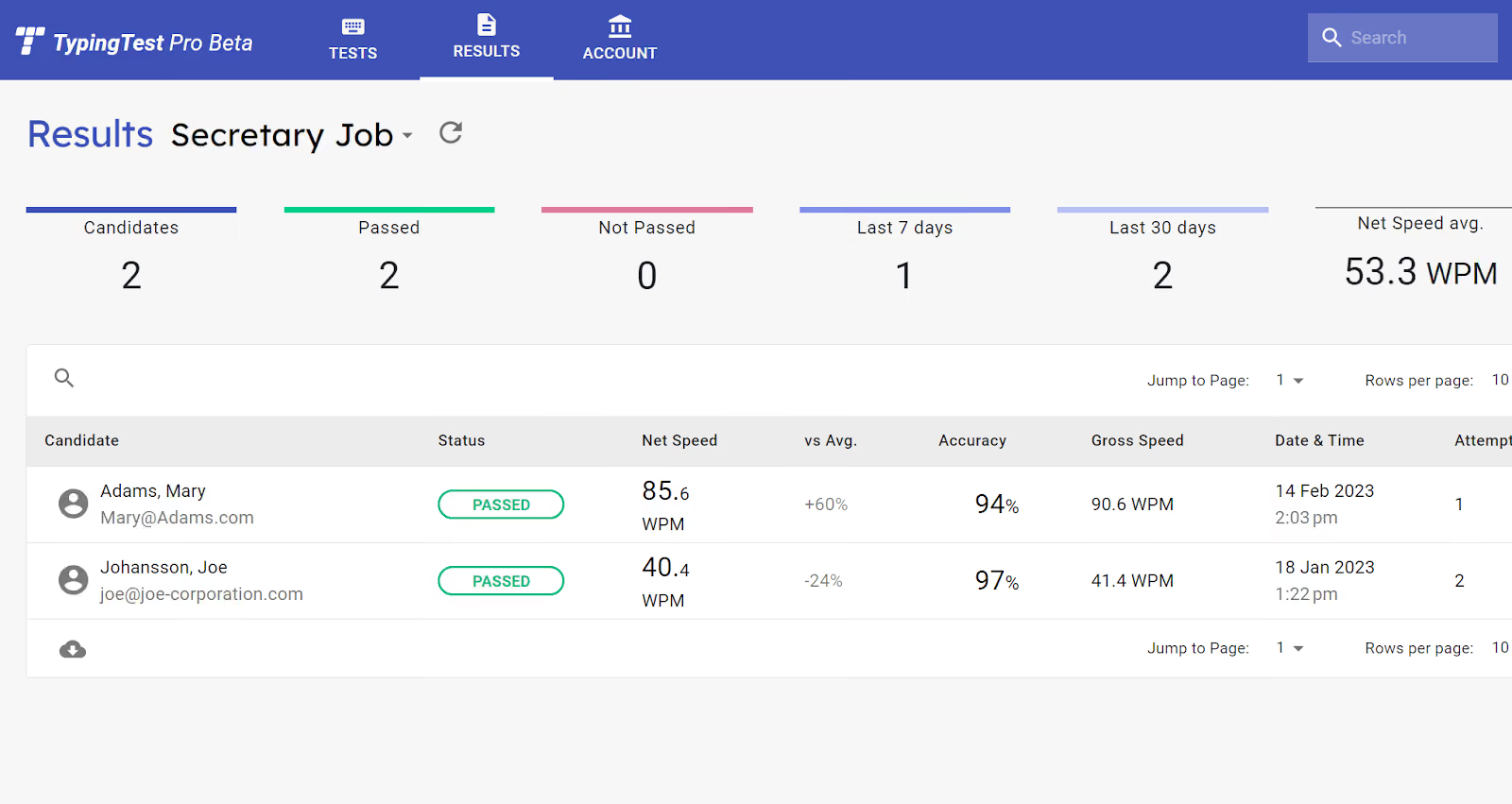
This way, the platform makes it easy for hiring teams to compare candidates on the administrative skills that directly impact day-to-day performance.
6. Numerical and Data Analysis Tests
Numerical and data analysis tests evaluate how candidates interpret quantitative information and apply logical reasoning. These assessments focus on how effectively candidates work with data to support decision-making.
The tests are widely used in roles such as finance, business analysis, data analysis, and consulting, where interpreting data is a core responsibility. Candidates are typically evaluated in areas like working with charts and tables, numerical problem-solving, and quantitative reasoning.
Aon’s numerical reasoning tests are widely used to assess how candidates interpret and apply quantitative information in work-related contexts.
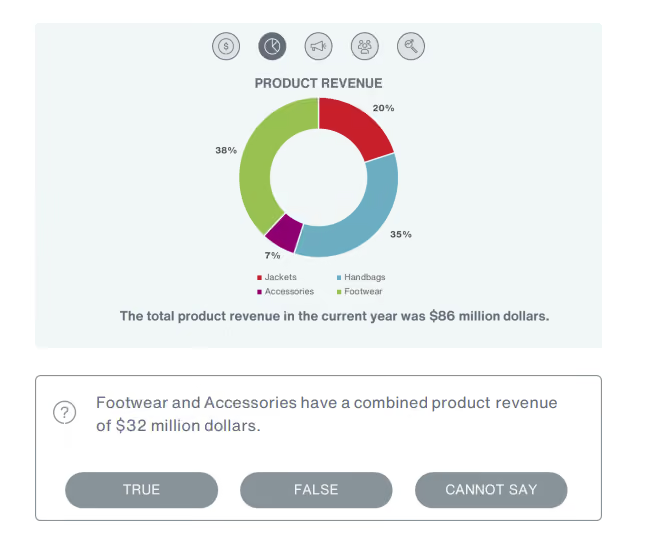
The tests focus on reading charts, tables, and numerical data accurately, giving hiring teams a clear view of how candidates handle data in practical decision-making situations.
How to Evaluate Talent Assessment Tools
To help you weigh up the options within each category, here’s a practical framework for evaluating specific talent assessment solutions.
Note: These operational considerations complement the strategic SCALE framework for vendor selection, outlined in our talent assessments guide. Use the framework below when you’re ready to evaluate how a specific tool will function inside your hiring workflows.
Assessment Types and Role Coverage
Start by confirming that your chosen assessment type reflects what successful performance looks like in the role. The earlier section outlined common test types, but at this stage, focus on how accurately that type captures real job performance.
For example, if you’re hiring for a call centre agent, use a soft skills assessment that reflects real customer interactions. If you’re hiring for a software engineer, choose an assessment method that mirrors the tasks candidates will encounter on the job, like writing code or working with datasets.
Next, compare how different tools within that category measure those skills. Consider:
- How each platform defines competencies
- How closely tasks reflect real work
- Whether the output gives you a clear signal of candidate readiness
Tools that reflect real job requirements tend to be most effective in this final area, as they show how candidates handle tasks they would actually perform in the role.
The Candidate Experience
Review how each tool delivers the assessment from the candidate’s perspective. A clear and well-structured experience helps candidates complete assessments confidently and demonstrate their abilities effectively.
As part of the evaluation process, it’s good practice to test the candidate experience directly. Look at:
- How long the assessment takes
- How clear the instructions are
- How easy it is to complete the test on different devices
In volume hiring, even small differences in these areas can significantly affect test completion rates and the quality of candidate responses.
A positive candidate experience also depends on whether the assessment feels relevant and worthwhile. Candidates are more likely to engage fully when they see it as a meaningful step in the hiring process.
For example, a soft skills assessment should feel grounded in real interactions, while a coding or technical test should present clear tasks that follow a logical structure.
Note: Some platforms include proctoring tools to ensure candidates complete assessments independently and under the required conditions. The best tools do this without introducing friction to the candidate experience.
Integration With Recruiting Systems
Check how easily each tool connects to your existing recruiting systems. Assessment results should move automatically into your applicant tracking system (ATS) so recruiters can view and act on them without switching between platforms.
Ask how the tool fits into your current workflow. Can it:
- Trigger assessments at the right stage?
- Track candidate progress?
- Store results alongside other evaluation data?
If the answer to any of these questions is no, recruiters may need to manage parts of the process manually. This will inevitably slow down decision-making.
In high-volume hiring, delays and extra steps quickly compound. That’s why it’s important to choose tools that integrate cleanly with existing systems to help maintain a structured hiring process.
Reporting and Hiring Insights
Hiring teams are more likely to use talent assessment tools accurately and consistently when they can review and analyze the data efficiently.
Compare how each tool presents results, paying close attention to whether recruiters can:
- Understand the scores at a glance
- Compare candidates quickly
- Use the data to make informed hiring decisions
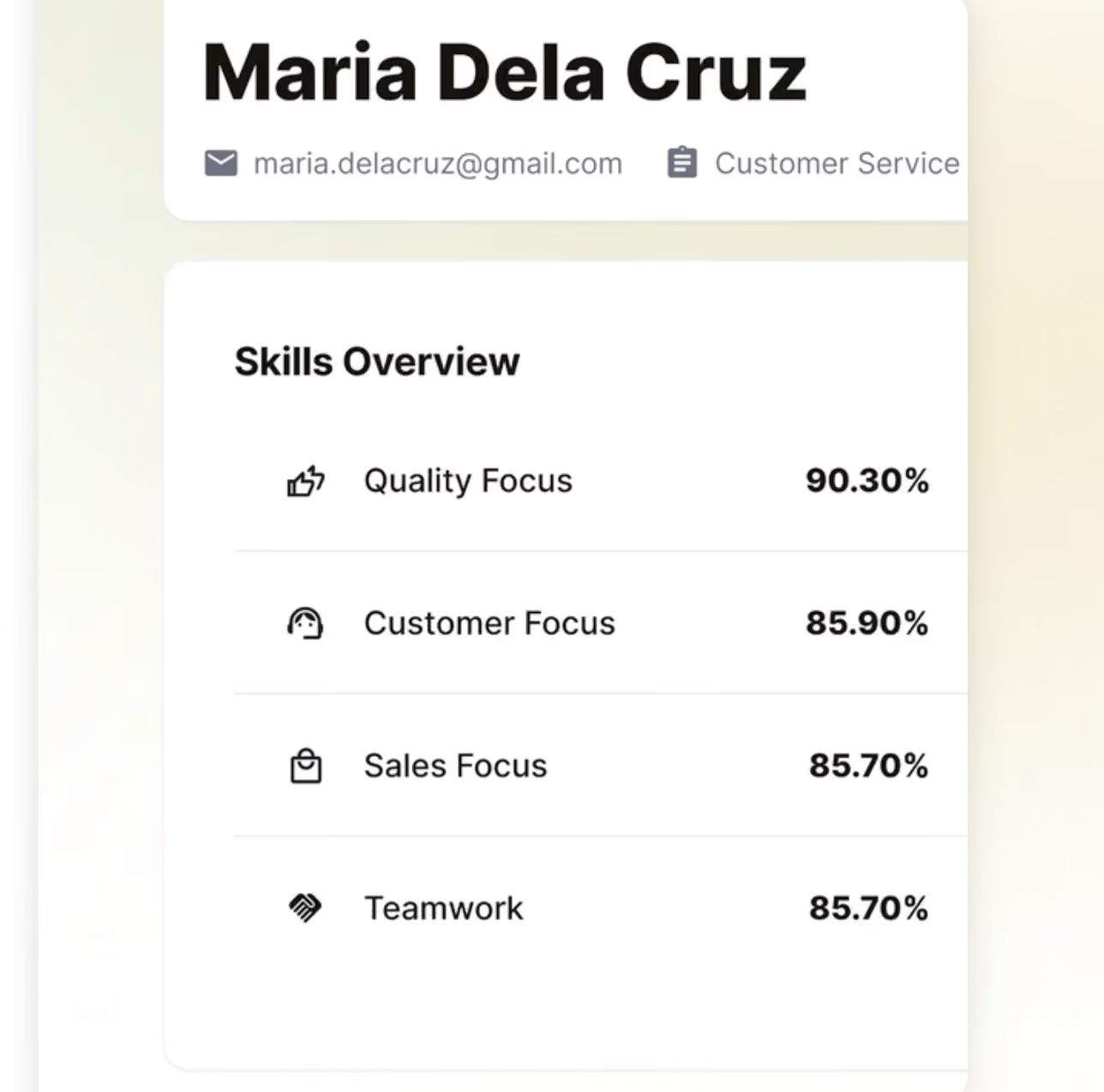
Look for tools that clearly link scores to role-relevant competencies, such as tech support, sales, and teamwork. Recruiters and HR teams should have an at-a-glance view of candidates’ scores and how they compare, as in the example below.
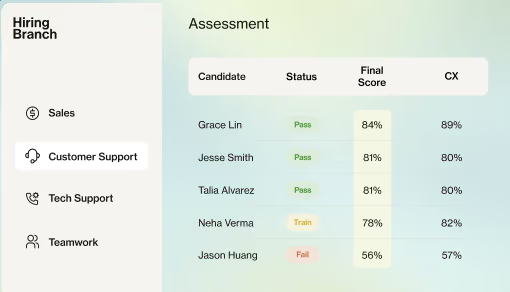
Remember, the goal isn’t just to collect data, but to generate insights that hiring teams can act on quickly. For example, let’s say recruiters note that candidates who rush through assessments tend to perform less well in interviews. As a result, they might flag unusually short completion times and review those applications more carefully.
Scalability and Automation
Finally, assess how each tool performs under real hiring volumes. For enterprise teams, the right tools for talent assessment maintain speed and consistency as application numbers grow.
Look at how the tool handles scoring, ranking, and candidate volume. Consider whether it can:
- Evaluate large candidate pools quickly
- Apply scoring consistently across different roles and hiring cycles
- Reduce manual effort for recruiters
Automation should support efficiency without weakening evaluation quality. The strongest tools combine scalable workflows with reliable assessment models, enabling teams to handle high-volume hiring while maintaining structured, consistent decision-making.
Implementing Talent Assessment Tools in Hiring Operations
Selecting the right talent assessment is just the first step. To truly improve efficiency, support recruiters and strengthen hiring outcomes, teams must set it up effectively.
Here’s a five-step implementation framework for TA leaders to follow.
1. Configure the Assessment for Real Hiring Use
Start by configuring the tool to reflect how your hiring teams actually make talent decisions. This exercise usually involves setting scoring thresholds, defining what strong performance looks like, and aligning the assessment with role requirements.
Recruiters using a soft skills assessment for customer support roles may define clear benchmarks for communication quality or tone. A team using a numerical test may set minimum score thresholds based on the level of analytical ability required for the role.
This step ensures that recruiters can interpret results consistently and apply them with confidence. It also means that assessment outputs align directly with hiring decisions. For example: “We will progress a candidate to the next stage of the process if they achieve a result of 75% or higher.”
2. Introduce the Assessment Into the Hiring Workflow
Define the exact stage in your hiring process where the assessment takes place and keep that stage consistent for every candidate. Recruiters should follow the same sequence so results can be compared reliably across applicants.
In high-volume hiring, many teams introduce short assessments early in the process to filter large applicant pools. For example, a soft skills test can quickly identify candidates who communicate clearly, while a numerical test can screen for basic analytical ability. These early signals help recruiters focus on qualified applicants without having to review every resume.
More in-depth assessments are often more effective later in the process. Coding or technical tests, for instance, tend to work better after initial screening when candidates are already engaged.
Structuring assessments across stages helps balance efficiency with candidate experience and keeps the process moving.
3. Train Recruiters and Hiring Managers
Everyone involved in the hiring process should be trained to consistently interpret assessment results. This training should focus on how results translate into day-to-day hiring decisions.
Begin by mapping assessment results to specific competencies and documenting how recruiters should apply them. Let’s say a soft skills assessment scores candidates on communication and problem-solving. In this case, recruiters might prioritize candidates with stronger communication scores for customer-facing roles.
This shared understanding becomes especially important in high-volume hiring, where teams rely on data-driven insights to efficiently prioritize candidates.
Training should also show how assessment results fit alongside other evaluation methods. Assessment data should inform hiring decisions while still allowing room for judgment. When recruiters apply results consistently, candidate evaluation becomes more structured and comparable across hiring teams.
4. Measure Impact on Hiring Outcomes
Implementation doesn’t end once the tool is live. Track how assessment results influence hiring outcomes and adjust your approach over time so the tool continues to deliver value as hiring needs evolve.
Start with a small set of practical metrics, such as completion rates, time-to-hire, and early indicators of job performance. For example, early performance indicators might show that candidates with strong soft skills scores handle customer interactions most effectively. Meanwhile, higher technical scores might correlate with outcomes like faster onboarding and fewer errors in role-specific tasks.
Over time, teams can connect assessment data more directly to quality of hire. This metric measures a new employee’s value to an organization, including:
- How well they perform in their role
- How they contribute to the team
- How aligned they are with the company’s culture and goals
To evaluate quality of hire, compare a candidate’s on-the-job performance with their assessment results. You might find this evidence in performance reviews, productivity metrics, manager feedback, or attrition data.
This approach helps teams identify which assessment results align most closely with strong on-the-job performance. Teams can then use this insight to revisit scoring thresholds and review how they use results in hiring decisions over time.
5. Use Assessment Data to Improve Talent Strategy
As you collect more assessment data, use it to support broader talent management decisions and long-term employee retention. For instance, patterns in candidate performance might highlight which hiring channels produce high-potential candidates for different roles.
Use these insights to refine job criteria and focus on sourcing channels that consistently produce strong candidates. These performance patterns can also help you identify skill gaps and introduce targeted employee development initiatives, such as upskilling and reskilling.
Assessment data can also highlight the right people with leadership potential or consistent high performance. Over time, you can use this insight to identify future leaders and strengthen succession planning and leadership development efforts.
Build a Stronger Hiring Strategy With Talent Assessment Tools
Talent assessment tools shape how hiring teams and recruiters evaluate candidates in practice. When aligned with the real demands of a role, they lead to more consistent hiring decisions, higher recruitment standards, and stronger long-term workforce performance.
Learn how the right talent assessment tests help organizations measure role-critical skills and build more reliable hiring processes at scale.
Image Credits
Featured image: Via Unsplash / Jakub Żerdzicki
Image 1: Property of HiringBranch. Not to be reproduced without permission.
Image 2: Via Codility
Image 3: Via TestDome
Image 4: Via eSkill
Image 5: Thomas International
Image 6: Via TypingTest Pro
Image 7: Via Aon
Image 8: Property of HiringBranch. Not to be reproduced without permission.





.svg)