


HiringBranch recently co-hosted a webinar with Dalia and Fundraising Direct, moderated by the one and only Matt Charney! This post unpacks all the insights.
Subscribe to our Newsletter
Like what you're reading? Leave us your email, and we'll deliver to your inbox on the last Thursday of the month.
The hiring industry has a signal problem. Application volume is up significantly, but the quality of information coming through has never been lower. In a recent webinar titled Improve Hiring Speed and Outcomes Without Resumes, a talented group of speakers discussed what's broken in today's hiring process and what TA leaders should do instead. Panellists included HiringBranch CEO Stephane Rivard, Sam Fitzroy, Co-Founder at Dalia, Sarah Wise, Operations Director at Fundraising Direct, and Matt Charney, Principal Analyst at Kyle & Co. With so many smart people on one screen, the conversation covered a lot of ground. The one theme that kept surfacing was that screening is broken, and the resume is at the center of it.
AI Didn't Break Resumes. It Just Made the Problem Impossible to Ignore.
Resumes were never a reliable predictor of performance. They were a keyword-matching exercise. But as Stephane pointed out during the webinar, large language models have turned a flawed tool into a nearly useless one.
"It was originally focused on keywords only. Now with LLMs it's become more unreliable because candidates can just feed the job description into AI to make it so they appear qualified," said Stephane.
The result is what panelists kept calling the "AI deluge" …a flood of well-written, highly polished applications that tell recruiters almost nothing about the actual person behind them.
"So many more resumes are being well-written," said Sam Fitzroy of Dalia. "And the story is getting lost for these candidates. It's just been homogenized based on the job description. It creates more noise for the recruiter without much impact."
For candidates, the irony is that they’re optimizing for a system that isn't actually helping them. They're playing a matching game instead of showcasing who they are.
The Screening Problem Nobody Talks About
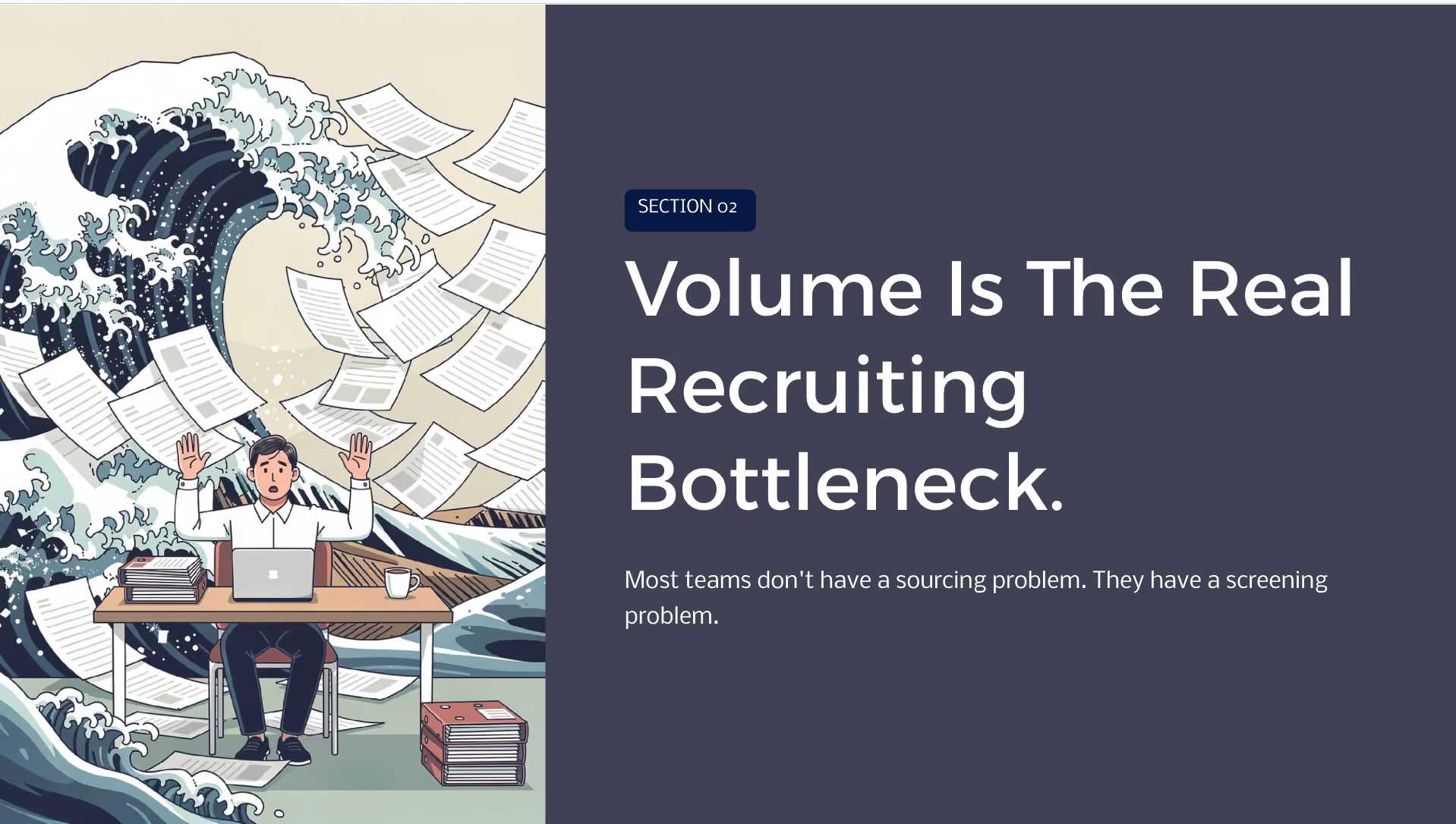
Matt Charney framed it simply: "Most teams don't have a sourcing problem, they have a screening problem."
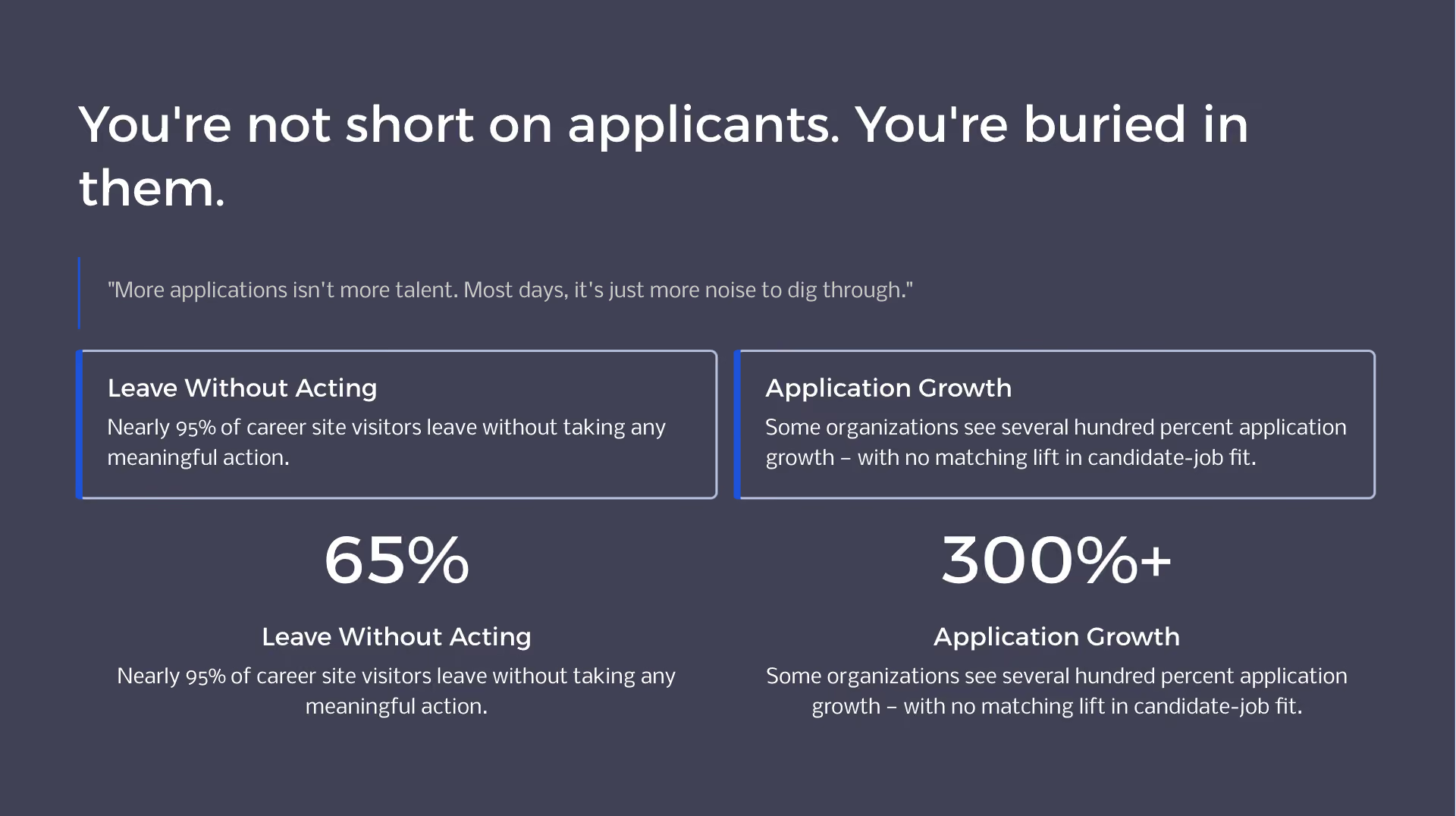
That's a critical distinction. Recruiters aren't failing to attract applicants. They're drowning in them, without the right tools to find the ones who will actually succeed.
Stephane added the data point that cuts to the heart of it, explaining that less than a third of applicants have the skills to do the job. That means the vast majority of application volume is noise. And with job boards incentivized to send volume rather than match on fit, the problem compounds at the top of the funnel.
"Job boards don't always show who is the right match," said Sam. "With a one-click apply, candidates aren't always applying to the right jobs for them."
What Actually Predicts Performance?
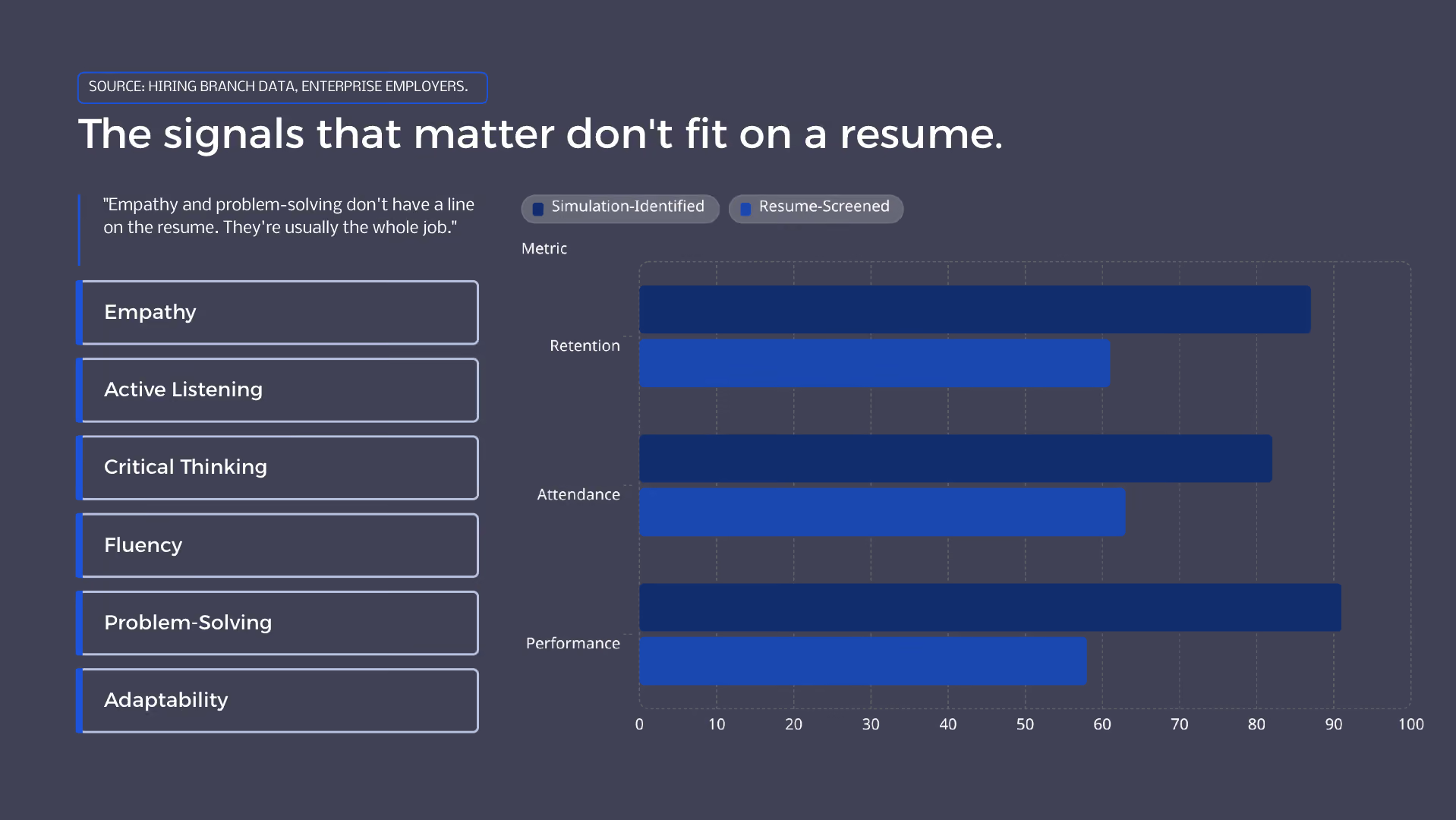
The actual signals that predict performance rarely show up on paper.
The panelists converged on soft skills as the real differentiator. These can include dimensions like empathy, active listening, adaptability, building rapport, and critical thinking. Matt Charney identified adaptability as the single most important predictor. These are the skills AI can't fake for a candidate.
Sarah Wise described how Fundraising Direct shifted their entire process around this insight. "We don't spend much time looking at resumes anymore with HiringBranch. We do look back sometimes out of morbid curiosity to see if the skills they said they have match up to their assessment results."
The results spoke for themselves. "Our campaign performance has been the best it's ever been for the last two years. People stay longer, are better trained, and are having a bigger impact on the business outcomes," Sarah said. "It's one thing to have empathy, but they also need to have building rapport, active listening, or they won't do well."
AI in Hiring: The Tools That Actually Help
There's a meaningful difference between AI tools that make noise worse and AI tools that cut through it. All of the panelists were clear in stating conversational assessments sit firmly in the second category.
"We use AI in hiring to look for soft skills, and so they can't fake that," said Sarah. The key is what’s being measured. Technical skills are increasingly accessible with AI assistance. The skills that predict retention like communication, judgement, adaptability, and critical thinking, require a different kind of evaluation - one that resembles the actual job.
Stephane described the value of scenario-based assessment at the top of the funnel. He said, "By having a screen that resembles the job, it sets candidate expectations. Sales and customer-facing roles can be difficult. Putting people through a job simulation shows perseverance and sets expectations to help identify candidates who stay."
The stickiness data behind this approach is compelling. If you can get a frontline candidate to 90 days, you can expect them to stay for a year. In senior roles, 90-day retention predicts two to three years of tenure, the panellists explained.
A Better Funnel Looks Like This
Rather than filtering resumes and hoping for the best, the panelists recommended a different sequence:
1. Run a scenario-based assessment at the top of the funnel
Before anyone looks at a resume, rank candidates by skill, not by how well they gamed a keyword scan.
2. Interview the top performers from the assessment
Save interviews for those who have demonstrated skill, not just the top 10% of CVs.
3. Use the resume to support the interview
For candidates who've demonstrated the skills, the resume becomes a useful conversation guide, not a filter.
Sarah's conversion numbers reflect what this looks like at scale. She said approximately 85% of candidates who get screened through their soft skills assessment process become employees.
On Candidate Experience and Bias
No conversation about AI in hiring is complete without addressing the concerns TA leaders are feeling. Stephane named them directly: bias concerns, candidate anxiety around AI interviewers, and internal HR teams worried about being replaced.
The distinction that matters is that a conversational assessment isn't an AI interview. "With an assessment, you're not pretending to interview someone," Stephane said. That framing shift matters for both HR stakeholders and candidates.
On bias specifically, assessments should be NYC Local Law 144 certified, meaning they've been externally validated to meet the most rigorous bias audit requirements in the U.S.
Matt Charney raised a broader point about the candidate experience. "Candidate experience needs to be highly personalized. Meanwhile recruiters are making everything algorithmically based and automated," he said. The goal isn't to remove humans; it's to get the right information in front of them faster, so the human interaction that does happen is meaningful.
The Future of Resumes
Are resumes going away? The panelists think so, yes… eventually.
"I see them going away," said Sam. "Maybe it's just because people have built it into their process and there is no great replacement yet that everyone knows about."
Sarah was more direct: "Resumes may line up if you have the experience of what's required, but they still don't say whether you have the skills. Let's move away from a person that's qualified to a person that's skilled."
The shift is already underway for the organizations that have made it. The question for everyone else is how long they're willing to spend screening noise when there's a better signal available.
See a summary of the discussion below. To watch the full webinar on LinkedIn click here.
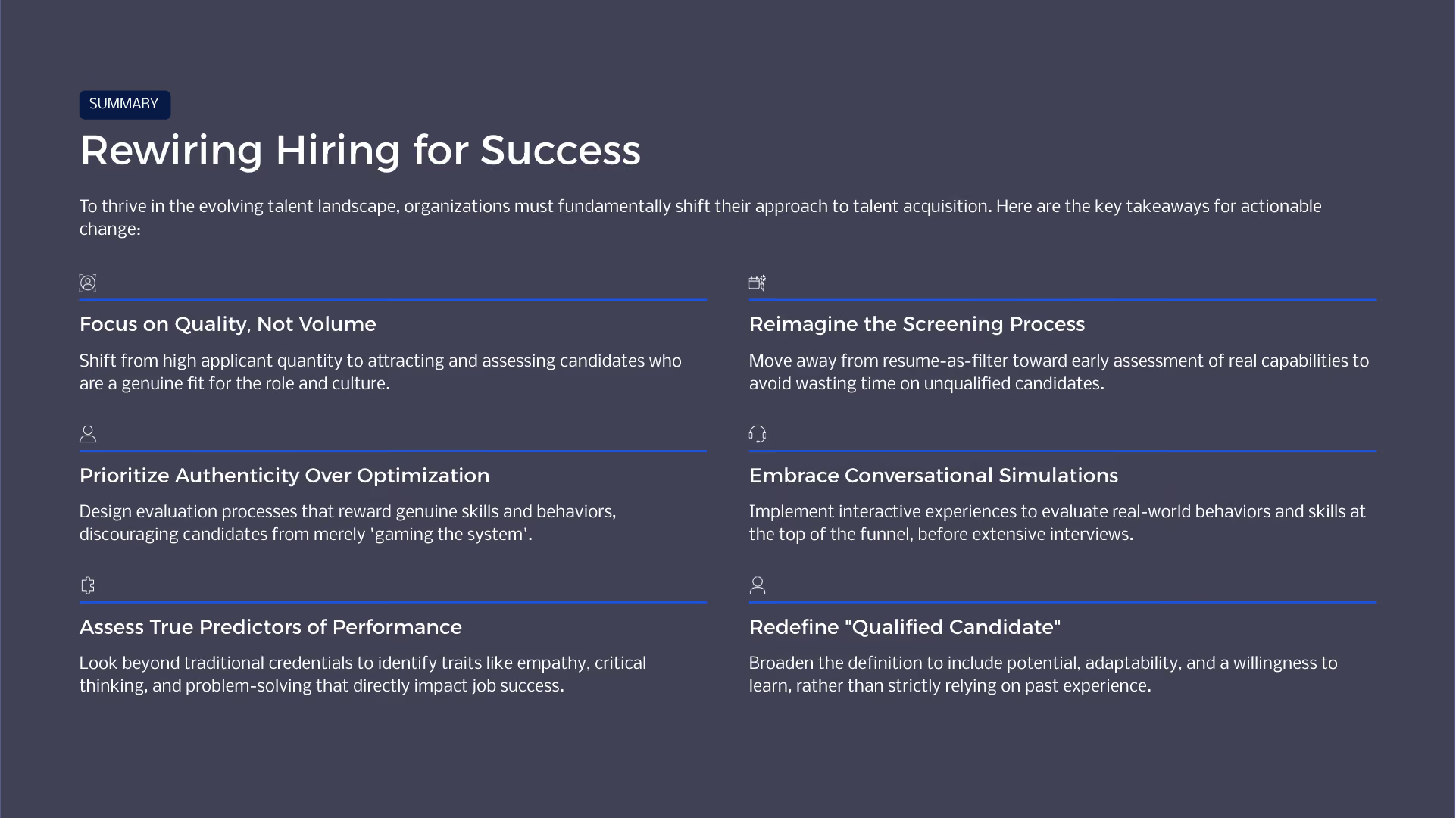
Image Credits
Feature Image: Unsplash/Markus Winkler
Image 1-5: Webinar screenshots


.svg)