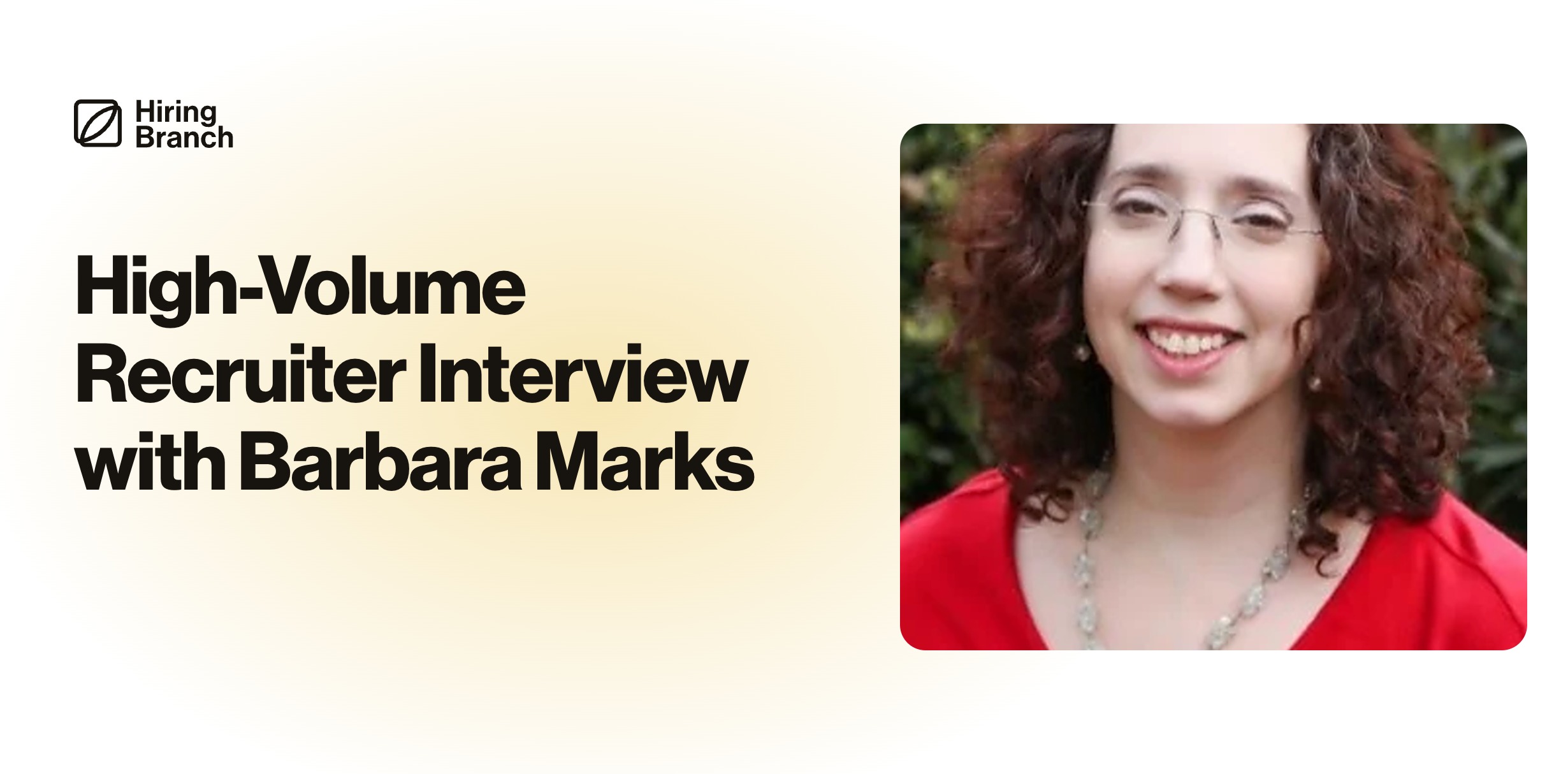
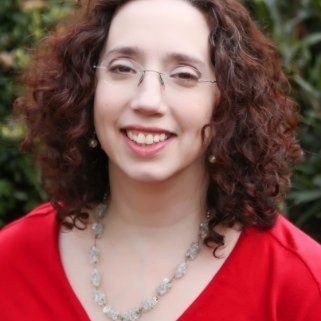
We're excited to bring you a special edition of this series, featuring recruiting and talent acquisition pro Barbara Marks. We sat down with Barbara on the floor at RecFest USA in Nashville alongside our friends at WRKdefined. The session was hosted by the one and only William Tincup. Watch or read the discussion below to get Barbara's take on which assessments actually hold up to scrutiny, and why candidates deserve to know when they've been screened out.
Subscribe to our Newsletter
Like what you're reading? Leave us your email, and we'll deliver to your inbox on the last Thursday of the month.
This series is dedicated to sharing the knowledge and expertise of high-volume recruiters. These are the hardest-working people in the industry. So we're asking how they're getting hiring right at scale. Recorded live, here is a special installment of our high-volume recruiter series.
Meet Barbara Marks. Barbara works in recruiting and talent acquisition, and she spends a lot of her time in the trenches with job seekers, helping them sharpen their resumes and navigate interview processes. That vantage point gives her a clear view of what candidates experience on the other side of an assessment. Her message to employers is this: if you can't prove a test is valid, you shouldn't be using it. Get the full conversation below.
Interview Transcript: Barbara Marks × WRKdefined
Interviewer: Where do you go mentally when someone says "skills assessment"?
Barbara: I think there are two kinds of skills assessments, right? There's the technical skill set: software development, accounting, a sterile tech in a hospital, that kind of skill. But there's also the psychometric skill. And I think there is a lot of psychometric testing out there that is not backed by science. It's not backed by rigorous research. It's full of bias.
Interviewer: They are not valid.
Barbara: And there's very little that's validated. There are a few things, like the DISC, that are validated. But people use Myers-Briggs all the time, and that is not validated in any way, shape, or form. Myers-Briggs also wants us to believe that people's personalities are static. So the way you are at 20 is the way you are at 40 is the way you are at 60. God forbid we evolve over a lifetime!
Interviewer: And the people who study personality for a living actually believe that personalities don't change. Which is insane.
Barbara: Which would be sad, because that would say there's no room for personal growth. And also, if you take a Myers-Briggs on one day and it’s a great day, and then a couple of months later you take it on a bad day…
Interviewer: Yeah, yeah, yeah, one day EFTJ and another E9FJ or whatever.
Barbara: You're introverted, you're extroverted. And you have people who are introverts but who can turn it on being an extrovert.
Interviewer: Right. How much coffee did I have that day? I'm going to be an extrovert. How do we do the verification part of skills? How do you think about that today?
Barbara: Well, how I think about it is…On the technical side, and again I don't just mean a software developer; I mean an accountant or a sterile tech. I do want someone on the team to verify that, to validate it, because they know how we're using that skill. A sterile tech at a hospital setting might need a different skill set than a sterile tech in a physician group practice setting. So you need it customized to your setting, somewhat.
Interviewer: And you verify that internally with an expert.
Barbara: Right. Is this person a high performer? Is this person doing well? Is this person a great Workday admin? They're able to tell: Is this someone who can just talk about it, or did they talk about what they've actually done?
Interviewer: How are you thinking about soft skills? What's the current thought?
Barbara: I think a lot of people are still relying on hiring manager interviews.
Interviewer: Oh, God.
Barbara: I know, I know!
Interviewer: I think my heart just stopped. I’m getting wheezy. I’m coming, baby. [Quotes the famous fake heart attack routine from the classic sitcom Sanford and Son]
Barbara: I think there's a lot of soft skills assessment going on that, again, isn't validated. And I think that's the scary part. Then there are some things, like StrengthsFinder, that say, "We want to focus on what you already have a strength in…"
Interviewer: And build it further.
Barbara: Right, and build on that, as opposed to trying to make me great at Excel. I'm never going to be great at Excel.
Interviewer: I actually don't want to be great at Excel. The older I get, the more I push myself away from Microsoft Office products. I don’t want to know those things.
Barbara: I'm great at Microsoft Word, which is great, because I help job seekers with their resumes all the time, and I want to get even better at that. But I'm not helping anyone with spreadsheets.
Interviewer: If I ever get called to ask about that…
Barbara: You'd know you've run out of people to ask if you're coming to me!
Interviewer: ChatGPT. You should look into that.
Barbara: Right, because ChatGPT is going to be better at building a formula or creating a pivot table than I ever would be. And it won't cry like I will if I have to do it.
Interviewer: Are you getting asked by customers or candidates about soft skills?
Barbara: When I talk with job seekers, I do hear that in the market there are more and more assessments in the interview process. And I think for those roles where people are dealing with the public - so customer service, retail, IT support- where they get an influx of the public, so to speak. There's more and more assessment of that. And job seekers are leery in some ways, and they don't get the feedback. They just know they got dropped out of the process. They don't know why, and they don't know what did it.
Interviewer: It drives me so crazy. In the credit reporting world, you apply for something and whatever happens, doesn't happen, etc., they'll send you a note.
Barbara: Right. And say this is why.
Interviewer: This is why…and in the back in the background screening world, ironically, no…
Barbara: Oh, the background check.
Interviewer: They’ll actually send that to the candidate and say, "Here's what.."
Barbara: Because legally they're required to. That's the Credit Reporting Act. So see, government regulations are doing good things in our lives.
Interviewer: Shocking! Not shocking. But with the ATS and with assessments, things like that…
Barbara: You just drop off.
Interviewer: Let them know! It's okay to let them know that it didn't work out. That doesn't mean it won't work out next time. So what advice do you give people like you?
Barbara: Look at the tool you're looking at and ask about validation. I think that's the first big question. If a vendor can't talk about the validation of their tool or their process…
Interviewer: End the call.
Barbara: "Thank you so much, I appreciate the time. This has been so informative."
Interviewer: Thank you so much.
HiringBranch would like to extend a sincere thank you to Barbara Marks for participating in this special edition of our series, and to WRKdefined for making the conversation happen. For the previous interview in this series, click here, and stay tuned for the next installment coming next month.
Image Credits
Feature Image: Property of HiringBranch. Not to be reproduced or distributed without permission.