



Learn how healthcare talent acquisition leaders use skills-based hiring and assessments to improve quality of hire and strengthen clinical hiring outcomes.
Subscribe to our Newsletter
Like what you're reading? Leave us your email, and we'll deliver to your inbox on the last Thursday of the month.
Talent acquisition in the healthcare sector presents challenges that few other industries face. Think strict licensing standards, high-stakes candidate responsibilities, and specialized clinical skill requirements.
Persistent workforce shortages add to the pressure, with a deficit of 187,130 full-time physicians anticipated by 2037. Meanwhile, recruiters are under pressure to fill positions quickly to keep clinical teams fully staffed.
This guide explores how skills-based hiring can help healthcare organizations hire more consistently, improve their quality of hire, and build a stronger long-term workforce.
The State of Healthcare Talent Acquisition
Healthcare talent acquisition has become increasingly complex as demand for care continues to outpace workforce supply. Talent acquisition teams must navigate lengthy hiring timelines and strict regulatory requirements while ensuring clinical teams remain fully staffed.
One of the most significant pressures comes from the scale of workforce shortages across the healthcare sector. In addition to the predicted shortage of full-time physicians we outlined earlier, the U.S. Health Resources and Services Administration also expects significantly fewer dentists and dental hygienists by 2037.
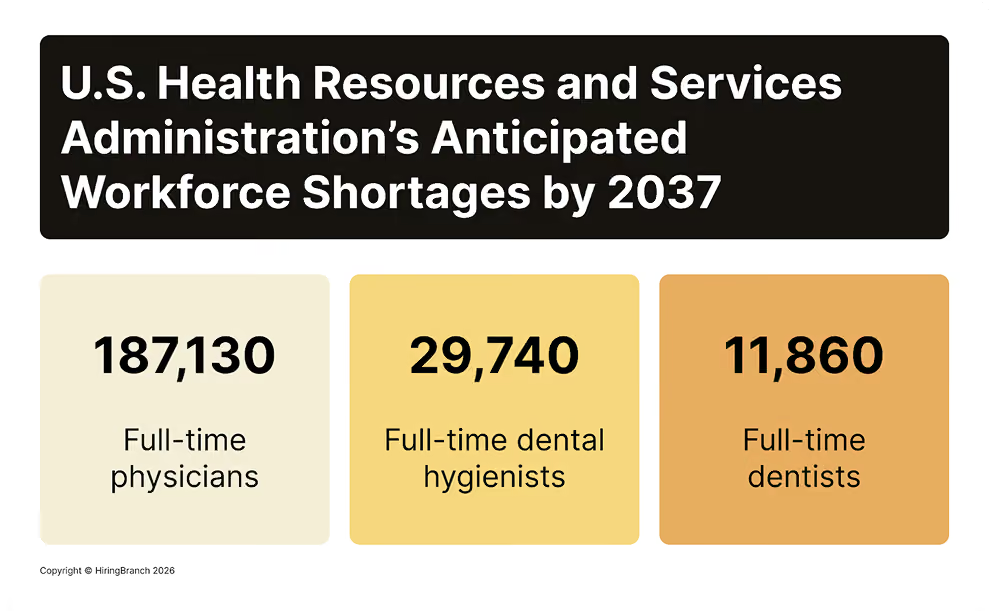
The operational impact of these workforce shortages is clear in Symplr’s Healthcare Hiring Benchmarks report. For example, the median time-to-fill for registered nurse roles is 45 days. And to secure a single accepted offer, healthcare recruiters spend roughly 16.8 hours sourcing and pre-screening candidates.
For recruiters, these pressures shape the reality of the job. As one user puts it in a Reddit discussion:
“Healthcare recruitment has been one of the biggest challenges I’ve faced. It’s not just about finding people who can do the job — it’s about finding the ones who truly care about the work and align with your team’s values.”
Together, these dynamics make healthcare talent acquisition one of the most complex hiring environments in the broader labor market.
Traditional Healthcare Recruitment Models Fall Short in Assessing Clinical Performance
Against this backdrop, many traditional recruitment practices begin to show their limitations. They provide only limited visibility into how candidates will perform in complex clinical roles. Here are four core factors that contribute to this challenge.
Overreliance on Experience and Credentials
Most healthcare organizations’ hiring process involves screening candidate resumes based on their years of experience, licenses, and qualifications that meet the job description. While essential for regulatory compliance, these credentials rarely predict clinical performance.
Two clinicians with similar credentials can deliver vastly different outcomes in patient care environments. Communication skills, critical thinking, teamwork, and decision-making under pressure will likely influence their success, which resumes alone can’t measure.
Healthcare recruiters often spend significant time sourcing and reviewing those who appear as qualified candidates on paper but may not fit the role in practice.
Inconsistent Interview and Evaluation Processes
Traditional staffing models usually lack standardized evaluation methods. Interviews vary widely across departments, facilities, and individual hiring managers.
Without a structured evaluation framework, recruiters may rely on subtle signals such as perceived “cultural fit” or interview rapport-building. These factors are not only subjective and prone to hiring bias; they also fail to predict on-the-job performance.
Inconsistent evaluation criteria also prevent human resources teams from objectively comparing candidates and demonstrating that hiring decisions are fair and evidence-based.
Limited Visibility Into Real-World Clinical Skills
Traditional hiring methods rarely reveal how candidates apply their knowledge in real clinical situations.
Structured skills assessments help bridge this gap by evaluating how candidates respond to realistic care scenarios. For example, a medication-safety scenario might ask candidates to review a patient chart with conflicting dosage information and identify the safest next step.
These scenarios help hiring teams evaluate practical decision-making before a candidate joins the care team.
Disconnected Hiring and Workforce Planning Metrics
Traditional healthcare recruitment often measures success using operational metrics such as time-to-fill or number of applicants sourced.
While these indicators help track recruiting activity, they don’t reveal whether hiring decisions ultimately strengthen the workforce. As a result, TA teams may focus heavily on filling open roles as quickly as possible instead of evaluating which hires lead to stronger long-term outcomes.
Recruiters may expand their talent pools through job boards, LinkedIn, social media, and referral programs. However, the information they gather during the recruitment process is rarely connected to post-hiring outcomes such as retention, job performance, or team stability.
Without this visibility, healthcare organizations struggle to identify which hiring decisions actually improve workforce performance.
The Role of Skills Assessment in Healthcare Talent Acquisition
As healthcare organizations look for better ways to evaluate candidate capability, many are introducing structured skills assessments into their recruitment processes. These evaluations allow hiring teams to measure how candidates apply relevant skills in realistic job scenarios.
Skills assessments strengthen healthcare talent acquisition. Let’s take a deeper dive into how below.
Shifting the Focus From Credentials to Demonstrated Competency
Skills-based hiring evaluates demonstrated competencies rather than credentials alone. In healthcare, this means testing clinical decision-making, communication, and situational judgment directly.
Let’s say a behavioral health communication assessment presents a simulated interaction in which a patient in recovery resists treatment. The candidate must show empathy and encourage the patient to remain engaged in their care.
By testing these capabilities directly through pre-hiring assessments, healthcare recruiters can accurately assess how candidates actually respond to real-world scenarios.
Standardizing Hiring Decisions Across Facilities and Teams
Structured skills assessments in healthcare staffing create consistent benchmarks. These make it easier for human resources leaders to maintain fairness and transparency while improving the overall candidate experience.
Standardized evaluation also improves collaboration between recruiters and operational leaders. When stakeholders share a clear definition of strong performance, hiring decisions become more data-driven and easier to justify.
Strengthening Predictive Quality of Hire
Healthcare organizations ultimately care about long-term hiring performance. They want to recruit clinicians who will deliver strong patient outcomes, collaborate effectively with teams, and remain with the organization over time.
Skills assessments help strengthen predictive quality of hire by evaluating the capabilities that influence these outcomes.
For instance, a clinical judgment scenario might ask a nurse or behavioral health technician to review a short description of a patient experiencing withdrawal symptoms. The candidate must pick the most appropriate next steps in line with safety protocols and explain their rationale.
Supporting Workforce Planning With Skills Data
Skills-based hiring enables organizations to capture valuable data on the competencies within their workforce. These include capabilities such as communication, clinical judgment, and situational decision-making.
Over time, this data helps healthcare organizations understand how different skills are distributed across the workforce and where capability gaps exist.
Let’s say hiring teams identify a shortage of clinicians with strong decision-making skills in addiction treatment roles involving withdrawal management. Talent acquisition teams can use these insights to identify shortages in specific specialties or clinical roles and build stronger talent pipelines to address them.
When teams understand the specific competencies associated with successful hires, they can focus outreach on candidate groups more likely to possess those capabilities. For example, recruiters might target candidates from military healthcare training pathways or professional communities that specialize in a particular clinical skill set.
Used consistently, these insights help healthcare organizations move toward a strategic workforce-planning model that supports long-term performance outcomes.
Building a Skills-Based Healthcare Talent Acquisition Framework
Adopting a skills-first hiring approach requires healthcare organizations to align their evaluation methods, recruiting workflows, and workforce strategy.
The following framework outlines six practical steps healthcare leaders can use to implement a structured skills-based hiring model and strengthen their talent acquisition strategies.
1. Clarify Strategic Workforce Priorities
Every health system faces different hiring pressures. Some organizations struggle with nursing shortages, while others face gaps in specialized roles across allied health, laboratory services, or behavioral health.
Before introducing new hiring practices, human resources and talent acquisition partners should identify which roles most affect patient outcomes, staffing stability, and operational performance. These priorities often include high-volume roles, hard-to-fill clinical specialties, and positions with historically high attrition rates.
When TA leaders clearly define these priorities, recruiters can then focus their efforts on sourcing for roles aligned with the organization's hiring needs.
2. Define Role-Critical Skills and Standardized Evaluation Criteria
After identifying the highest-priority roles, the next step is defining the competencies required for success. Traditional job descriptions typically list qualifications and responsibilities, but they rarely specify the practical skills that distinguish strong performers from average ones.
TA teams should collaborate with clinicians, operational leaders, and hiring managers to identify the competencies that matter most. These may include specific technical capabilities or soft skills such as patient communication, problem-solving, and teamwork. For example, nurse supervisors might help to define the skills that clinicians use to coordinate care with colleagues during shift handovers.
For healthcare talent acquisition teams that don’t know the skills and competencies that matter most, a custom benchmarking assessment is recommended. This allows a company like HiringBranch to measure the skills of a team’s current top-performing staff and build a custom assessment that can evaluate these skills in the hiring process.
Once you have skills mapped to roles, be sure to revisit these competency frameworks periodically as the organization’s workforce evolves. Changes in clinical protocols, new technologies, or emerging specialty roles may require updates to how healthcare professionals are evaluated.
After defining these competencies, TA teams should translate them into practical evaluation criteria to guide candidate assessment during the hiring process. For example, if clinical decision-making is a key competency for an emergency department role, candidates might complete a scenario-based exercise in which they must choose an appropriate course of action based on the presented symptoms.
3. Evaluate Assessment Solutions Against Healthcare Requirements
Healthcare organizations should assess recruitment technologies against the specific demands of the healthcare industry. Follow these three key steps:
- Start by looking for solutions that provide validated measurement methods, transparent scoring models, and a clear explanation of what each assessment actually measures.
- Next, make sure the assessment reflects the realities of clinical work. Many healthcare roles require professionals to communicate clearly, respond appropriately under pressure, and collaborate effectively with colleagues and patients. Tools such as HiringBranch's healthcare assessment (shown below) can help hiring teams evaluate these capabilities through structured, job-relevant exercises. For example, a communication assessment could measure how well candidates explain complex information or respond to patient concerns.

- Finally, assess how well the solution fits within a regulated, high-volume hiring environment. Healthcare hiring often involves multiple stakeholders and strict documentation requirements, so assessment results must be easy to access and review throughout the hiring process.
Look for tools that integrate with your applicant tracking system and support collaboration between recruiters and hiring managers. It should also be easy for recruiters and hiring managers to review assessment results as part of the broader hiring workflow.
With the right assessment solution in place, TA teams can begin incorporating skills into their recruiting process.
4. Embed Skills Assessments Into the Hiring Workflow
After choosing a skills assessment provider, TA teams should integrate the solution directly into their hiring workflow. It’s good practice to introduce assessments early in the recruiting process to streamline candidate evaluation. Recruiters can gauge candidates’ real-world capabilities before investing time in interviews.
Assessment results should then carry forward into the interview stage. Hiring managers can use the scenarios candidates completed during the assessment to guide deeper conversations about how they approach communication challenges, problem-solving situations, or clinical decision-making in practice.
Finally, ensure recruiters and hiring managers know how to interpret and apply assessment results when evaluating candidates. Provide clear guidance on how assessment insights should inform interview discussions and hiring decisions so teams consistently prioritize the capabilities required for success in the role.
5. Align Hiring Metrics With Organizational and Patient Outcomes
Healthcare TA teams should align recruiting metrics with the outcomes that matter most to the organization. Instead of evaluating hiring success solely through operational indicators, track how hiring decisions influence workforce stability and patient-facing performance.
Start by identifying the competencies most critical to clinical roles, such as communication, situational judgment, and teamwork. Then, build simple tracking practices to monitor the performance of candidates who demonstrated these competencies during the hiring process.
This might involve gathering feedback from supervisors during onboarding, reviewing early performance evaluations, or monitoring retention patterns within specific teams. For example, TA teams can compare assessment results with indicators such as clinician retention, patient satisfaction feedback, or early-stage performance reviews.
Tracking these relationships helps healthcare leaders understand which competencies contribute most strongly to desired patient outcomes.
6. Establish Governance, Oversight, and Continuous Validation
A skills-based hiring model requires clear governance to ensure evaluations remain fair, consistent, and defensible. Human resources leaders, recruiting teams, and other stakeholders should establish clear guidelines for:
- How assessments are used alongside other hiring steps, such as interviews, credential verification, and background checks
- How assessment results are interpreted by recruiters and hiring managers
- How hiring decisions and evaluation criteria are documented across the healthcare system
Auditing results across roles, locations, and candidate groups helps confirm that evaluations remain consistent over time and do not introduce unintended hiring bias.
With the right governance structure in place, healthcare organizations can be confident that skills assessments will remain reliable tools for identifying top talent and supporting better long-term workforce outcomes.
Driving Measurable Benefits in Healthcare Hiring Through Skills Assessment
As healthcare organizations adopt skills-first hiring, structured skills assessments allow recruiters to move beyond competency evaluation and directly measure and validate the quality of a hire over time.
Healthcare organizations typically define quality of hire using a combination of measurable indicators. For instance, they may include 90-day new-hire retention, time-to-productivity for clinicians, supervisor performance evaluations during onboarding, and patient satisfaction scores.
Together, these metrics provide a clear view of three core outcomes in healthcare talent acquisition: retention, early performance, and workforce stability/ROI. By connecting assessment results to downstream outcomes, healthcare hiring teams can make more consistent, successful, and evidence-based hiring decisions. Skills assessments play a critical role in linking hiring decisions to these outcomes.
Healthcare recruiters often face recurring hiring challenges in filling specific specialties or clinical roles. Skills assessment data becomes significantly more valuable when paired with quality-of-hire metrics to validate recruitment success.
With clearer insight into which skills drive success in these roles, hiring teams can refine their sourcing and recruitment strategies. For example, they can focus their outreach efforts by targeting specific training programs, professional communities, or career pathways that produce candidates with the required capabilities.
Over time, this targeted sourcing approach helps healthcare organizations create a more predictive hiring model for critical roles and reduce the constant pressure of reactive hiring.
Hiring decisions in healthcare carry significant operational risk, particularly in patient-facing roles where early performance is critical. Measuring quality of hire through early indicators such as onboarding evaluations, time-to-productivity, and initial patient feedback provides a clearer picture of whether new hires are meeting expectations.
This connection between pre-hire assessment and post-hire outcomes strengthens confidence in hiring decisions. For healthcare organizations managing high-volume recruitment, it also supports more stable staffing models by improving retention and reducing the costs associated with early attrition.
Strengthening Healthcare Talent Acquisition With Skills-Based Hiring
Healthcare hiring decisions shape the stability of clinical teams and the quality of care they deliver.
As workforce pressures persist across the healthcare industry, many organizations are moving toward skills-driven workforce planning. In high-stakes clinical roles, hiring teams increasingly seek clearer signals of future performance.
Skills-based hiring supports this shift by helping recruiters evaluate the capabilities that drive success in the role. Through explainable, AI-powered assessments, healthcare organizations can measure applicant qualities in a transparent and consistent way.
Ultimately, structured assessments let healthcare recruiters and hiring managers compare candidates more confidently and build stronger talent pipelines for critical positions. Learn more about screening and assessing candidates for patient-care skills here.
Image Credits:
Feature Image: Via Unsplash / National Cancer Institute
Image 1, 2, 3: Property of HiringBranch. Not to be reproduced without permission





.svg)